


- All
- Data & Analytic
- DJPK
- GEDSI
- Gender Responsive Budgeting
- MSS
- PFM
- Public Financial
- SKALA
- Standard
- Top 10

To achieve a prosperous and globally recognised NTB, the NTB Provincial Government is committed to strengthening the regional economy and infrastructure, as well as promoting inclusive and sustainable development. This collaboration with SKALA, the Australia-Indonesia Partnership for Basic Service Acceleration, will continue to strengthen data systems, planning, and the provision of better basic services. Read the full summary of the SKALA Program's support in NTB Province in this publication.
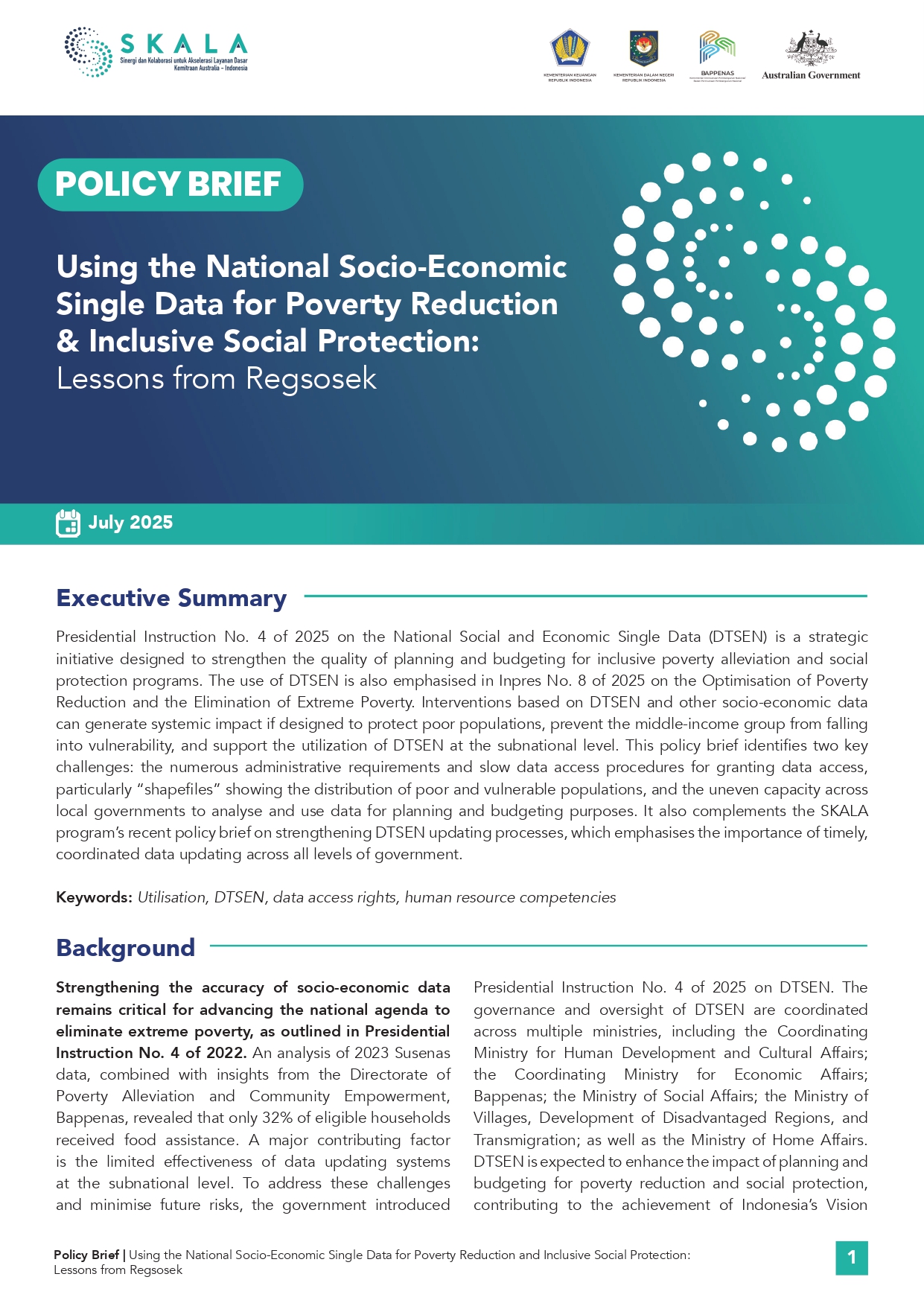
Presidential Instruction No. 4 of 2025 on the National Social and Economic Single Data (DTSEN) is a strategic initiative designed to strengthen the quality of planning and budgeting for inclusive poverty alleviation and social protection programs. The use of DTSEN is also emphasised in Inpres No. 8 of 2025 on the Optimisation of Poverty Reduction and the Elimination of Extreme Poverty. Interventions based on DTSEN and other socio-economic data can generate systemic impact if designed to protect poor populations, prevent the middle-income group from falling into vulnerability, and support the utilization of DTSEN at the subnational level. This policy brief...
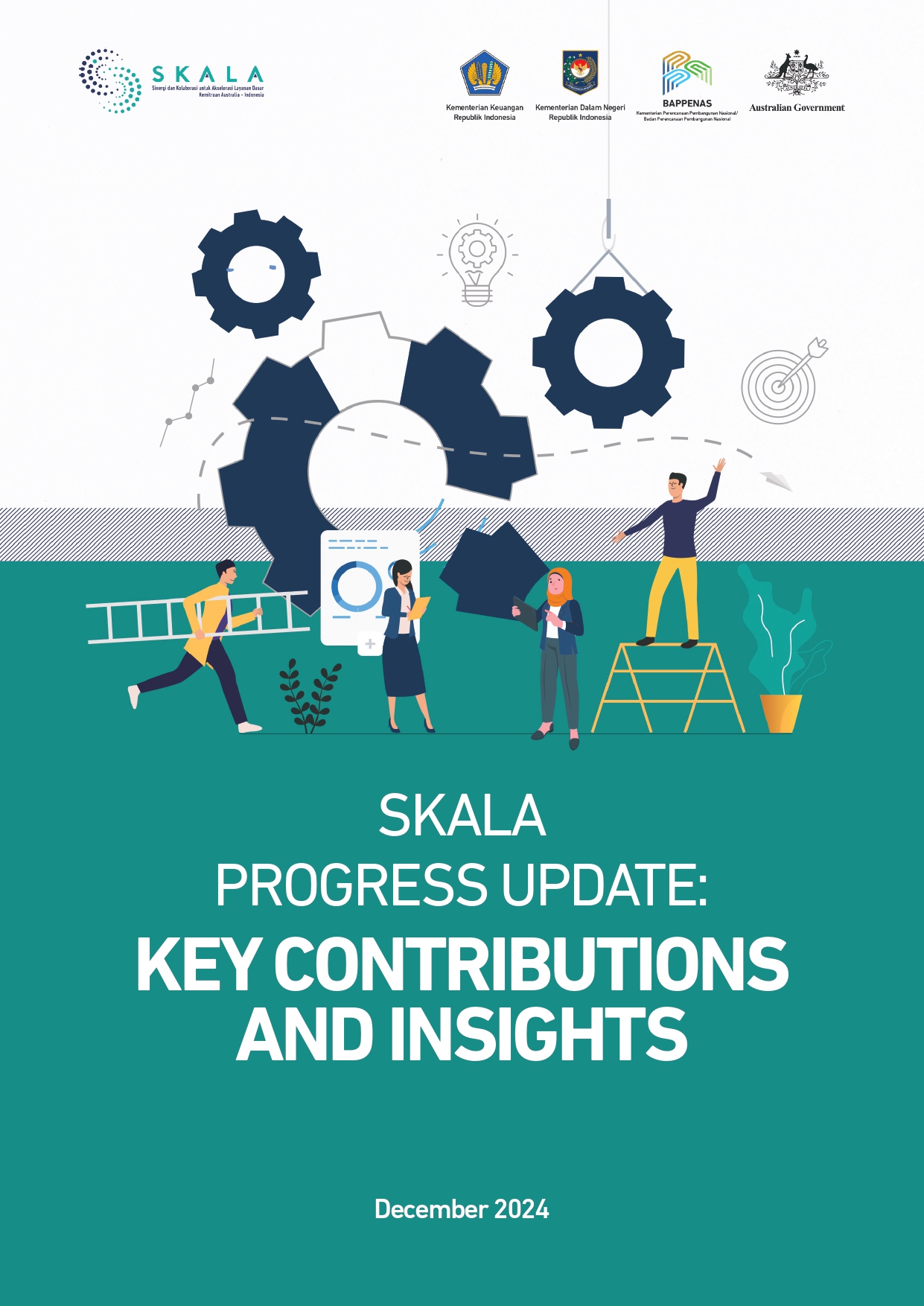
As part of its continued commitment to accelerating basic service delivery, SKALA Program, an Australia–Indonesia Government Partnership, continues to strengthen decentralized governance and improve access to inclusive basic services for the poor and vulnerable, especially in underdeveloped regions. This publication is a summary of the SKALA Six Monthly Progress Report (July–December 2024), showcasing key program achievements such as strengthened data governance, improved public financial management, integration of socio-economic data into policy, expanded civil society participation, and progress in gender equality and disability inclusion. During this reporting period, the SKALA Program also supported reforms in fiscal transfer mechanisms and the development...
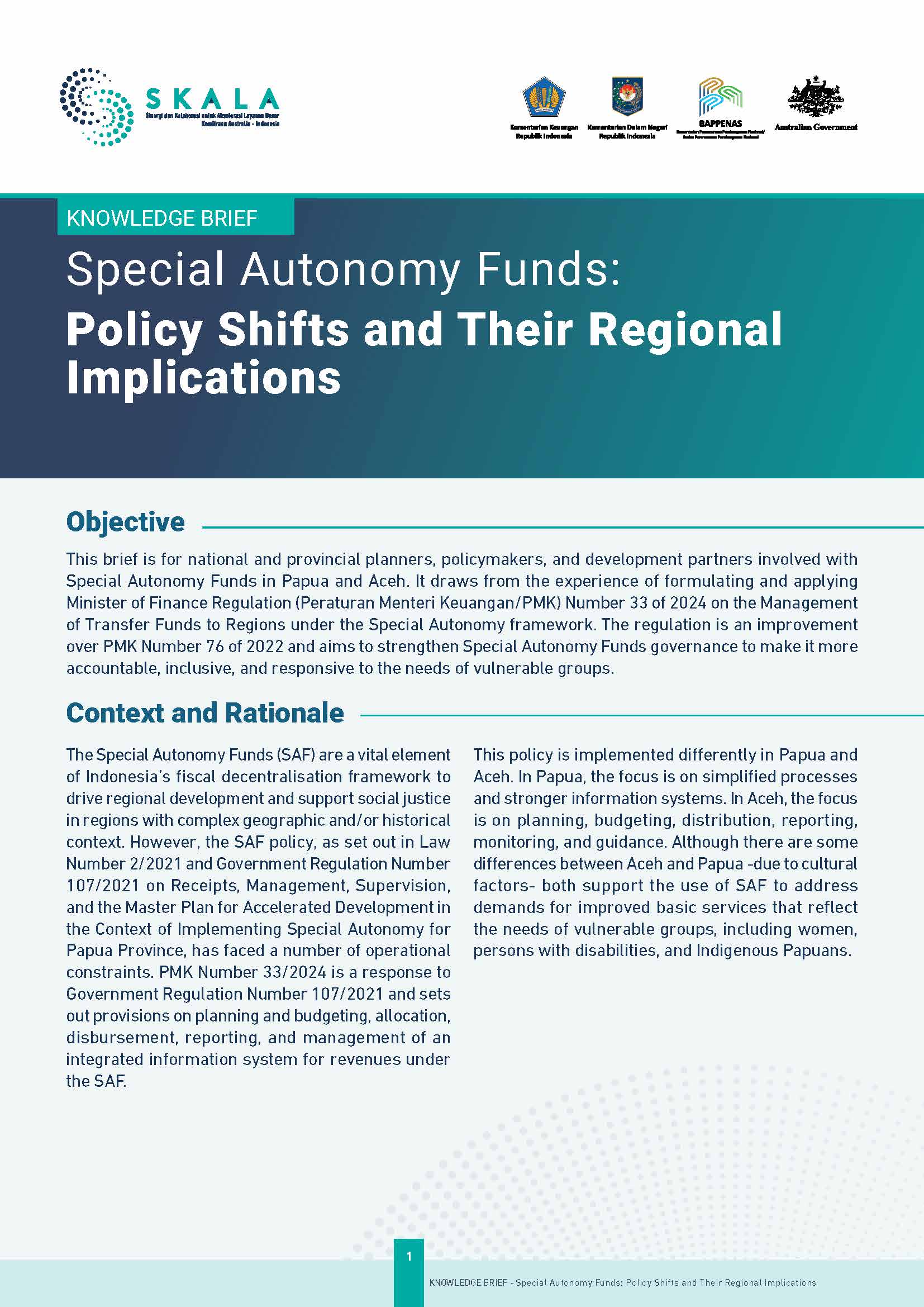
The updated Minister of Finance Regulation (PMK) Number 33/2024 introduces a new chapter in the governance of Indonesia’s Special Autonomy Funds (SAF) in Papua and Aceh, aiming to strengthen accountability, inclusiveness, and responsiveness to vulnerable groups. Drawing on lessons from cross-ministerial collaboration and with support from the SKALA Program, the regulation emphasizes tailored regional approaches, integrated information systems, and the integration of GEDSI (Gender Equality, Disability, and Social Inclusion) principles. It highlights the critical role of local ownership, strategic planning, and interoperability of data systems in ensuring SAF delivers tangible impact for Indigenous Papuans, women, and persons with disabilities through...
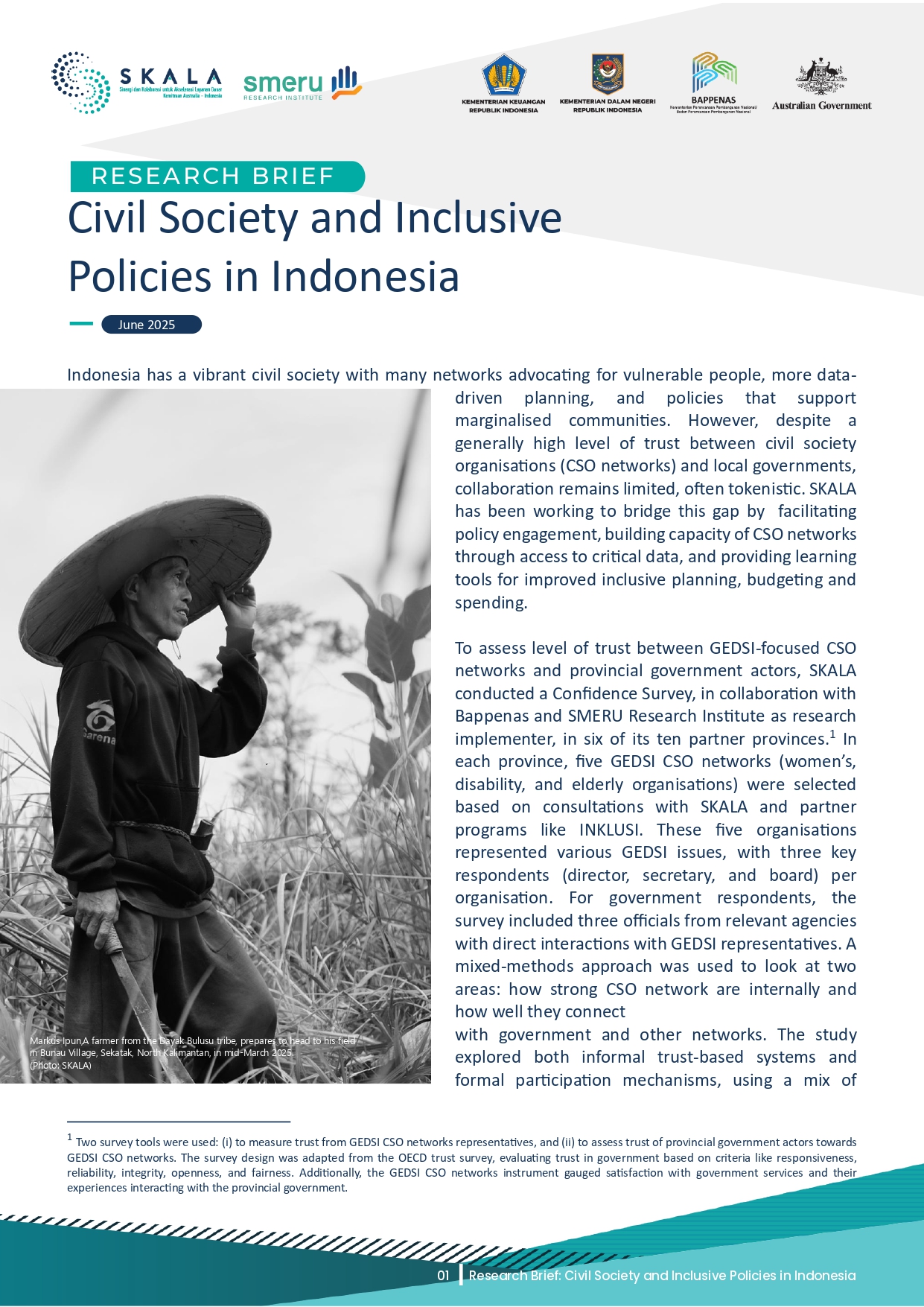
The research brief Civil Society and Inclusive Policies in Indonesia explores how civil society organisations (CSO networks) play a vital role in advancing inclusive public policies and services across Indonesia. Conducted by the SKALA Program in collaboration with Bappenas, the Confidence Survey reveals gaps and opportunities in CSO-government collaboration, especially in trust, data access, budget engagement, and policy monitoring. Highlighting findings from six provinces, including Aceh, NTB, and North Kalimantan, the study provides insights into strengthening civil society participation in planning, budgeting, and oversight. With support for data-driven advocacy, formal consultation processes, and multi-stakeholder partnerships, SKALA aims to build a...