


The Timika Agreement – Central and Regional Synergy to Oversee Papua Special Autonomy Funds
Leaders from Papua’s six newly formed provinces have signed a landmark pact to improve regional cooperation, unify development planning and strengthen financial accountability.
Papua’s six provinces share a distinctive place in Indonesia’s governance framework. Under a special autonomy arrangement established in 2001 and significantly strengthened by Law No. 2 of 2021, the Indonesian government provides dedicated funding, known as Dana Otonomi Khusus, or Otsus, to accelerate development across the region and improve services for Indigenous Papuan communities. In 2026, that allocation reached Rp12.69 trillion (AUD 990 million), directed at health, education and basic infrastructure in some of Indonesia’s most remote and underserved areas.
Translating that funding into results has proven difficult. Papua’s division into six provinces between 2022 and 2023, each with its own government, budget processes and priorities, has fragmented regional coordination. At the same time, a lack of disaggregated socioeconomic data leaves local planners without the baseline information needed to target services accurately to Indigenous Papuans. These planning hurdles are further complicated by the digital systems used to track how Otsus funds are planned, spent and reported, which have traditionally operated in silos.
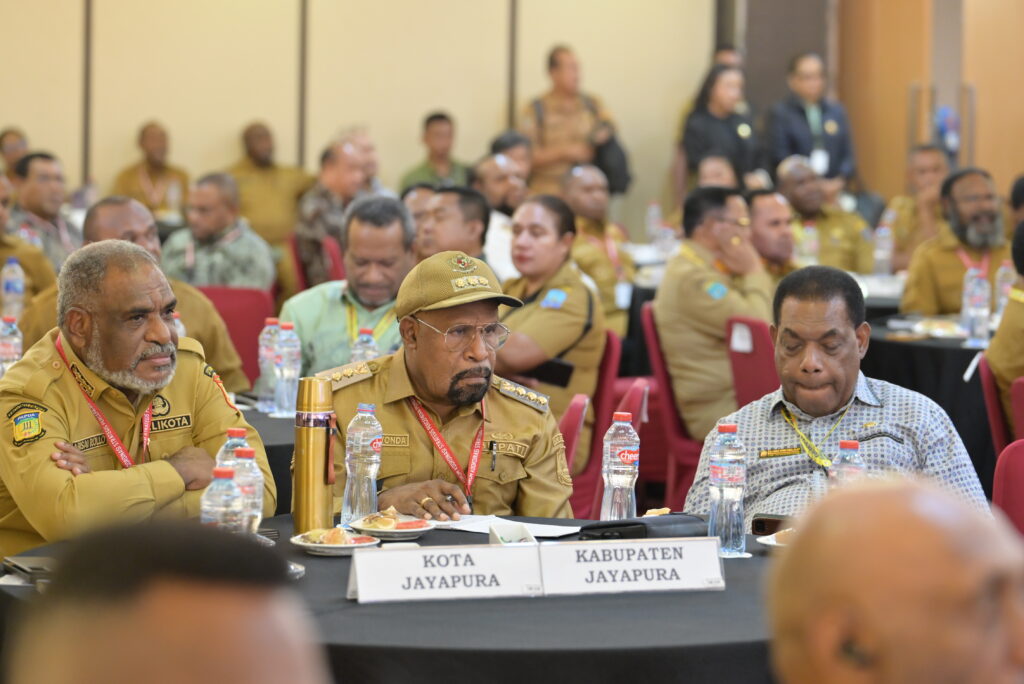
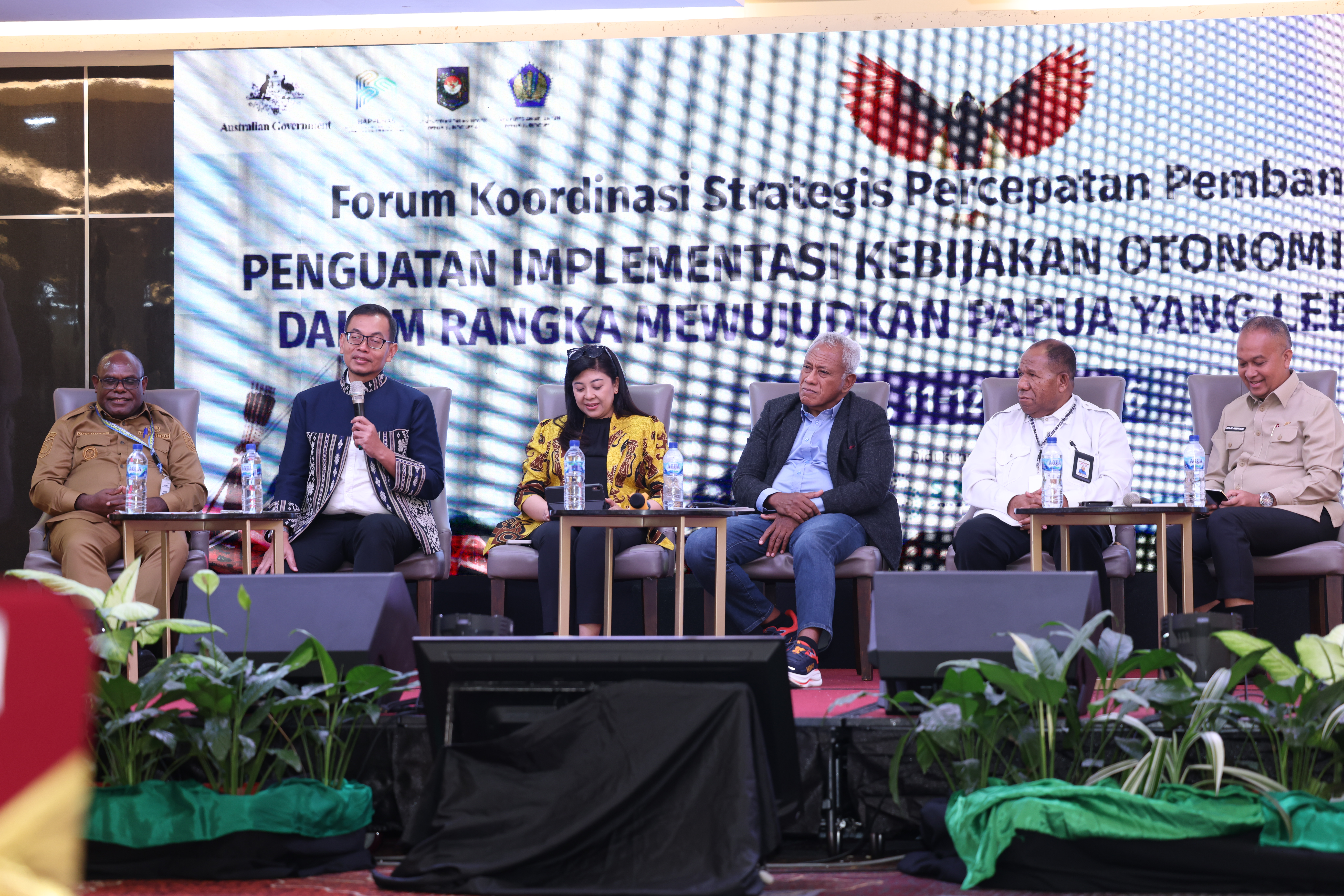
It is in this context that the two-day ‘Strategic Coordination Forum for the Acceleration of Papua’s Development’ was convened in Timika, on 11-12 May 2026. The event brought together the six provincial governors, 42 regents and mayors and national government representatives. Key leaders including Komarudin Watubun from the national parliament’s Commission II and Velix Vernando Wanggai, Chair of the Executive Committee overseeing Papua Special Autonomy acceleration, came together to find common ground on managing Otsus funds more effectively, enabling the communities they are meant to serve.
The forum also marked the signing of the Timika Agreement by the six governors of Papua. The agreement sets out 12 joint commitments across the six Papuan provinces, where provincial governments work together, support one another and coordinate efforts to address shared development priorities.
Through these commitments, the governors reaffirmed their commitment to improving the welfare of Papuan communities and advancing a Papua that is inclusive, sustainable, and prosperous. The agreement is aligned with the implementation of Special Autonomy and contributes to the achievement of Golden Indonesia (Indonesia Emas) 2045.
Increased funding, higher stakes
The forum came at a significant moment: the 2026 Otsus allocation represented an increase of Rp2.6 trillion on the previous year, and the six governors arrived with a shared commitment to ensure that growth translated into better outcomes on the ground.
Its work was grounded in a strengthened policy framework, including Ministry of Finance Regulation 33/2024, which sets out revised arrangements for managing regional transfer funds under Special Autonomy. Additionally, the central government’s Ministry of Home Affairs, Bappenas and the Ministry of Finance are strengthening national information systems to support more transparent, accountable and coordinated budget governance.
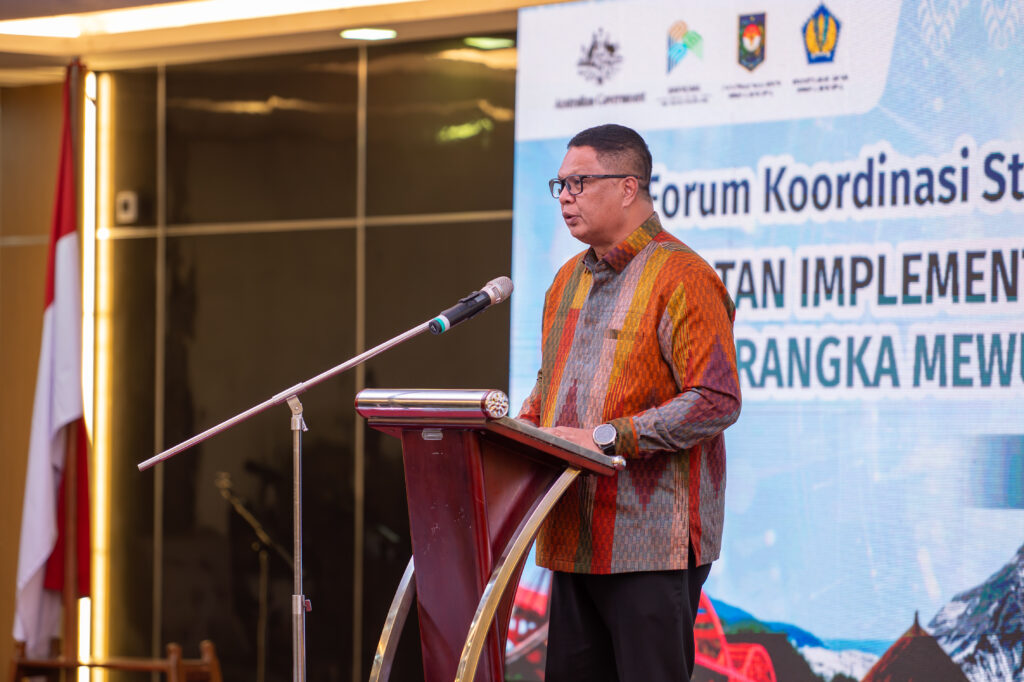
The event was convened by the Association of Regional Heads across Papua Land, the body representing governors, regents and mayors from all six provinces. Regional Secretary of Papua Tengah Province, Silwanus Soemoele said the forum was intended to move beyond policy discussion and focus on practical coordination and implementation.
‘The Association considers it necessary to have a joint forum that not only discusses policy issues but also strengthens cross-government coordination and ensures the prudent, accountable and targeted management of Otsus funds,’ Silwanus said.
Meki Nawipa, Governor of Papua Tengah and Chair of the Association, struck a unifying note.
‘There may be six provinces, but it remains one Papua,’ Meki said, ‘We must unite our hearts, unite our steps, unite our thoughts and unite our goals so that tomorrow Papua must be better than today.’
Hoiruddin Hasibuan, Special Staff to the Minister of Home Affairs for Village Governance and Border Development, represented the Minister at the forum. He conveyed the central government’s call for regional governments to sharpen their development priorities:
‘Ensure that every program truly responds to the basic needs of the community.’
Hasibuan signalled the central government’s intent to connect the three digital systems underpinning Otsus governance: the Papua Development Planning System (SIPP), the Regional Finance Information System (SIKD Otsus) and the Regional Government Information System (SIPD).
‘Integration of these systems will ensure that planning, budgeting and oversight of Papua’s development runs more effectively, transparently and measurably,’ he said.
Petrarca Karetji, representing the Australia-Indonesia Partnership Program, SKALA (Synergy and Collaboration for the Acceleration of Basic Services), which provided technical support for the forum, noted three persistent obstacles in Otsus implementation: community trust, the weakness of disaggregated socioeconomic data for Indigenous Papuans, and poor collaboration across government levels.
To address these, Karetji pointed to the potential of the Joint Strategic Priority Program as a mechanism for coordinating Otsus governance. Such a mechanism, he said, would provide a breakthrough in managing Papua’s special autonomy funds and assign clear responsibility to specific leaders for each strategic initiative, ultimately accelerating development throughout Papua.
A key highlight of the forum was the kick-off of interoperability efforts between SIPPP, SIKD Otsus, and SIPD, reflecting a joint commitment to strengthen implementation and integration of these systems in support of more effective Otsus governance.
With SKALA’s support, the forum advanced three areas of technical work: guidance for regional officials on Otsus implementation, refinement of Ministry of Finance Regulation 33/2024, and stronger use of disaggregated socioeconomic data on Indigenous Papuans to improve the targeting of Otsus-funded services. Discussions focussed on policy, systems and also on implementation. Agency heads from across Papua in health, education, public works and planning worked through the practical details of Otsus fund management alongside provincial and national officials.
Next steps
The priority is to ensure that the increased 2026 allocation delivers measurably better outcomes in health, education and local economic development. Disaggregated socioeconomic data on Indigenous Papuans will be central to that effort, giving planners the baseline they need to direct funds to the right people and places.
Sustaining the momentum will require continued coordination between national and regional governments and the representative and oversight bodies that give Papuan communities a voice in how Otsus funds are used.
The Timika Agreement and the newly connected digital systems provide a foundation — the work now is to build on them.