


Strengthening Coastal Socio-Economic Resilience in Response to Sea Level Rise
Sea level rise is creating new challenges for Indonesia’s coastal areas. It has wide-ranging impacts across people’s lives, livelihoods, access to basic services and local economies, as well as the environment.
To anticipate these impacts, the Government of Indonesia is promoting more adaptive development planning. This means planning that considers physical infrastructure—such as roads, bridges, ports and sea walls—alongside the needs of communities who live and work in coastal areas.
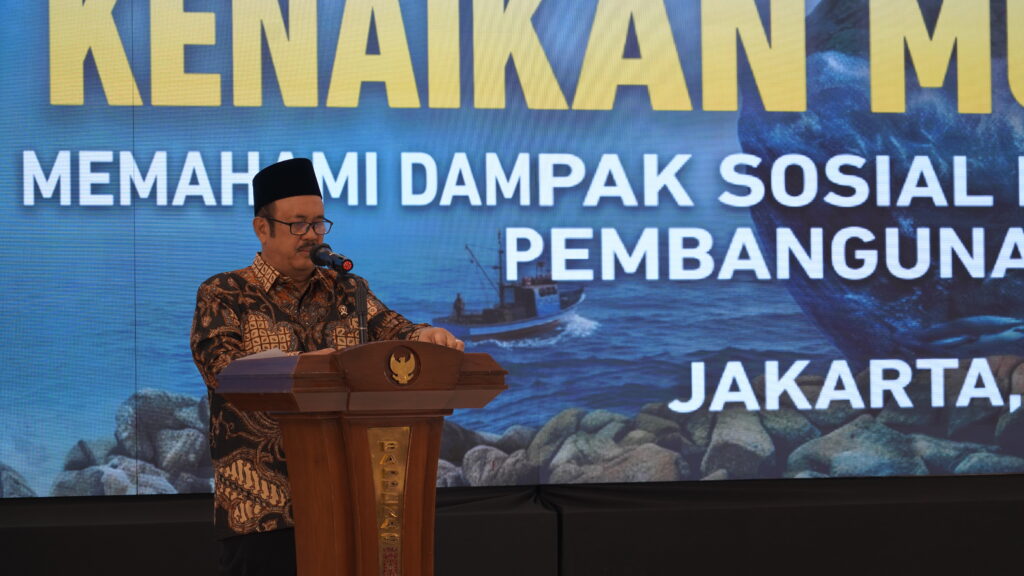
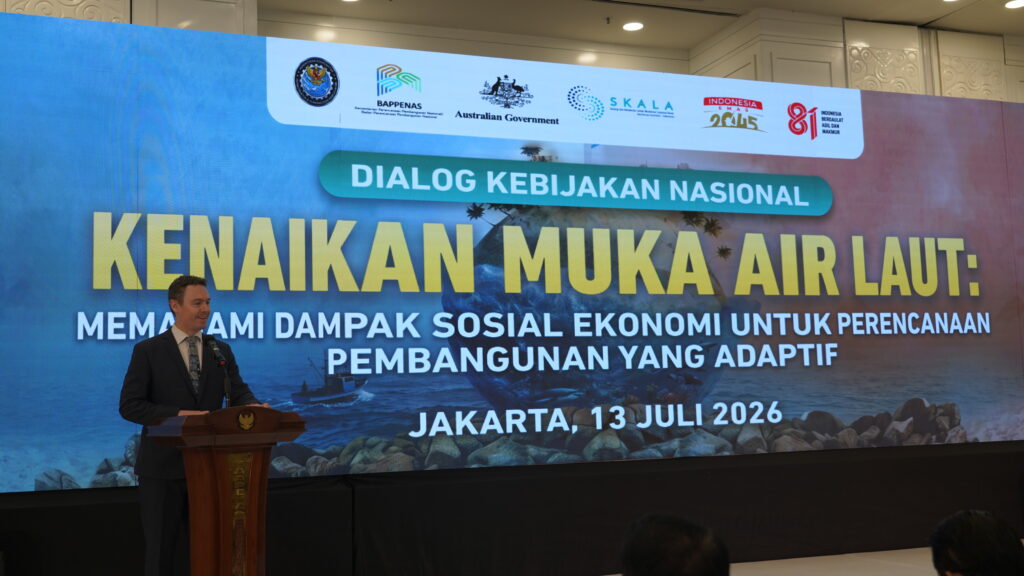
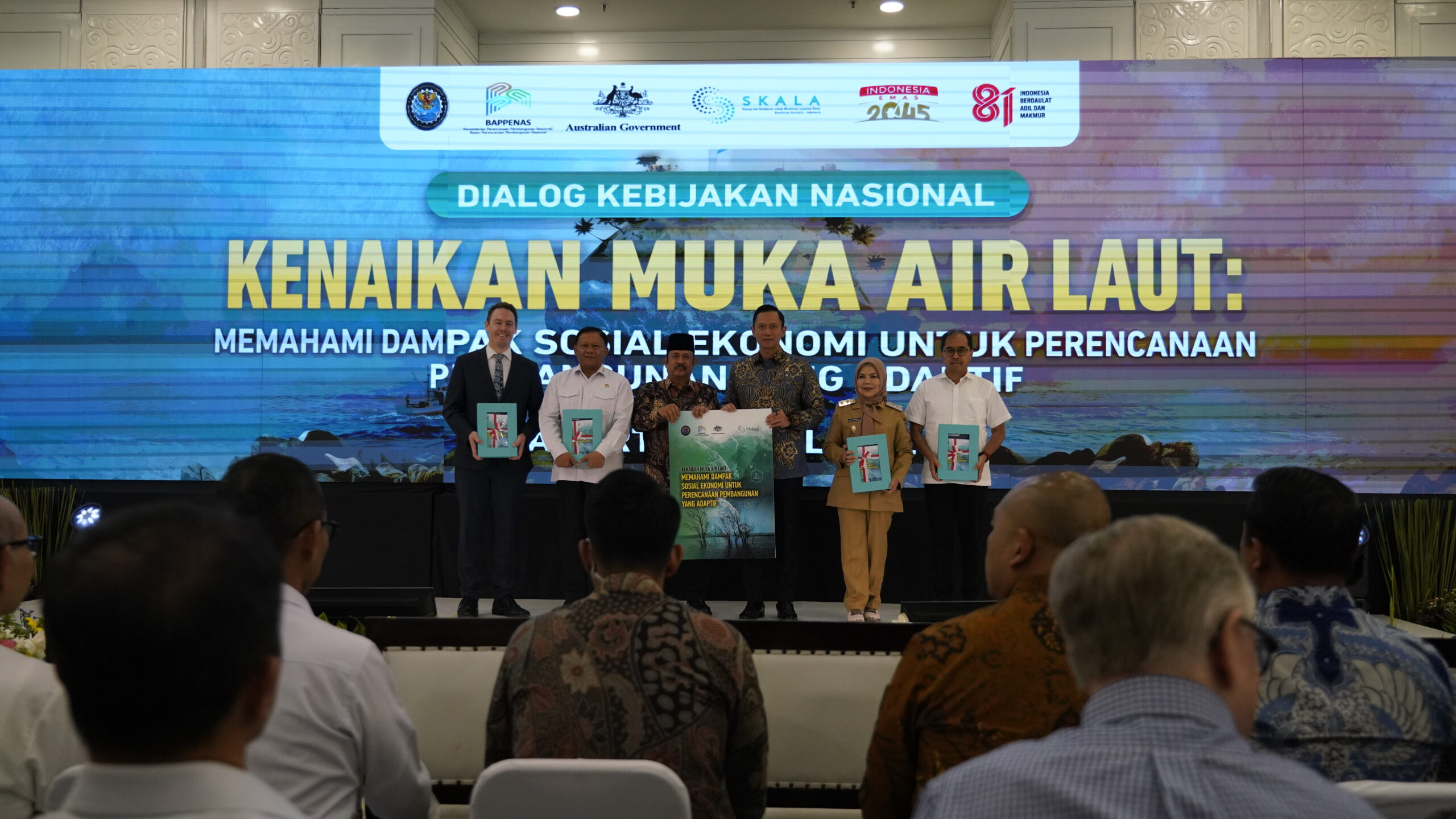
This issue was discussed at the National Policy Dialogue on Sea Level Rise, convened by the Ministry of National Development Planning/Bappenas and the Coordinating Ministry for Infrastructure and Regional Development in Jakarta on Monday, 13 July 2026.
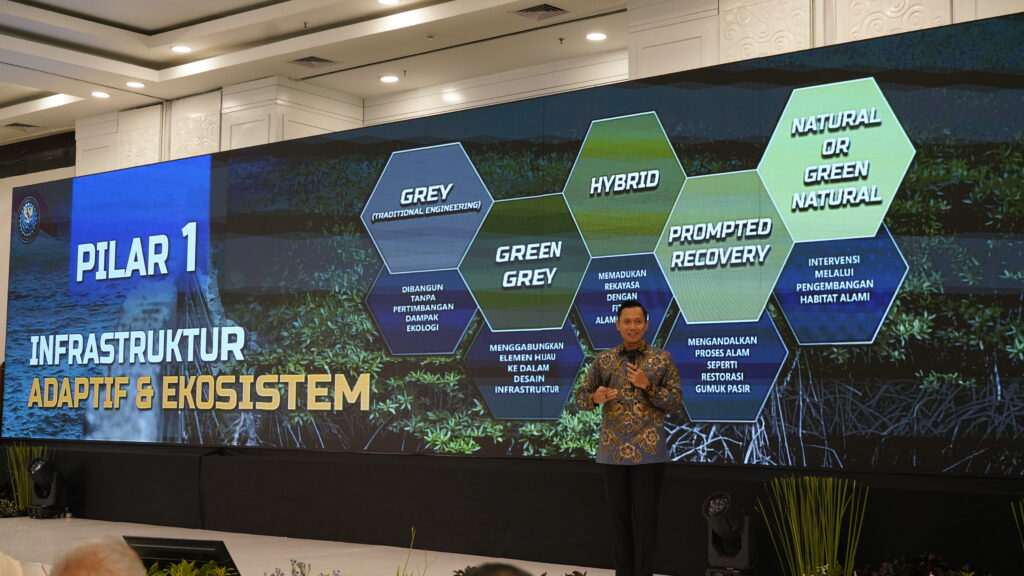
Coordinating Minister for Infrastructure and Regional Development Agus Harimurti Yudhoyono said that sea level rise is not only a technical issue related to building sea walls. It is also about protecting the future of millions of people living in coastal areas.
“This is a humanitarian issue, even a civilisational issue. What we are protecting is the future of coastal communities and future generations. Implementation on the ground can go in the wrong direction if it is not built on careful planning that is science-based, technologically feasible and financially accountable,” said Agus.
Protecting communities and social infrastructure
Minister of National Development Planning/Head of Bappenas Rachmat Pambudy highlighted the need for a comprehensive response. “It is clear that climate issues will affect physical infrastructure, but social infrastructure must also be addressed. Sea level rise caused by climate change also has a direct impact on people,” he said.
Coastal areas are important to Indonesia’s economy. The North Coast of Java, for example, is a major economic area that contributes around 27 per cent of national Gross Domestic Product. This makes early action important, both to reduce potential economic losses and to protect the people who live and work in these areas.
The government is continuing to develop a range of strategies, including controlling groundwater extraction, protecting coastal areas through sea wall development and working towards net zero emissions targets. These efforts must be supported by social protection and basic services that reflect the needs of communities in each area.
Using data to understand who is most at risk
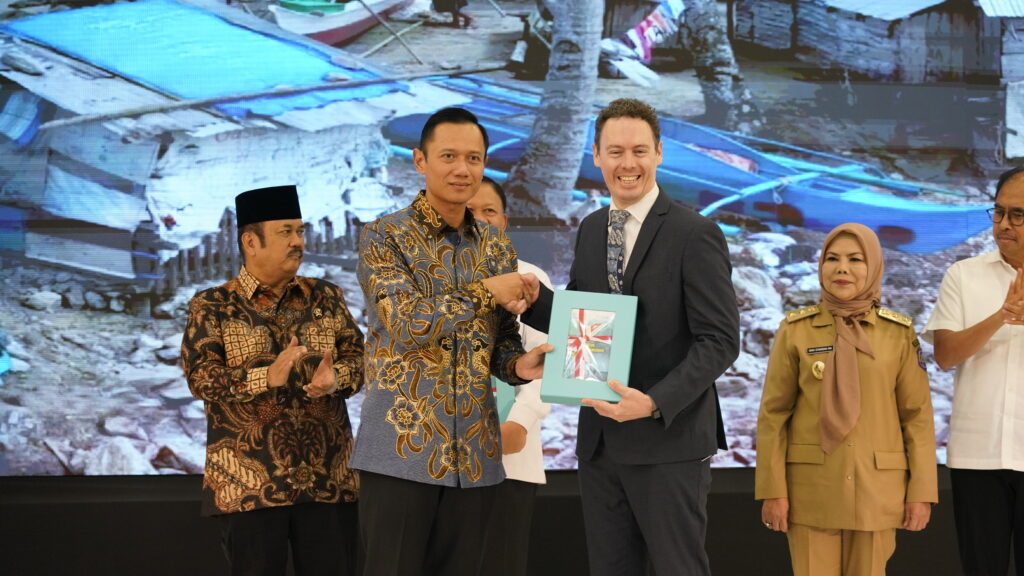
During the dialogue, Bappenas introduced the book Sea Level Rise: Understanding Socio-Economic Impacts for Adaptive Development Planning. The book presents data-based analysis developed through the Collaborative Planning and Integrated Data Analysis System (SEPAKAT).
The analysis combines information on areas that may be affected by sea level rise with socio-economic data from the National Socio-Economic Single Data (DTSEN). This helps the government understand which locations are at risk, and which people, livelihoods, basic services and public facilities may be affected.
The analysis presented in the book is expected to serve as a reference for ministries, agencies and local governments. It can help them integrate the socio-economic impacts of sea level rise into development planning and spatial planning documents.
Deputy for Community Empowerment, Population, and Employment at Bappenas, Maliki, explained that SEPAKAT can combine spatial data with population data by name and address. This information can be linked with data from different ministries and agencies, including data on schools, health facilities and other public infrastructure.
The analysis shows that sea level rise may affect different groups in different ways. Informal workers, people who depend on fisheries, female-headed households and people who are not yet covered by social protection need particular attention.
“Based on the analysis, at least 4,787 urban informal workers and 4,566 workers in the fisheries sector are (potentially) affected. What is critical is that 65.5 per cent of (potentially) affected female-headed households are not social assistance recipients, and more than one thousand vulnerable individuals are not yet covered by National Health Insurance contribution assistance,” said Maliki.
Maliki also emphasised that policies and infrastructure development in coastal areas need to consider the social and cultural context of local communities. Adaptation efforts should protect coastal areas without disrupting people’s livelihoods, social structures and ways of life.
Suraya, Chair of the Indonesian Anthropology Association, underlined the importance of involving affected communities in decision-making. She said that community participation should not stop at socialisation activities or be treated as an administrative formality. Instead, communities need to be involved from the early stages of planning, so that adaptation solutions reflect their needs, local knowledge and ability to respond to climate change.
Using socio-economic data and involving communities from the beginning can help ensure that adaptation policies are not applied in the same way everywhere. Policies need to reflect the specific conditions of each area.
Learning from Gorontalo
One province that has started to use climate impact analysis in its policy planning is Gorontalo. Vice Governor of Gorontalo Idah Syahidah Rusli Habibie said that the province has a long coastline and faces risks from tidal flooding and coastal erosion. These risks can affect settlements, clean water and sanitation.
“The potential impact of sea level rise affects access to basic services and requires an integrated policy response between government and development partners. We are formulating adaptation strategies through three main approaches: ecosystem-based green infrastructure, hard infrastructure such as coastal embankments and adaptive settlements,” said Idah.
The national policy dialogue was supported by SKALA (Sinergi dan Kolaborasi untuk Akselerasi Layanan Dasar), the Australia–Indonesia Partnership Program. Acting Deputy Head of Mission at the Australian Embassy in Jakarta, Tim Stapleton, said that the Australia–Indonesia partnership supports the government’s efforts to respond to the impacts of sea level rise on communities.
“Through the SKALA Program, Australia supports the Government of Indonesia to strengthen decentralised governance, evidence-based planning, data use and the delivery of basic services for poor and vulnerable communities most affected by climate change,” said Tim.
With stronger data, community involvement and coordination across sectors, adaptation policies can be designed in a more targeted way, reflect local conditions and better protect the communities most at risk.