


Papua Selatan Brings Stakeholders Together to Support Inclusive Education
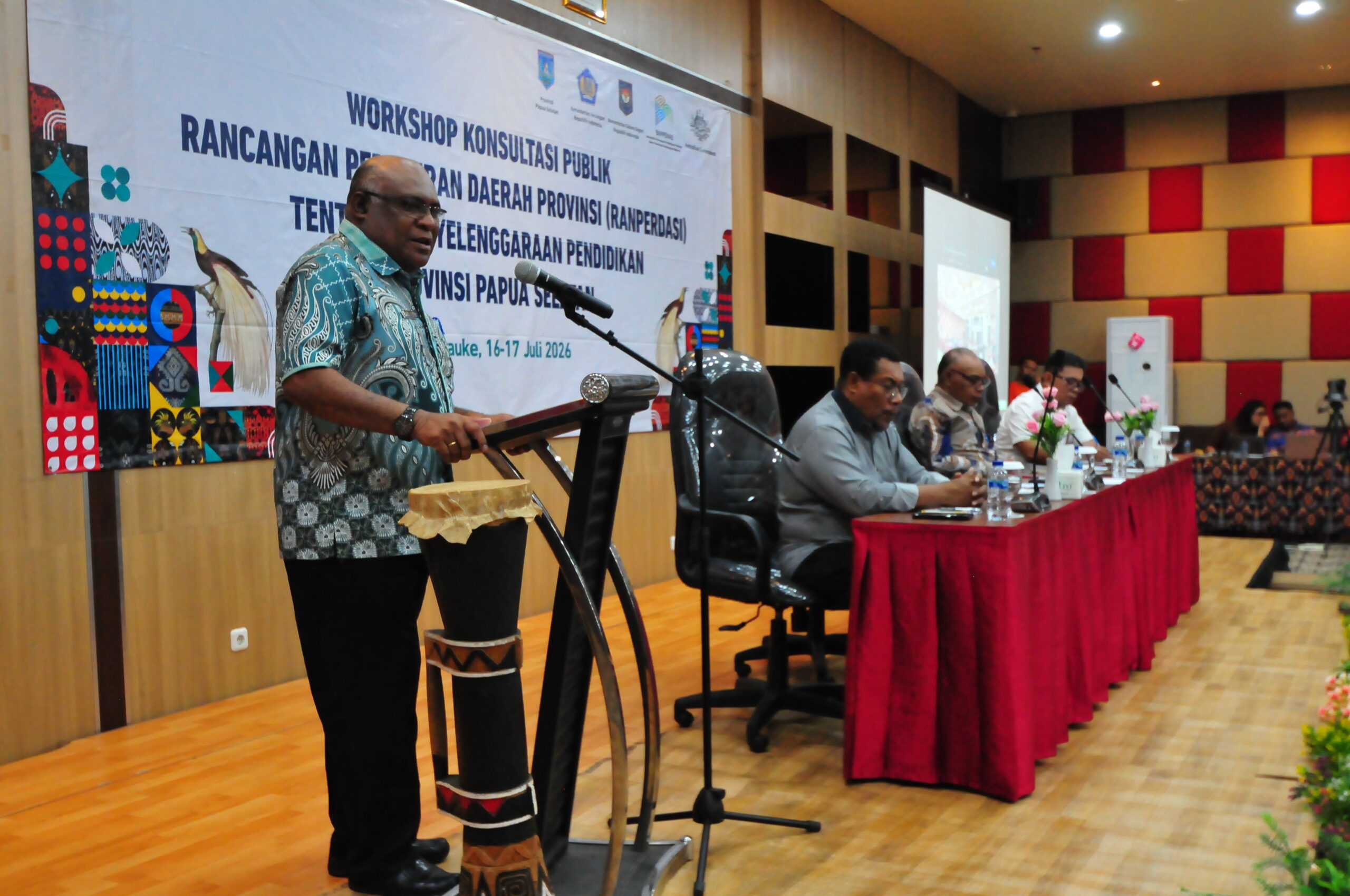
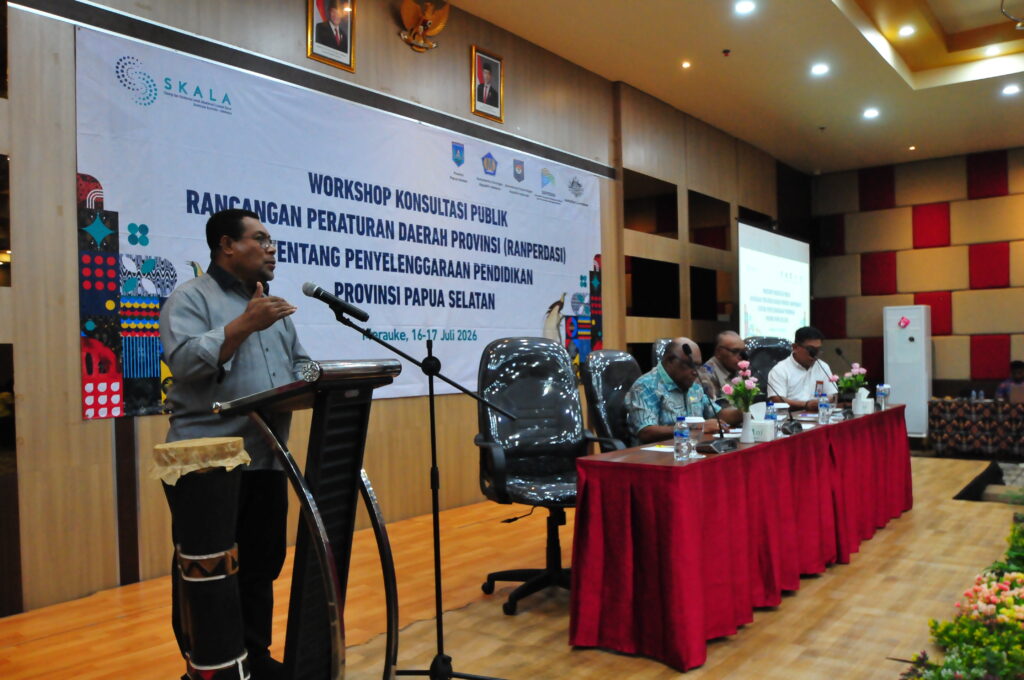
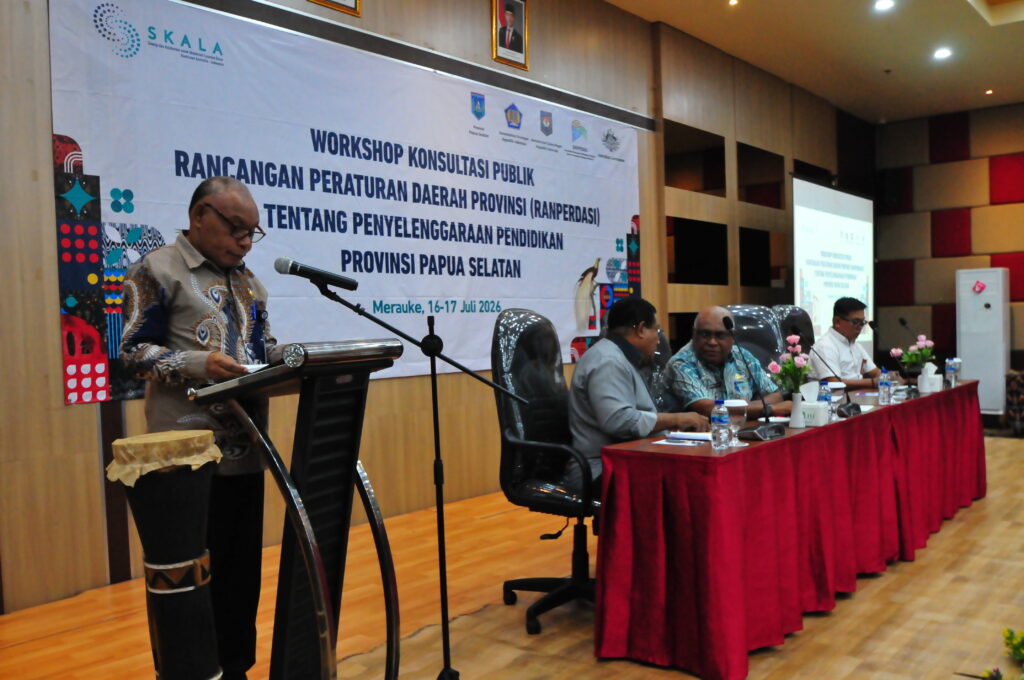
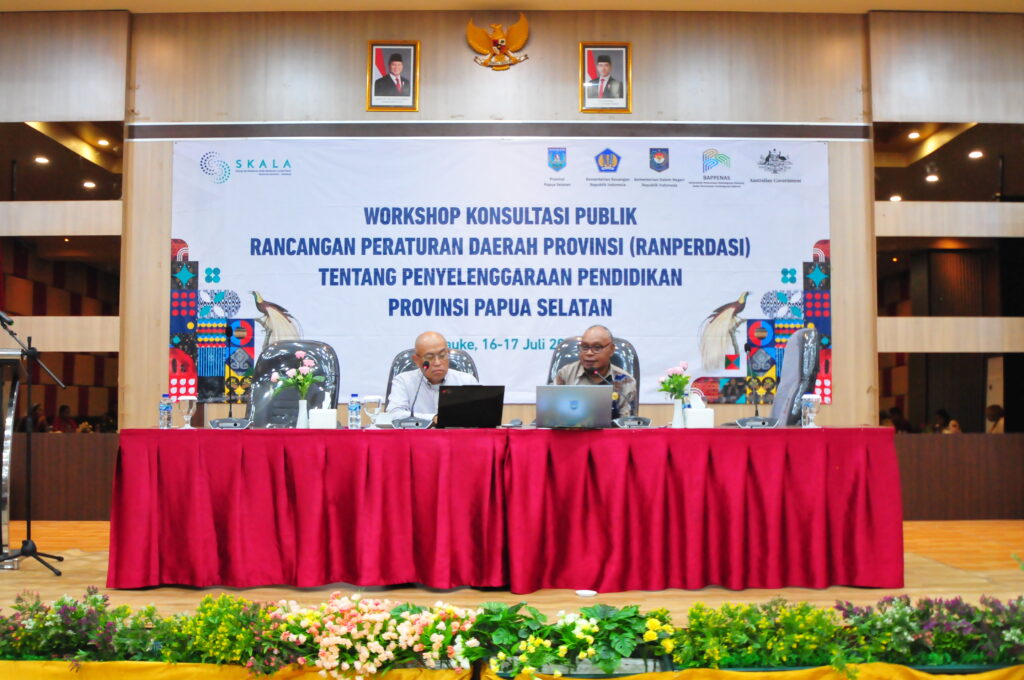
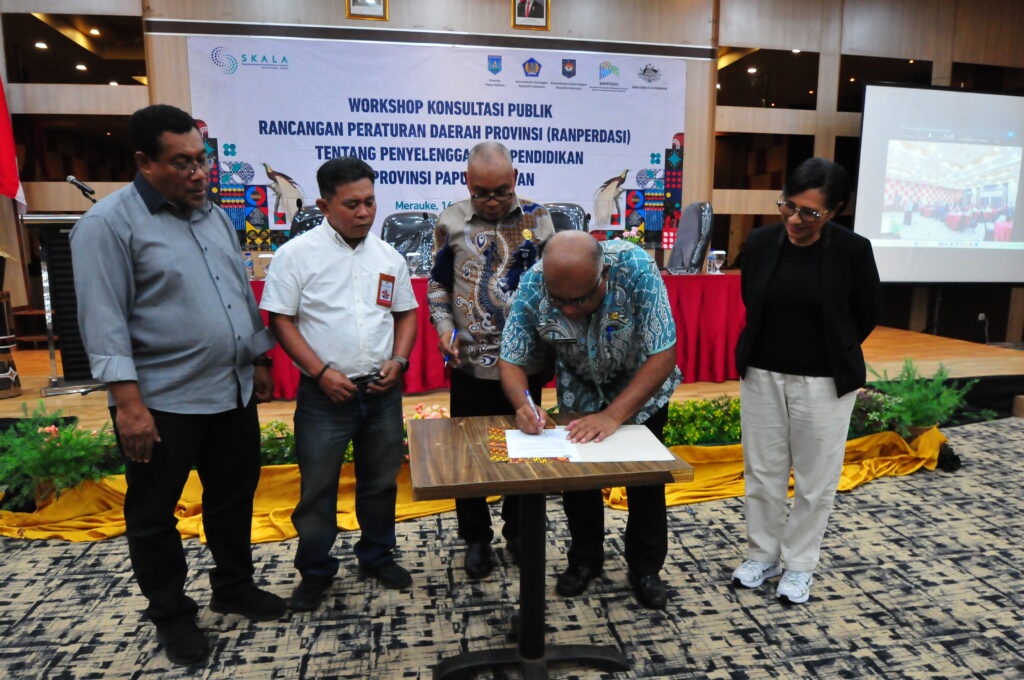
On 16–17 July 2026 in Merauke, the Papua Selatan Provincial Government – through its Education and Culture Office – held a public consultation on its Draft Provincial Regulation (Ranperdasi) on Education Administration.
The consultation aimed to strengthen the draft education regulation to ensure it meets the specific challenges facing education services in Papua Selatan. It sought to align the draft regulation with the province’s Regional medium-term development plan 2025–2029 (RPJMD) and Papua’s Special Autonomy policy, while reflecting the needs of communities in border and remote areas.
Education is one of the Papua Selatan Provincial Government’s key development priorities. The province’s RPJMD places particular emphasis on improving education, health and social welfare services – especially for Indigenous Papuans (Orang Asli Papua/OAP) and vulnerable groups – in ways that are equitable and inclusive.
Representing the Governor of Papua Selatan at the consultation was Assistant III in the Provincial Secretariat, Albert A. Rapami, who said education, alongside health, was essential to Papua Selatan’s development.
Rapami said the Ranperdasi would provide a strong legal basis for the provincial government to plan and implement education programs. He encouraged participants to provide substantive input to strengthen the draft regulation before it proceeded to the next stage of the legislative process.
Bringing different perspectives to the education planning
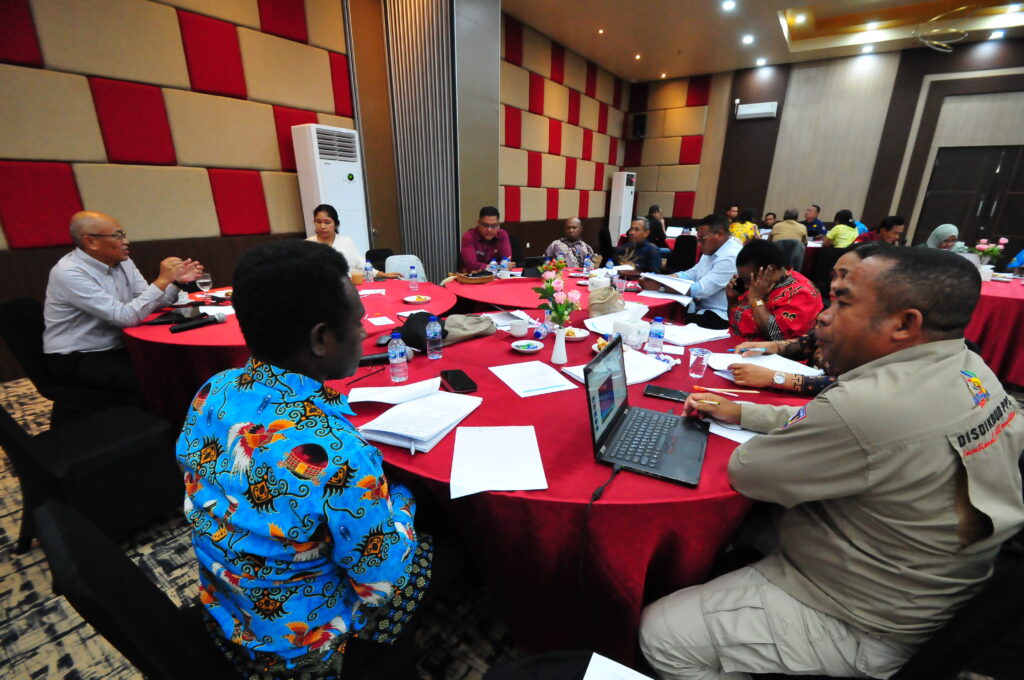
A total of 74 participants took part in the public consultation, representing provincial and district government agencies, customary institutions, education providers, disability organisations, universities and civil society organisations.
The involvement of diverse stakeholders was important to ensure the Ranperdasi reflects the real experiences and needs of communities in accessing education services.
The consultation opened with a report from Secretary of the Papua Selatan Provincial Education and Culture Office, Marthen Rumar, on the activity’s preparation and implementation. The consultation was organised by the Papua Selatan Provincial Government with support from SKALA, an Australia–Indonesia partnership program.
SKALA Senior Manager for the Papua Region, Julianus Septer Manufandu, said SKALA had supported the Papua Selatan Provincial Government for the past four years, including efforts to make basic services more inclusive.
“Through the mandate of Government Regulation No. 106 of 2021, we hope that no-one in Papua Selatan is left without access to education. Through this draft provincial regulation, we also hope that more people across Papua Selatan will be able to attend school,” he said.
Manufandu said the public consultation provided an opportunity to review the substance of the draft regulation and identify areas that needed strengthening, while also ensuring it responded to local conditions and community needs.
Responding to education challenges in Papua Selatan
Papua Selatan continues to face a number of challenges in delivering education services. These include children who don’t attend school; shortages and uneven distribution of teachers in remote areas; and a lack of coordination between formal and non-formal education services.
As a newly established province and an area hosting several National Strategic Projects, Papua Selatan also needs skilled human resources to support its long-term development.
Papua’s Special Autonomy framework under Government Regulation No. 106 of 2021 provides space for provincial governments to develop policies that better reflect local characteristics and community needs.
Four key areas for discussion to improve the regulation
During the two-day consultation participants joined thematic group discussions to examine key provisions of the Ranperdasi in more detail. The discussions focused on four main areas:
- Education management, including education units, curriculum and local languages.
- Education resources, including teachers and education infrastructure.
- Affirmative measures and education data, including services for people with disability, affirmative measures for OAP and education data systems.
- Governance, participation and education financing, including the role of communities, customary institutions, faith-based organisations, universities and education financing.
The first day’s discussions culminated in each thematic group presenting its findings in a plenary session on the second day. Participants from different sectors were then able to provide further input based on conditions and experiences on the ground. The overall feedback was then consolidated into recommendations to strengthen the Ranperdasi.
Next steps
The Papua Selatan Provincial Government will use the recommendations from the public consultation to refine the Ranperdasi before it moves to the next stages of harmonisation and legislative deliberation.
Two key follow-up actions are planned. First, the draft regulation will be finalised by incorporating recommendations from the public consultation. Second, further consultation with relevant national ministries and agencies is planned for this month (August 2026).
Through this participatory process, the Provincial Government aims to establish a stronger regulatory foundation for education services that are more inclusive, equitable and responsive to the needs of communities across the province.