


New Learning Videos Series Supports Gender-Responsive Development
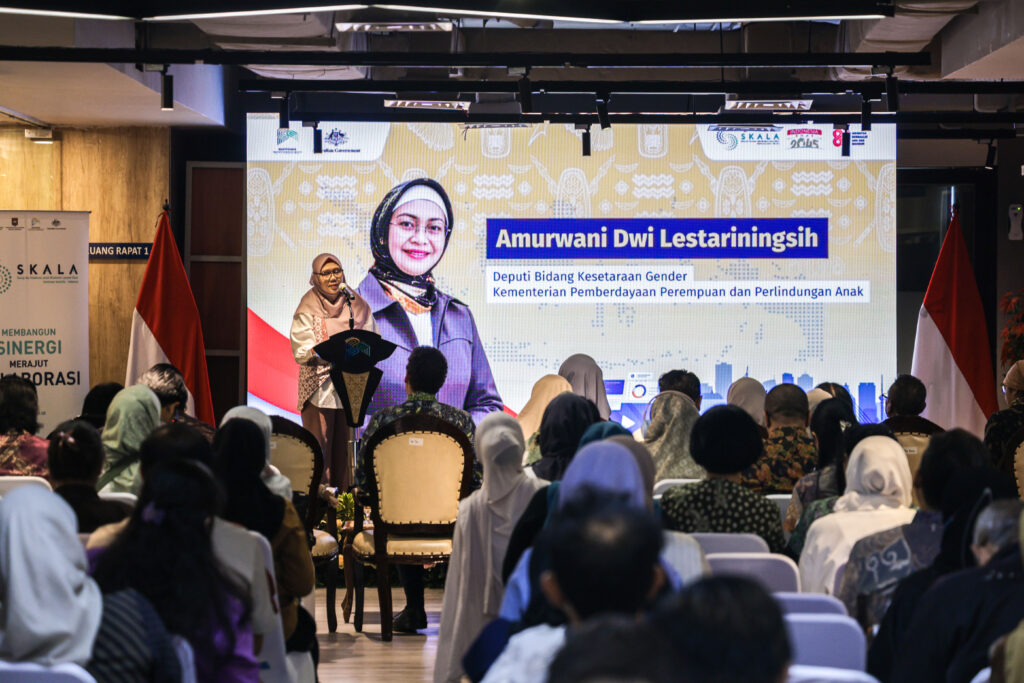
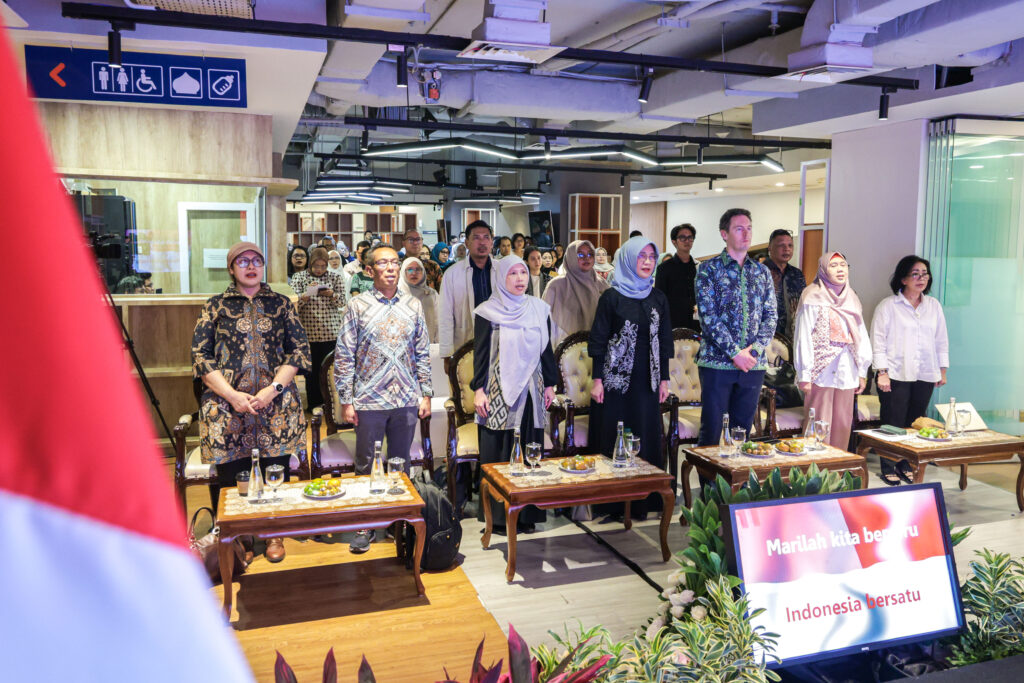
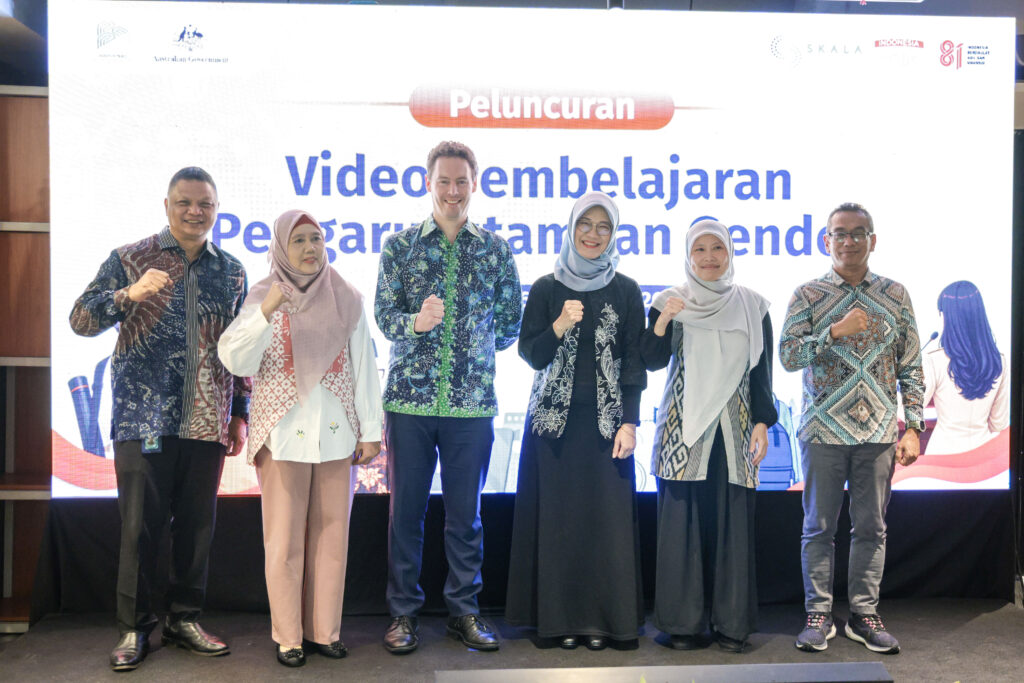
The Ministry of National Development Planning (Bappenas) has launched a series of Gender Mainstreaming (Pengarusutamaan Gender/PUG) learning videos to support development stakeholders to apply a gender perspective to their practice. The launch, held in Jakarta on Wednesday 26 August, attracted 200 participants from ministries and government agencies, local governments, civil society organisations, research institutions, universities, development partners and the media.
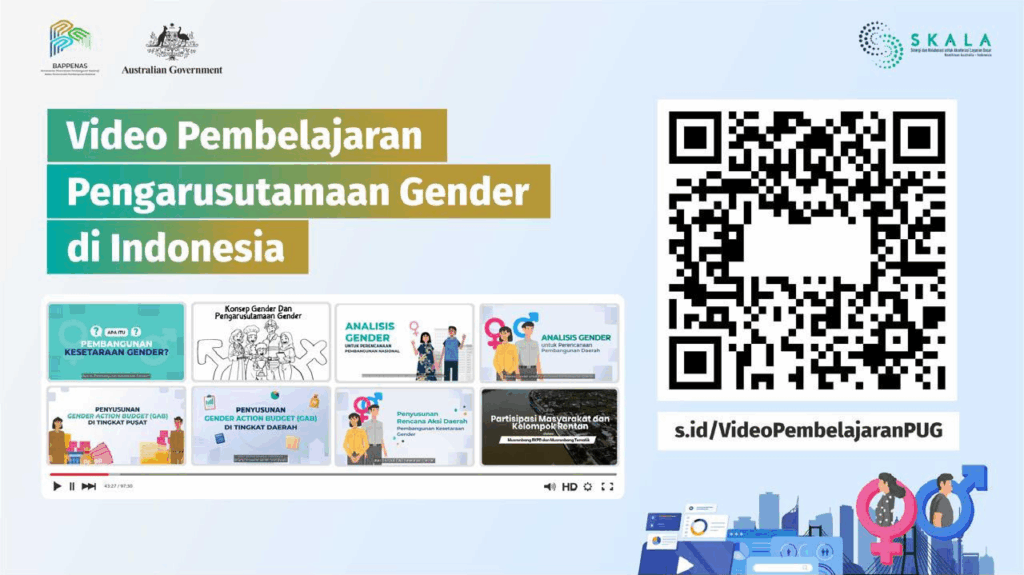
The learning series consists of eight themes covering gender equality policies, gender concepts and mainstreaming, gender analysis at national and subnational levels, Gender Action Budget at central and local government levels, gender equality in regional action plans, and community participation.
The materials are designed for flexible learning delivery and can be accessed at the official platform of Bappenas’ Centre for Education, Training and Development of Development Planners (Pusbindiklatren). The videos are expected to help strengthen the understanding and application of gender mainstreaming at both national and subnational levels.
Integrating a gender perspective into development
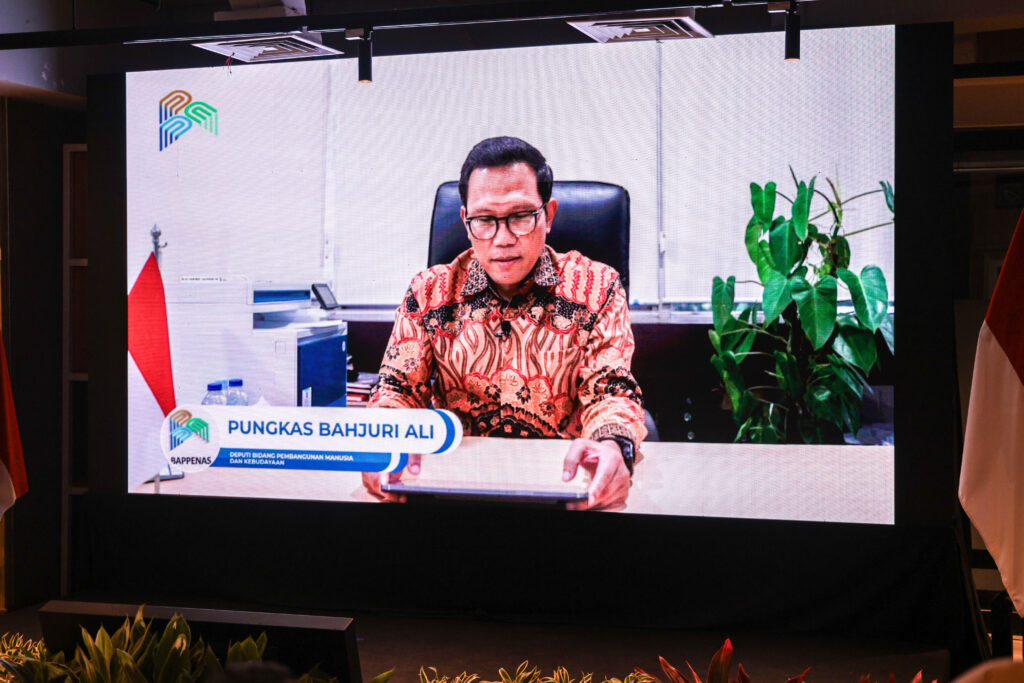
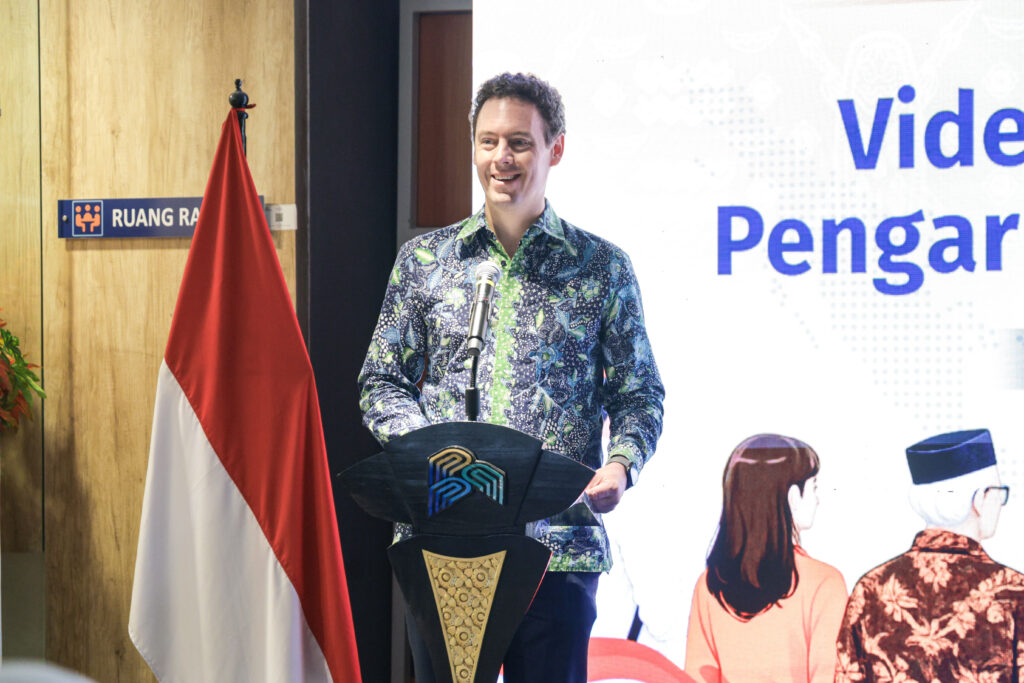
Deputy for Human Development and Cultural Affairs at the Ministry of National Development Planning/Bappenas, Pungkas Bahjuri Ali, emphasised that gender mainstreaming is an integral part of the development process, rather than a separate agenda.
“Gender mainstreaming is not a sectoral agenda, but an integral part of how we plan and implement development,” Mr Ali said in his opening remarks.
According to Mr Ali, a gender perspective needs to be applied consistently, from understanding development challenges and preparing plans and budgets, through to implementation, monitoring and evaluation. He said the learning videos were a means to integrate gender mainstreaming into development practice so that decisions and programs became more responsive to people’s needs.
“The success of the PUG learning videos we are launching today should not only be measured by how many people access them, but by the extent to which the knowledge gained is applied in their work and contributes to improving the quality of development policies and programs,” he said.
Applying gender mainstreaming to bridge gaps in development
The importance of changing how gender mainstreaming is understood and applied was also highlighted by Deputy for Coordination of Family and Population Quality Improvement at the Coordinating Ministry for Human Development and Cultural Affairs, Woro Srihastuti Sulistyaningrum.
“We need to shift the paradigm from seeing gender mainstreaming as an additional activity to making it part of how development is carried out,” Ms Sulistyaningrum said.
She explained that the ultimate objective of gender mainstreaming is to reduce gaps between women and men to the access, participation, control and benefits of development. This approach is crucial in the context of Indonesia’s long-term development goals: integrating a gender perspective helps to ensure that development goes beyond supporting growth, to ensuring the benefits of growth are shared more fairly across society.
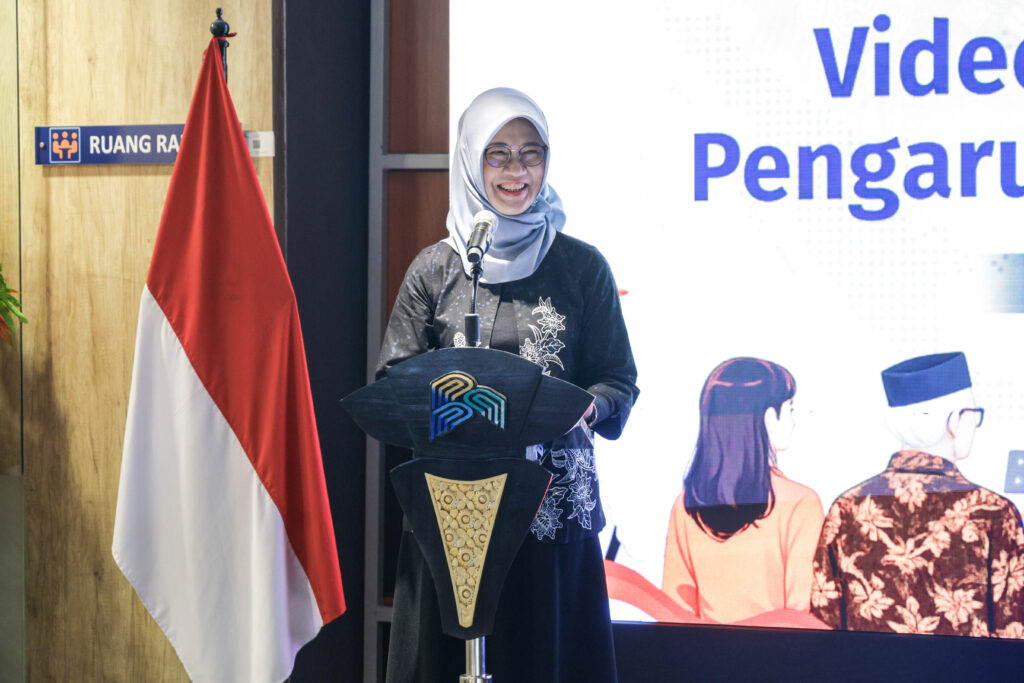
Assistant Deputy for Gender Equality Policy Formulation and Coordination at the Ministry of Women’s Empowerment and Child Protection, Siti Mardiah, said digital learning was integral to building a more efficient and accessible gender mainstreaming learning ecosystem.
“With the need to use budgets more effectively, we cannot always rely on face-to-face training,” she said.
According to Ms Mardiah, the learning content is part of a broader initiative to create a digital gender mainstreaming learning ecosystem, with plans for it to be integrated into a Learning Management System. This will enable use of the materials by a wider range of ministries, government agencies and local governments.
The digital format also responds to practical challenges faced by government institutions, including geographic distance and staff mobility. The videos can be accessed independently when needed, helping to maintain basic knowledge on gender mainstreaming even when staff rotations or transfers take place.
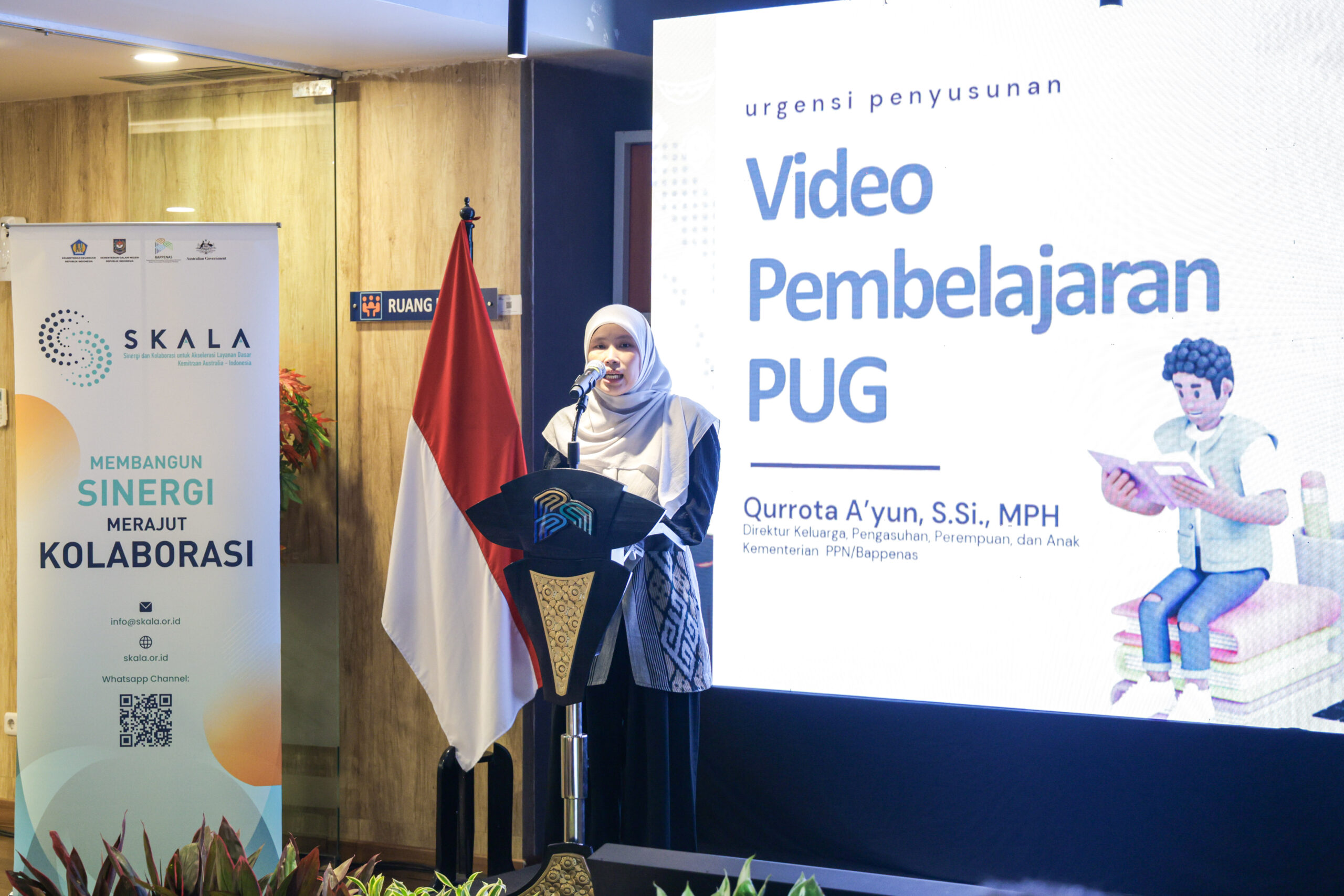
Director for Family, Parenting, Women and Children at the Ministry of National Development Planning/Bappenas, Qurrota A’yun, said the videos aligned with the gender equality priorities in the 2025–2029 National medium-term development plan (RPJMN). These priorities include efforts to:
- Improve women’s access to health and education services
- Strengthen women’s leadership in decision-making
- Increase women’s participation in the economy and workforce
- Protect women’s rights and prevent violence
- Strengthen governance and institutionalise gender mainstreaming in development processes.
Ms A’yun said gender equality was an important part of realising Indonesia’s full development potential.
“The demographic dividend can become a development strength when women and men have equal opportunities and quality of life,” she said.
Translating gender mainstreaming knowledge into practical implementation
The event’s panel discussion highlighted several challenges in translating learning into practice. Head of Bappenas’ Centre for Planners’ Development, Education and Training, Wignyo Adiyoso, emphasised the need to connect foundational learning with more in-depth competency development.
“These videos provide fundamental knowledge that should be followed by more in-depth technical guidance to help address differences in access to knowledge across regions,” Mr Adiyoso said.
The panel discussed use of a four-step Gender Analysis Pathway (GAP) to simplify gender analysis for planners working in technical sectors (where such considerations can be outside their area of expertise).
The experience of the Special Region of Yogyakarta shows that leadership is a critical factor to encourage the application of gender mainstreaming in technical sectors. Support from senior leaders can create space for local government agencies to integrate a gender perspective into programs that may not traditionally be associated with gender issues, including disaster management.
This point was shared by a speaker in the panel discussion, Suly Kumala Susanto from the Special Region of Yogyakarta’s Office for Women’s Empowerment, Child Protection and Population Control (DP3AP2).
Strengthening the Australia–Indonesia partnership
Development of the eight learning videos was supported by SKALA ( Sinergi dan Kolaborasi untuk Akselerasi Layanan Dasar), an Australia–Indonesia partnership program.
Minister Counsellor for Governance and Human Development at the Australian Embassy in Indonesia, Tim Stapleton, emphasised that strengthening capacity is essential to ensuring policies are translated into practice.
“Strong policies will only be effective when they are supported by the practical knowledge of those responsible for implementing them,” he said.
Mr Stapleton said SKALA supported gender-responsive and inclusive development by working with both national and subnational governments in Indonesia. He also pointed out that SKALA was working alongside INKLUSI, a companion Australia–Indonesia partnership program, to support the active participation of civil society organisations in advancing more equitable development and ensuring that no-one is left behind.
This launch also reinforces the role of learning as a bridge between knowledge and implementation. Gender mainstreaming can make a meaningful difference when a gender perspective is consistently integrated throughout the development process—from analysis, planning and budgeting, to implementation, monitoring and evaluation—so that development policies and programs can deliver more equitable benefits for women and men.