


Maluku Strengthens Gender Mainstreaming from Learning to Implementation
Gender mainstreaming, or Pengarusutamaan Gender (PUG), is intended to ensure that development policies and programmes respond to the different needs of women, men, children, persons with disabilities, older people and other vulnerable groups. In practice, however, implementing PUG requires more than policy commitment. It depends on clear guidance, reliable data, cross-sectoral coordination and consistent oversight throughout the development planning and budgeting cycle.
In Maluku, the implementation of PUG has gained a stronger foundation through Regional Regulation Number 7 of 2024 concerning the Implementation of Gender Mainstreaming. The regulation provides an important basis for integrating gender perspectives across the seven stages of regional development: planning, budgeting, implementation, monitoring, evaluation, reporting, and oversight. However, the provincial government continues to face challenges in ensuring that PUG is applied consistently across sectors.
One of the main issues is that gender-responsive planning and budgeting is still often viewed as an additional administrative requirement, rather than as a tool to improve the quality and inclusiveness of development programmes. Several Regional Apparatus Organisations (OPDs) still require stronger understanding and technical support to integrate gender perspectives into their planning and budgeting processes.
The Maluku Provincial Office of Women’s Empowerment and Child Protection (DP3A), as one of the main drivers of PUG implementation, also requires stronger support from other OPDs. Without wider cross-sectoral ownership, gender mainstreaming risks being seen as the responsibility of one agency, rather than a shared responsibility across government.
Another challenge is the need for standard technical guidance for PUG Working Groups and Focal Points. Without clear guidance, gender mainstreaming can be applied differently across sectors, making it more difficult for the Inspectorate and other oversight bodies to assess whether gender-responsive planning and budgeting has been meaningfully implemented.
To address these challenges, the Maluku Provincial Government conducted a comparative study in the Special Region of Yogyakarta (DIY) in February 2026. The study visit was facilitated by the Directorate of Family, Parenting, Women and Children of the Ministry of National Development Planning/Bappenas, with support from SKALA (Sinergi dan Kolaborasi untuk Akselerasi Layanan Dasar), an Australia–Indonesia Partnership program. The visit provided practical lessons on how gender mainstreaming can be institutionalised through regulations, technical systems, data, monitoring and accountability mechanisms.
Consistent regulations
The first lesson from DIY was the importance of consistent regulatory support. Maluku participants observed that DIY has a comprehensive set of supporting regulations, including regional regulations, governor regulations and circular letters from the regional secretary. These instruments provide a clear mandate for OPDs to prepare gender-responsive planning documents each year.
Streamlined systems and data
Christin Pratami Jesaja from the Human and Community Development Division of Maluku Bappeda noted that DIY’s approach is also supported by the Sengguh System, which helps ensure that PUG implementation proceeds systematically, from the preparation of Gender-Responsive Budgets to performance assessment.
“DIY also has the Sengguh System in place, ensuring that the implementation of PUG proceeds systematically, from the preparation of Gender-Responsive Budgets through to performance assessment. This not only streamlines the process but also ensures that PUG implementation is continuously monitored,” she explained.
Another important lesson was the role of sex-disaggregated data. In DIY, data is used as the basis for planning, budgeting, monitoring, and evaluation. This helps OPDs identify who is being reached, who may be excluded, and what adjustments are needed to make programmes more responsive to different community needs.
Strengthened oversight
The third lesson was the importance of stronger oversight and feedback. Selfi Ivakdalam, Assistant Inspector for Region I at the Maluku Inspectorate, observed that DIY’s indicators and supporting data are clearly reflected in planning and budgeting documents. This makes it easier for the Inspectorate to review documents, identify gaps, and provide practical feedback to OPDs.
“The DIY Government conducts periodic evaluations by issuing performance report cards every three months. The presence of a clear reward and punishment system encourages OPDs to compete in delivering innovations,” Selfi explained.
Implementing the lessons
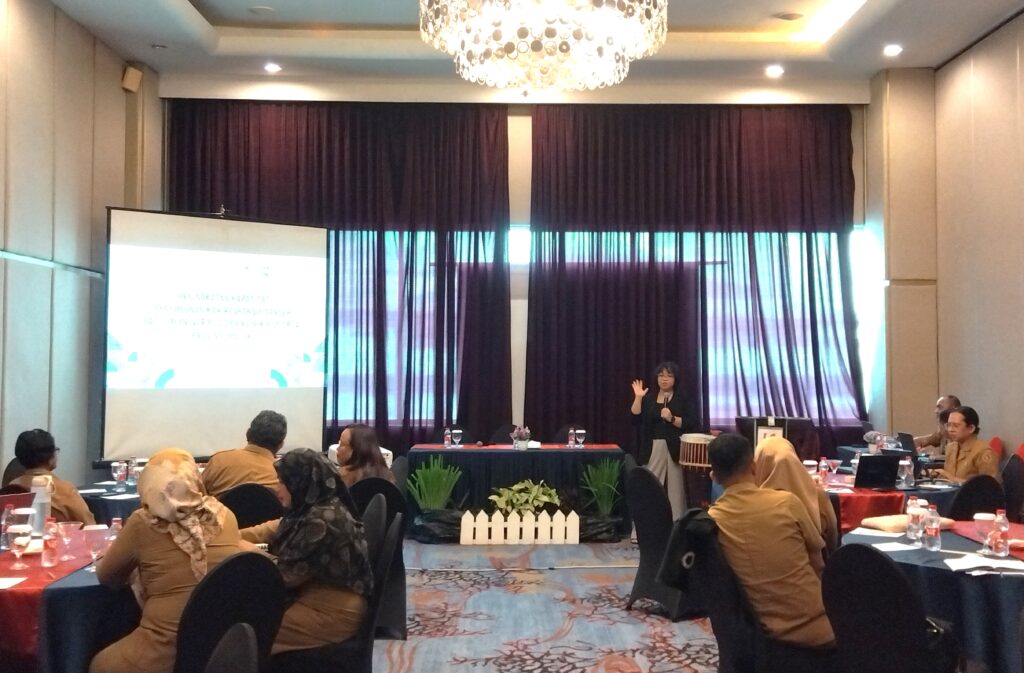
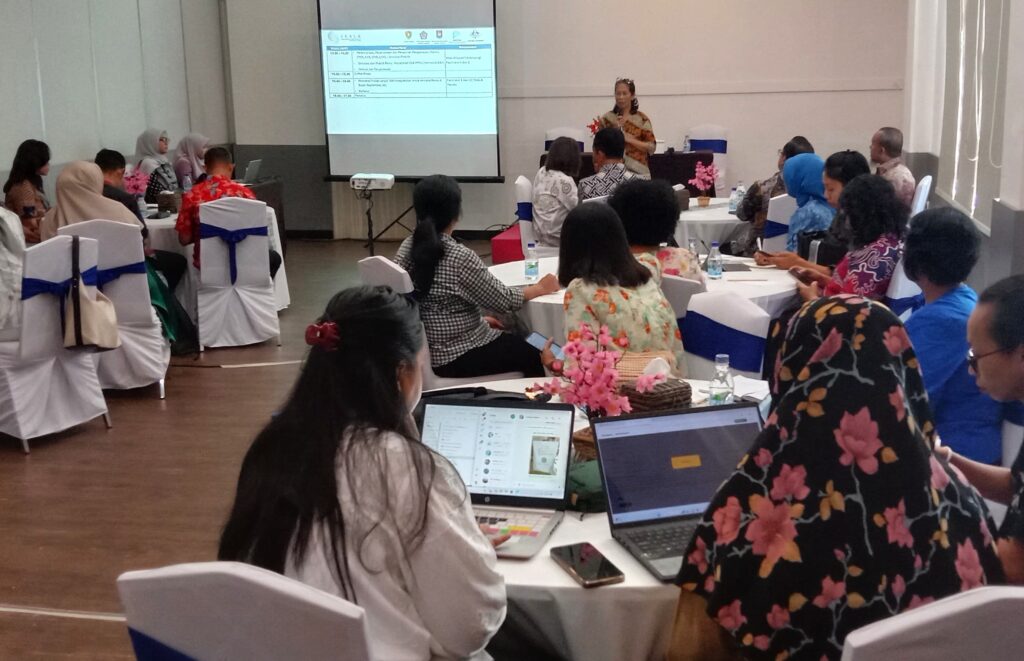
Following the comparative study, Maluku has begun translating these lessons into follow-up actions. In March 2026, the provincial government convened the Maluku Province PUG Technical Team Coordination Workshop. The workshop reviewed lessons from DIY while strengthening the roles of the Technical Team and relevant OPDs in implementing PUG across the regional development cycle.
The workshop helped reinforce that PUG implementation requires shared responsibility across sectors. It focused on strengthening the application of gender-responsive budgets, improving coordination among OPDs, and supporting progress on regional development indicators, including efforts to increase the Gender Development Index and reduce the Gender Inequality Index.
The next step is to strengthen the capacity of key implementers and stakeholders (PUG Driver Team and the Maluku Provincial DP3A PUG Clinic) to support OPDs in preparing gender-responsive planning and budgeting for the 2027 Regional Development Work Plan. This capacity building is expected to help civil servants provide more practical assistance to OPDs in reviewing and improving planning and budgeting processes.
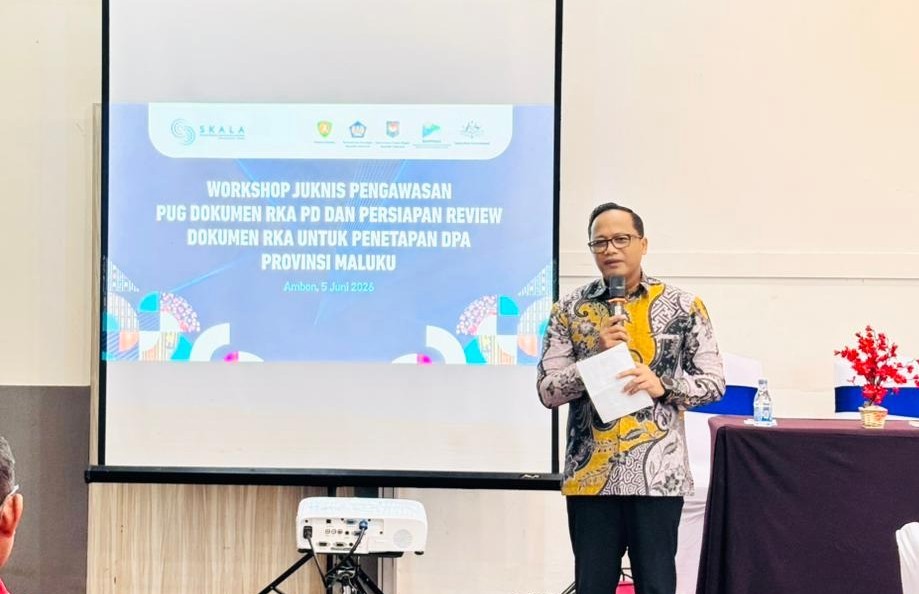
In earlyJune 2026, the Maluku Provincial Government held a workshop on technical guidelines for PUG oversight within Regional Apparatus Work Plan and Budget documents. This activity aimed to strengthen the capacity of the Government Internal Supervisory Apparatus at the Maluku Provincial Inspectorate to supervise gender-responsive planning and budgeting more effectively.
These follow-up actions show that Maluku is moving from learning to implementation. The lessons from DIY are being adapted into practical steps to strengthen technical guidance, improve OPD coordination, support better use of data and make oversight more consistent.
This agenda is aligned with the Third Mission of Sapta Cipta Lawamena (The Governor of Maluku’s Seven Priority Programmes (2025–2030), which includes gender equality and the empowerment of women, youth, and persons with disabilities as part of Maluku’s broader human development priorities. As Maluku continues to strengthen coordination across sectors, PUG is expected to become a more practical part of planning and budgeting processes, helping ensure that development plans and programmes better reflect the different needs and experiences of the communities they serve.