


Maluku Launches “Lawamena” to Strengthen Data-Driven Development
A new data portal is helping governments in Maluku deliver services to communities scattered across hundreds of islands.
Delivering development and public services to communities across a province of hundreds of far-flung islands, atolls and volcanic peaks is no simple task. Governments need accurate, accessible and integrated data to ensure development programs reach those who need them most. Maluku is one such province.
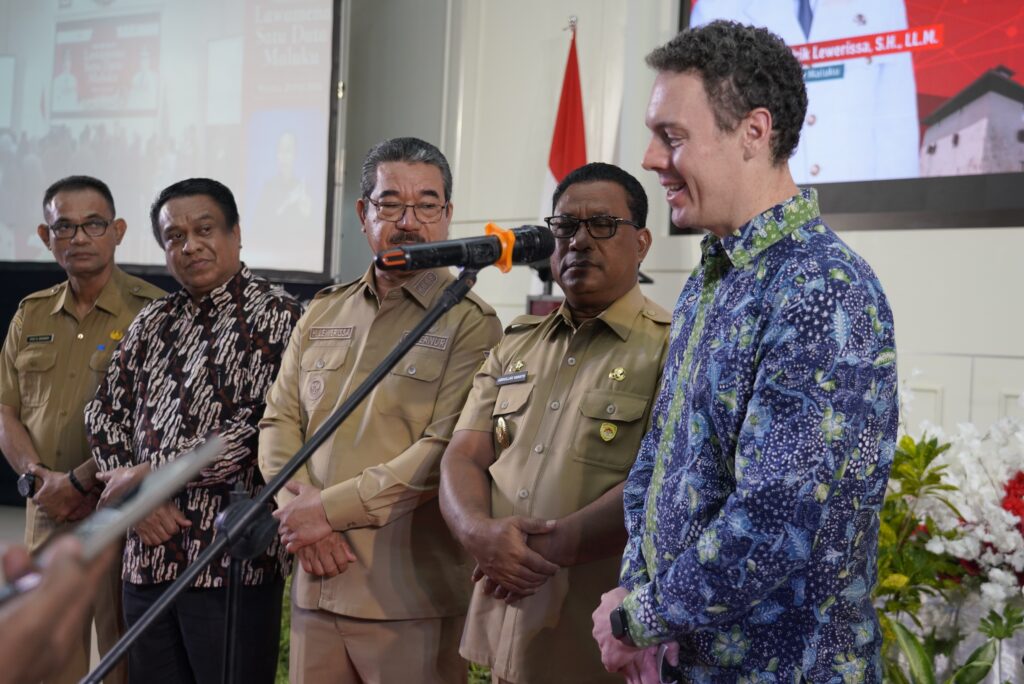
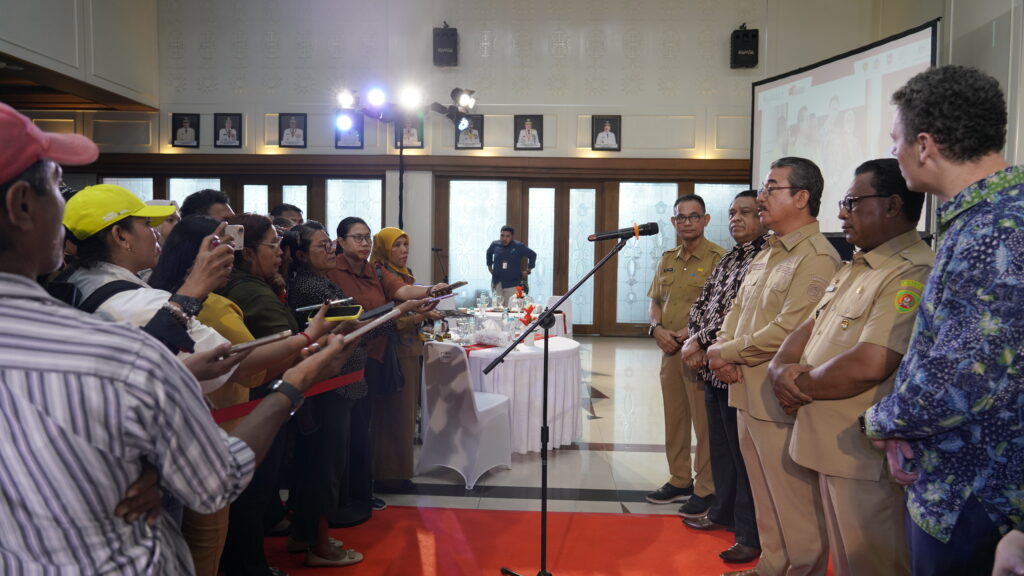
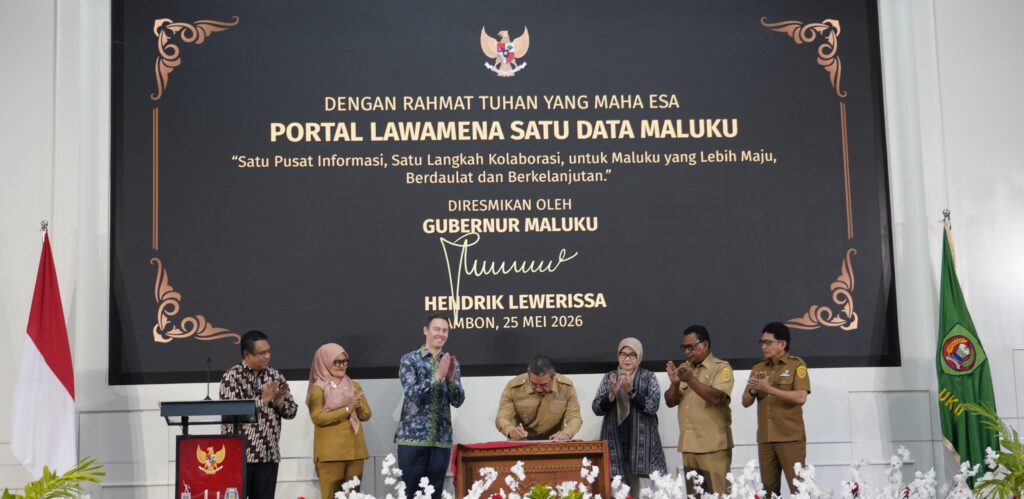
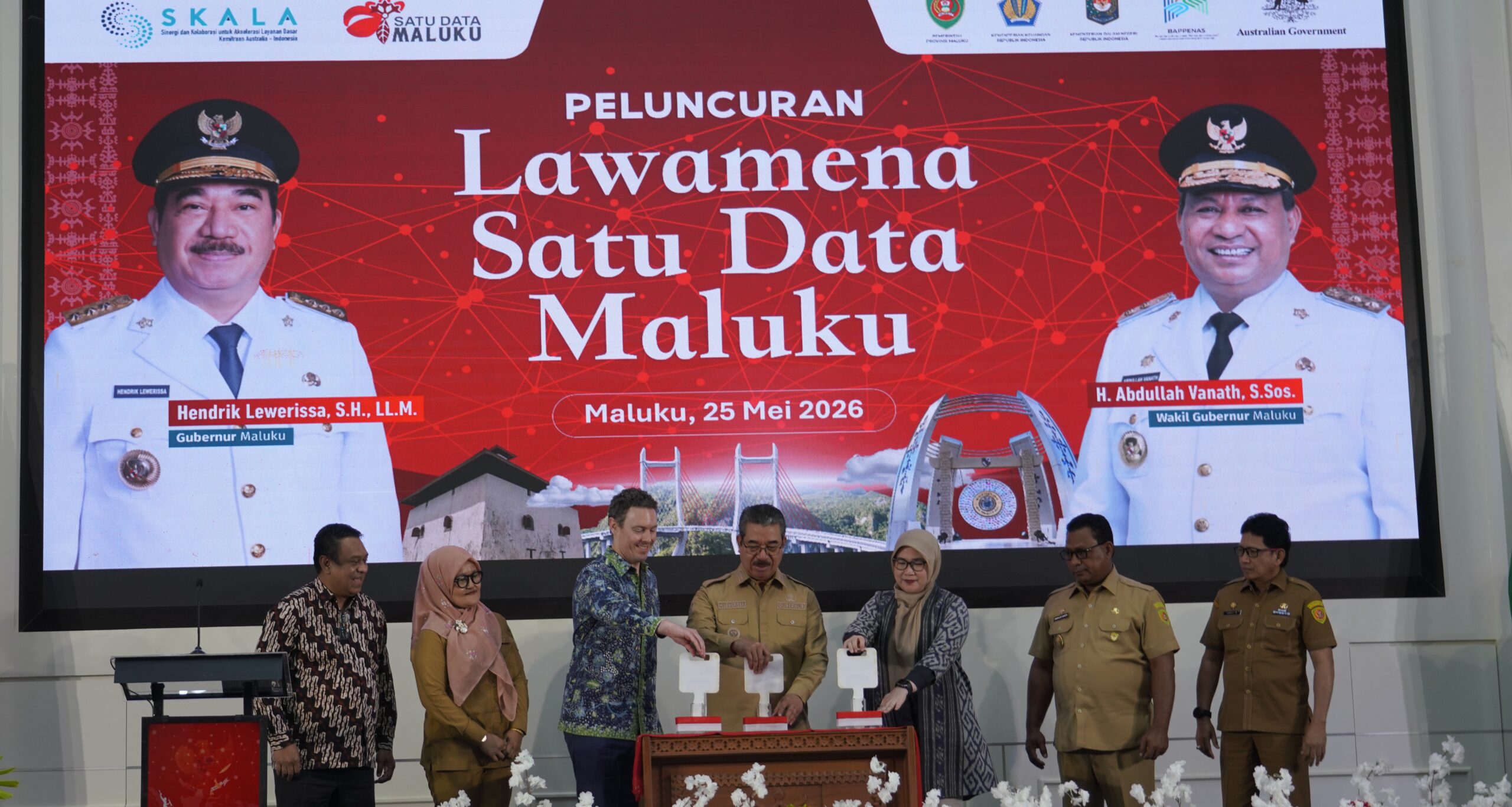
To address this challenge, the Government of Maluku Province launched the Lawamena Maluku One Data Portal on 15 May 2025 at the Governor’s Office in Ambon. Drawn from Malukan culture, Lawamena signifies the spirit of shared purpose, capturing the portal’s mission to unite fragmented government data into a single platform and contributing to One Data Indonesia, the national framework for integrating and sharing government data.
The portal’s launch marks an important step forward in evidence-driven development planning and decision-making across the province, addressing long-standing challenges including disconnected datasets, incompatible data standards and limited data-sharing between institutions.
Lawamena includes an Executive Dashboard, allowing provincial officials to monitor development indicators, population data and daily staple commodity prices. The dashboard helps decision-makers make informed decisions, respond quickly and tracks progress on the Governor’s priority programs, including Manggurebe Bikin Bae Rumah – working together to fix homes.
Responding to the challenges of an archipelagic province
The data governance challenges facing provinces with dispersed island geographies were highlighted at the launch by Dini Maghfirra, Executive Director of One Data Indonesia at the National Development Planning Agency (Bappenas). Development planning that relies on incomplete or disconnected data, Dini said, risks creating disparities in access to basic services across Maluku’s many islands. Stronger data interoperability and integrated systems are therefore essential to help governments better understand local needs and allocate resources effectively.
‘With the launch of Lawamena Maluku One Data, Maluku has a valuable opportunity to become a national example of how an archipelagic region can overcome geographical challenges through strong, inclusive and responsive data governance,’ she said.
Driving subnational integration
In a virtual address, Indonesia’s Deputy Minister of Home Affairs, Bima Arya Sugiarto, emphasised that Lawamena is not merely a data collection initiative, but part of a broader effort to transform how governments use data in policymaking and public service delivery.
Sugiarto encouraged regency and municipal governments across Maluku to strengthen data connectivity with the provincial government so that development planning can be more cohesive, consistent and beneficial across all levels of government.
Better data for more inclusive development
Speaking at the launch, Tim Stapleton, Minister Counsellor for Governance and Human Development at the Australian Department of Foreign Affairs and Trade, said data plays a critical role in helping governments understand the needs of different groups and locations across a dispersed province like Maluku.
‘Better data is not only about efficiency. It is also about inclusion. It helps ensure that women, people with disabilities, vulnerable groups and communities in remote areas are visible within the system and are included in development processes,’ he said.
Stapleton added that the Australian Government highly values its partnership with the Government of Indonesia, including the Australia-Indonesia Partnership Program, SKALA (Synergy and Collaboration for the Acceleration of Basic Services), which supports stronger data governance and more inclusive planning systems at the subnational level.
‘We see Maluku as an important example of how local governments can translate the national One Data agenda into practical systems that strengthen planning, coordination, and public service delivery,’ he said.
Building a culture of evidence-based governance
Governor of Maluku, Hendrik Lewerissa, said that future development planning in Maluku must be grounded in accurate and reliable data. Data, he said, has become a fundamental component of effective governance, enabling governments to design policies that are timely, efficient and responsive to community needs.
‘We want to build a new bureaucratic culture in Maluku, a culture that is driven by data. Development cannot rely solely on intuition; it must be guided by precision,’ he said.
The Governor outlined the breadth of datasets integrated into the Lawamena Portal, spanning governance, education, health and stunting, poverty, fisheries and marine affairs, agriculture, forestry, mining, investment, tourism, village development and customary communities.
He called on all provincial agencies, regents and mayors across Maluku to actively support Indonesia’s One Data initiative through the Lawamena Portal, ensuring that regency, municipal and provincial development plans remain aligned with national development priorities.
The portal was developed under several Governor regulations and decrees on One Data issued between 2020 and 2025. Serving as the province’s official data-sharing mechanism, the platform integrates sectoral government data with national social databases, including the national socioeconomic registry (Regsosek), the extreme poverty targeting database (P3KE) and the central social welfare database (DTKS), with data visualisation available down to the village level.
The Lawamena Portal demonstrates the collaboration between the Provincial Government of Maluku, the national government and development partners in strengthening a more integrated, evidence-based and inclusive planning system. Guided by the Lawamena spirit of shared purpose, the platform is making data easier to access, share and use, helping ensure development programs and public services better respond to the needs of communities across Maluku’s islands.