


Aceh Strengthens Data Ecosystem with Launch of District and City One Data Portals
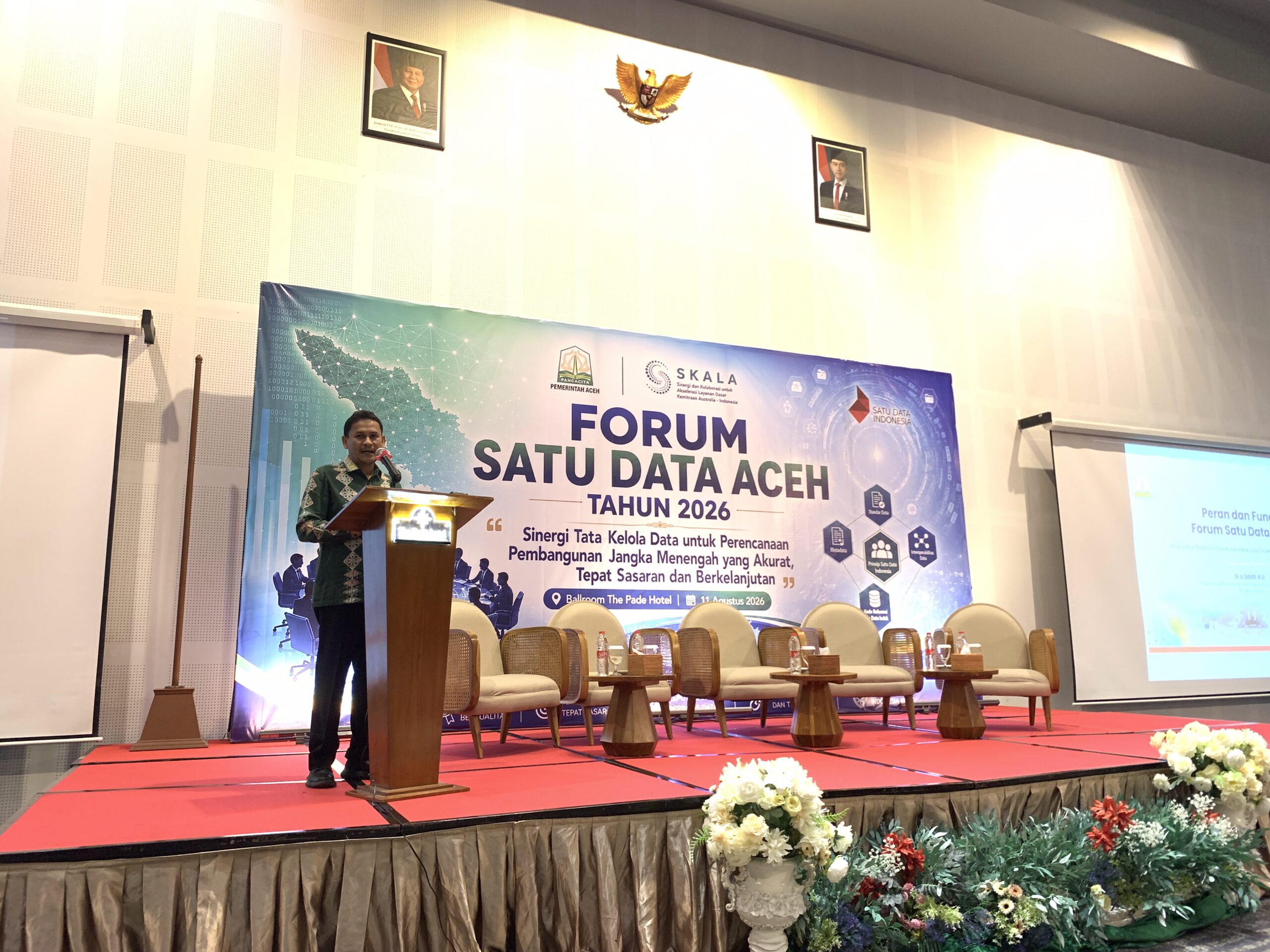
The Aceh Government is strengthening data governance with a push to better connect data at provincial, district and city levels.
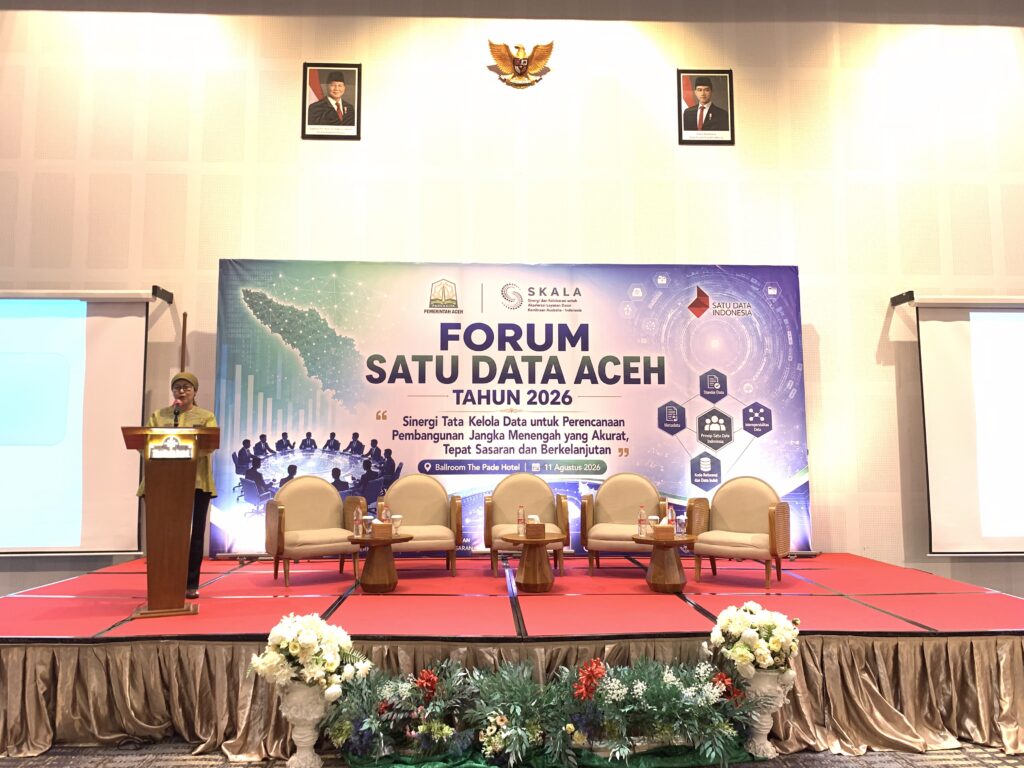
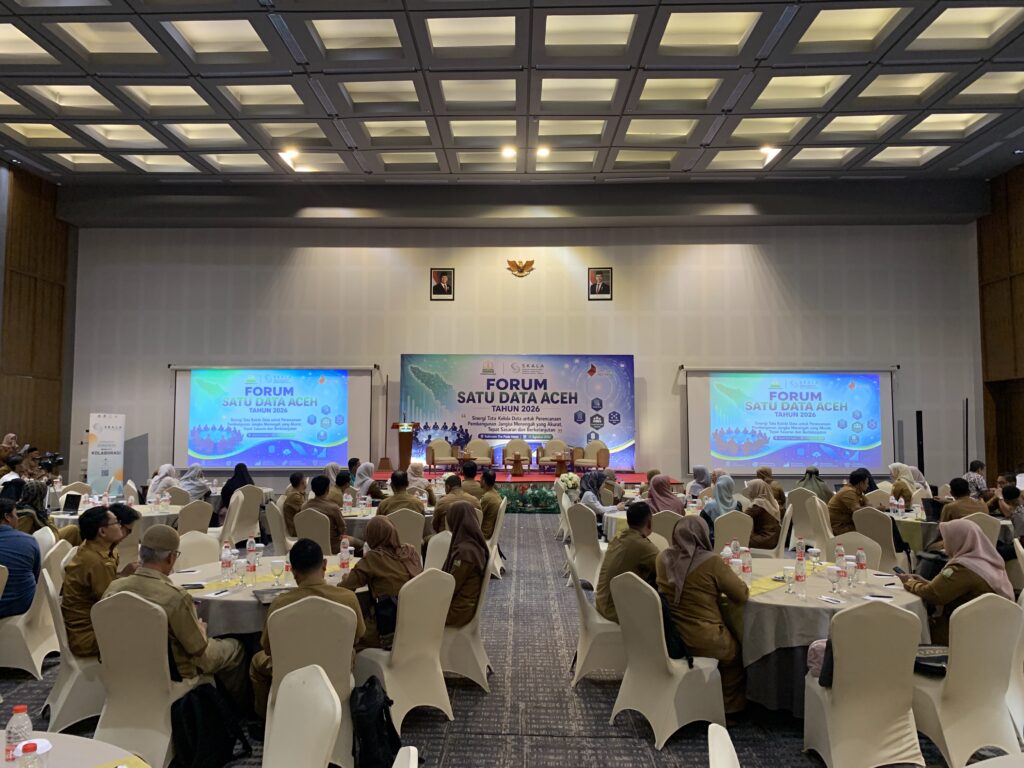
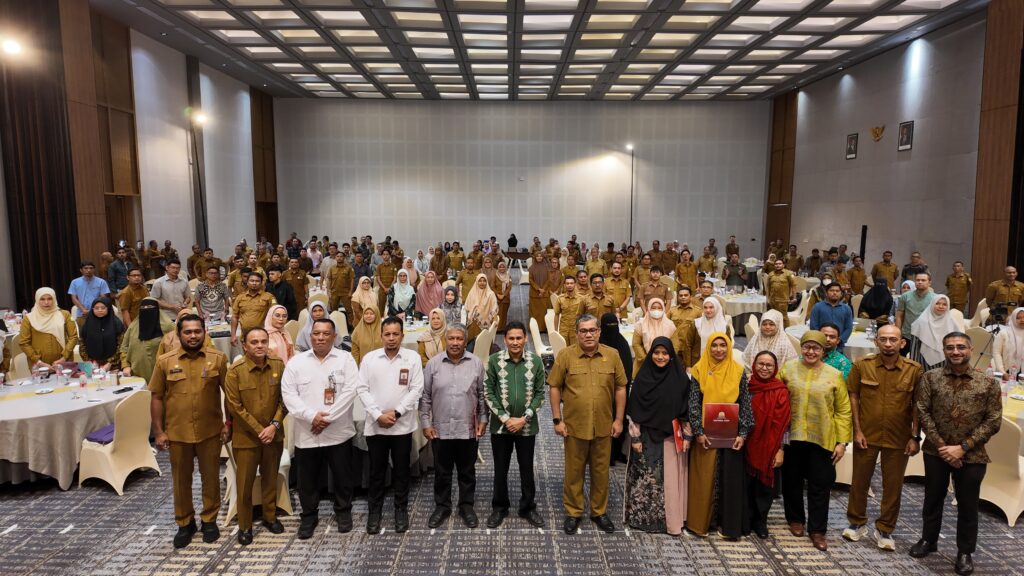
At the 2026 Aceh Government One Data Forum, held on 11 August 2026, the government soft-launched district and city One Data portals and symbolically handed over portal accounts to representatives from the districts of Aceh Tamiang, Aceh Barat Daya and Aceh Tengah.
The portals will make it easier to access district and city government data with a more connected data ecosystem. Data from different sectors can be displayed through dashboards and infographics, making information easier to find, understand and use.
The forum brought together representatives from the Regional Development Planning Agency (Bappeda) as the forum coordinator, Department of Communication, Informatics and Cryptography (Diskominsa) as the data guardian, Statistics Indonesia (BPS) Aceh as the data advisor and provincial government working units (SKPA), as well as regional representatives from all 23 districts and cities across Aceh.
Discussions focused on reviewing and agreeing on data lists, improving data collection and standards, and strengthening coordination among institutions. These were recognised as important steps to ensure that government data is reliable, accessible and able to support evidence-based development planning.
Data as a foundation for development planning
Head of Bappeda Aceh and Coordinator of the Aceh One Data Forum, Zulkifli, emphasised the importance of reliable data in development planning.
“Development planning today can no longer rely on assumptions. It must be based on data that is accurate, up to date, integrated, accountable, accessible and shareable,” he said.
Zulkifli said the implementation of One Data Indonesia, as mandated under Presidential Regulation No. 39 of 2019, provided an important foundation for effective, transparent, accountable and evidence-based governance.
In Aceh, this means connecting the Aceh and district/city One Data portals with e-Walidata and e-Dataku as part of the same data ecosystem.
“The Aceh and district/city One Data portals, e-Walidata and e-Dataku, are not standalone systems. They need to be connected as one ecosystem so they can provide a consistent source of data,” he said.
He said effective data governance required clear processes for how data is to be managed and used.
“Data needs to be planned, collected, checked, disseminated and used through clear institutional mechanisms,” he said.
The One Data Forum provides a space for government institutions to work through these processes together and strengthen the use of data in development planning and decision-making.
Aceh’s progress provides lessons for other provinces
Aceh’s progress in strengthening data governance was welcomed by Astrid Kartika, Unit Leader of Decentralised Governance, the Department of Foreign Affairs and Trade at the Australian Embassy in Jakarta.
Kartika said Aceh’s experience with One Data could provide useful lessons for other provinces. Government representatives from Gorontalo, Maluku and East Nusa Tenggara have already visited Aceh to learn about the province’s approach.
She said Aceh’s efforts to connect district and city data systems with the provincial system were an important step.
“Aceh has moved ahead quickly. One of the steps being taken today, with support from SKALA, the Australia–Indonesia partnership program, is connecting district and city One Data with provincial One Data,” she said.
Kartika described Aceh as being “one step ahead” compared with other SKALA-supported provinces, while noting that developing an integrated data system required an ongoing process of learning and collaboration.
Aceh’s experience can therefore provide useful lessons for other local governments as they strengthen their data governance systems.
Connecting data across government
The importance of integration was emphasised by Aceh Assistant Secretary for Economic Affairs and Development, T. Robby Irza, who represented the Aceh Provincial Secretary and opened the forum.
My Irza said the challenge was to ensure that government agencies could access consistent, reliable and up-to-date data when they needed it.
“We do not need more and more applications if the data remains separated and disconnected,” he said.
My Irza said it was important to clearly identify who owns, produces and updates data, as well as to agree on definitions and standards, schedule updating, access arrangements and responsibility for data quality.
All government agencies have a role in making the system work, whether as data producers, data stewards or users.
Strengthening data governance
Following the launch, participants discussed how the systems could be supported by stronger policies, institutional arrangements, data standards and the capacity of government officials responsible for managing and using data.
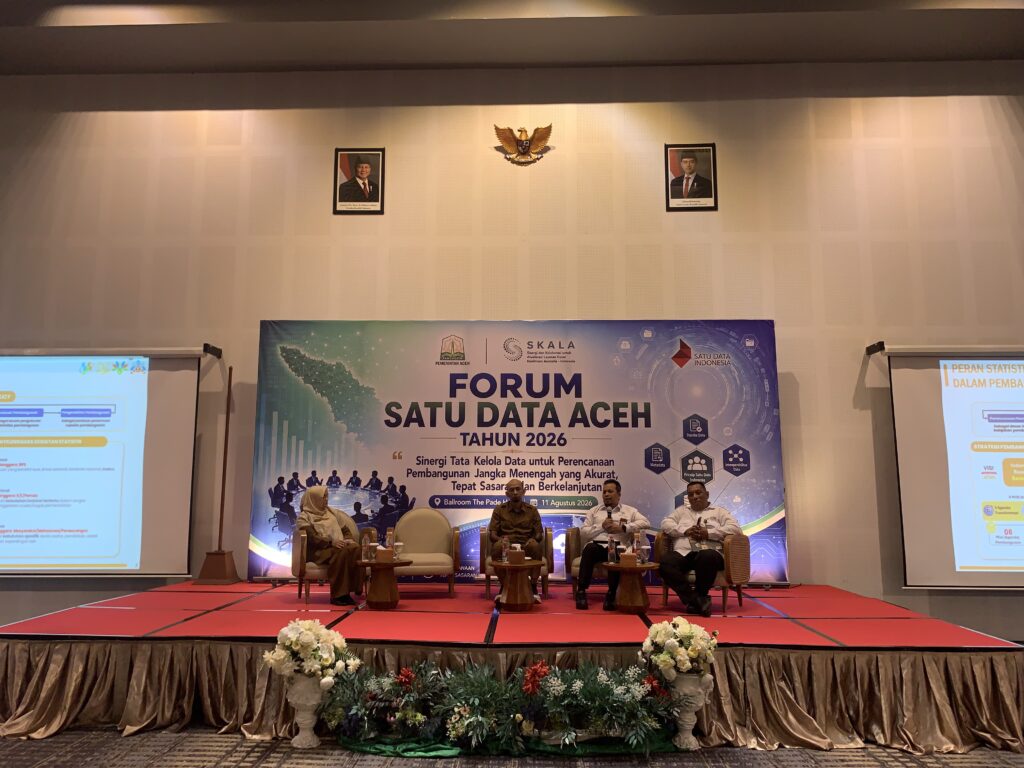
The discussions covered how One Data is governed within the Ministry of Home Affairs, progress in integrating Aceh’s provincial and district/city data systems, the One Data Forum’s role, BPS support for One Data implementation, and current challenges in managing data across Aceh.
Speakers included Alwin Ferry, Director of the Ministry of Home Affairs Data and Information Centre; Mahfud Ahmad from the national One Data Indonesia Secretariat; Agus Andria, Head of BPS Aceh; and Said Azhari, Head of the Statistics Technical Implementation Unit at Diskominsa.
Participants also worked on the 2027 data list and discussed the data cycle, including planning, collection, verification and dissemination. This will help establish clearer responsibilities and processes for producing and managing government data.
Using data for better planning
The district and city portals are part of Aceh’s broader work to develop a more connected data ecosystem. The next steps are crucial: keeping data up-to-date, applying consistent standards, maintaining data quality, and making greater use of the information in planning and decision-making.
Aceh is well on its way to having a stronger basis for identifying priorities, allocating resources and planning services based on evidence and the needs of communities.