



- All
- Data & Analytic
- DJPK
- GEDSI
- Gender Responsive Budgeting
- MSS
- PFM
- Public Financial
- SKALA
- Standard
- Top 10
The alignment between the competencies of human resources developed through high schools, vocational schools, and universities in North Kalimantan, and the competencies required by the labor market, is a strategic and urgent matter that requires immediate intervention by the local government. This intervention is important because of the disparity between the competencies of high school, vocational school, and university graduates and the needs of the industrial and educational sectors, which ultimately has an impact on the open unemployment rate in North Kalimantan. This policy brief discusses several issues, including the vocational school curriculum, which is considered to be not fully...
The development of the North Kalimantan industrial area as a driver of the regional economy is facing systemic risks in the form of an escalation of HIV/AIDS cases, which threatens the sustainability of a healthy investment environment in the province. Epidemiological data shows an increase in prevalence from 151 cases (2020) to 212 cases (2024), with the main cluster concentrated in the city of Tarakan as the main industrial hub (118 cases). This policy brief also discusses several issues, including: lack of education and socialization, limited access to health services, and the absence of specific regulations. To that end, the...
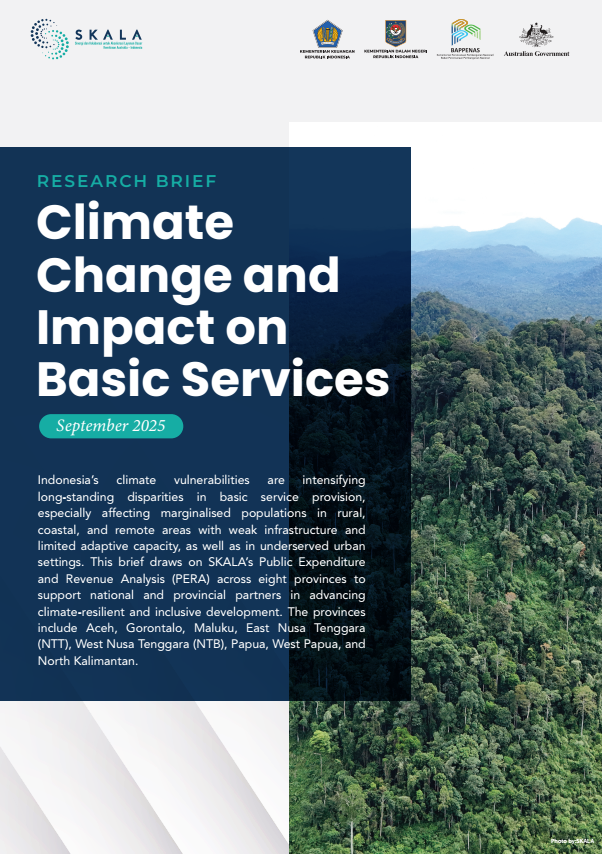
Climate change is worsening inequalities in basic service delivery across Indonesia, particularly in rural, coastal, and remote areas with limited infrastructure. SKALA’s Public Expenditure and Revenue Analysis (PERA) in eight provinces (Aceh, Gorontalo, Maluku, East Nusa Tenggara, West Nusa Tenggara, Papua, West Papua, and North Kalimantan) reveals how rising temperatures, floods, droughts, and coastal erosion strain access to clean water, sanitation, healthcare, education, and food systems. The research underscores the vital role of local governments in planning services and driving green economic transitions, while recommending three strategic priorities: investing in climate-resilient basic services for underserved communities, supporting local sustainable economic...
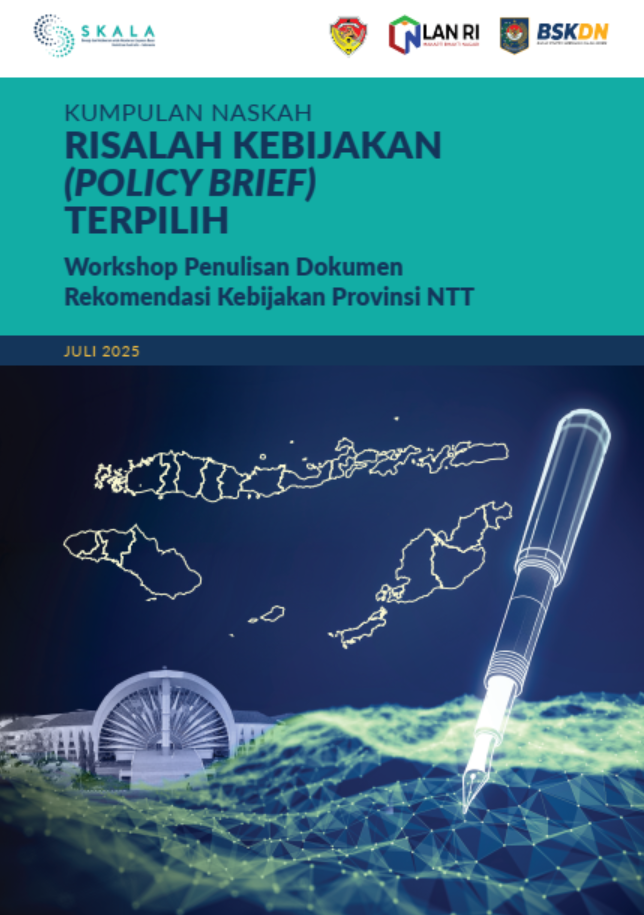
The collection of selected Policy Briefs was produced by the Policy Analyst Community, namely participants of the Policy Recommendation Document Writing Workshop (Policy Brief) supported by SKALA, in collaboration with the Domestic Policy Strategy Agency (BSKDN) of the Ministry of Home Affairs (Kemendagri), the State Administration Agency of the Republic of Indonesia (LAN RI), and the Provincial Government of East Nusa Tenggara (NTT) in Kupang City. The Policy Brief provides technical input and policy advocacy material in the following areas: (i) Public Financial Management, (ii) Gender Equality, Disability, and Social Inclusion (GEDSI), (iii) Utilization of Data and Information Systems for...
The Knowledge Brief Local Development Planning for Inclusive Policy and Basic Services provides strategic insights to strengthen Indonesia’s subnational planning processes so they are more inclusive, data-driven, and participatory. It highlights the importance of aligning regional plans (RPJPD, RPJMD) with national frameworks, leveraging disaggregated data such as REGSOSEK and SEPAKAT, and ensuring meaningful participation of women, persons with disabilities, indigenous groups, and marginalized communities. Drawing from practical examples by provincial government in Aceh, Kalimantan Utara, Nusa Tenggara Timur, Nusa Tenggara Barat, Gorontalo, Papua Barat, Papua, and Papua Selatan, the brief showcases how local governments, civil society, and SKALA are working...