

Papua Selatan Strengthens Data and Social Protection for Indigenous Papuans
The Papua Selatan Provincial Government has launched three initiatives—SIRIOS, GEMAS Ha-Anim, PASSTI Ha-Anim—to improve development planning, strengthen social protection and ensure basic services better respond to the needs of Indigenous Papuans (OAP).
Understanding community circumstances is essential for governments to deliver effective public services. In Papua Selatan, accurate data on households, particularly Indigenous Papuan families, enables governments to pinpoint those who need support and ensure development programs reach their intended beneficiaries.
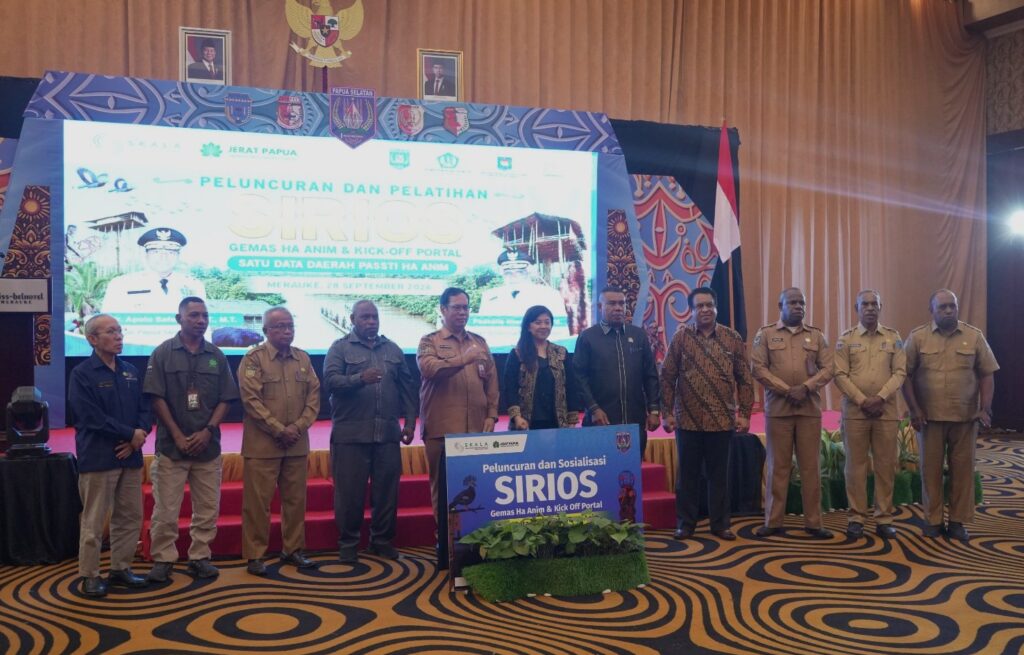
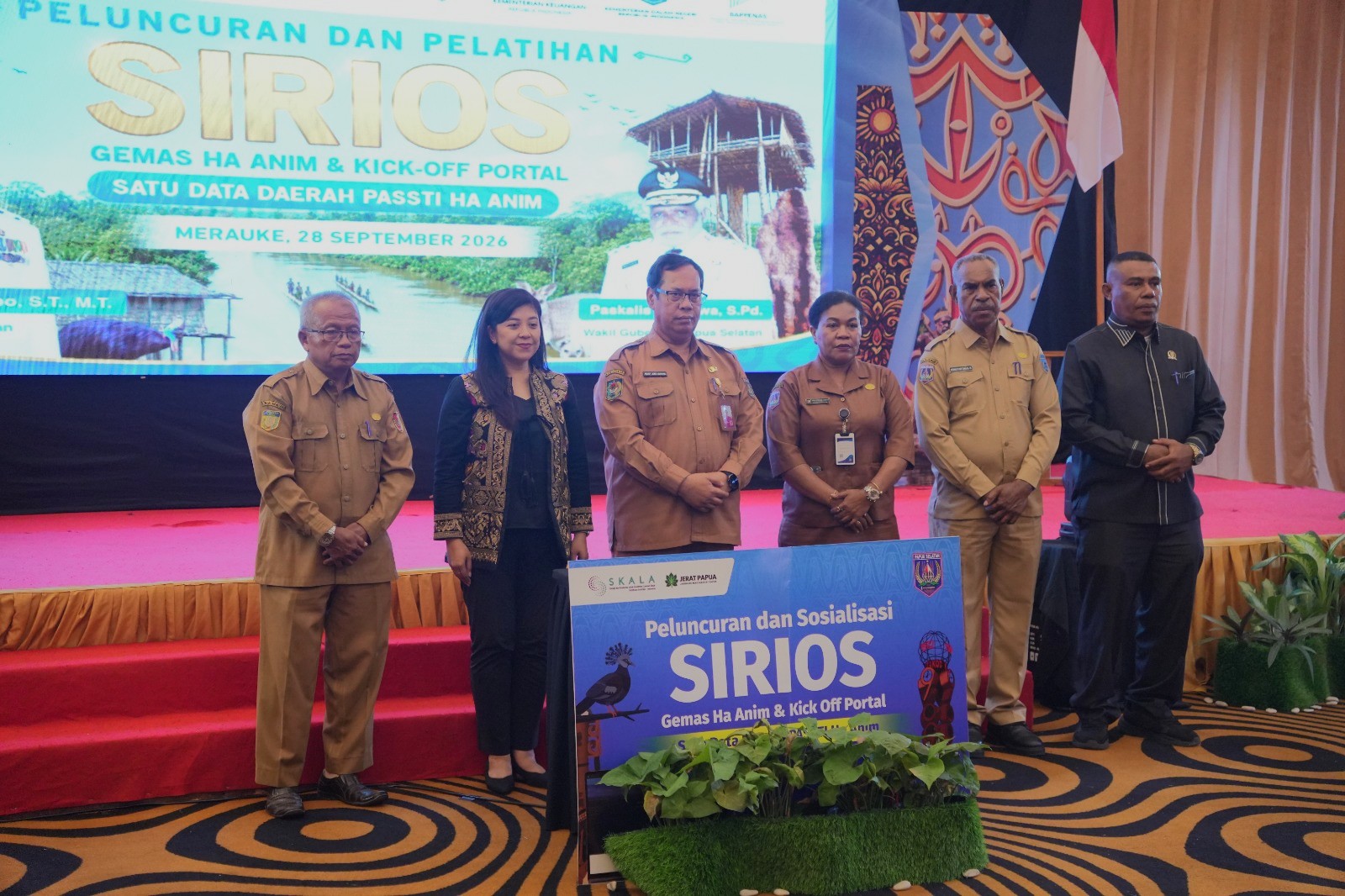
To strengthen evidence-based planning and social protection, the Papua Selatan Provincial Government launched three key initiatives in Merauke on 28 September 2026: the Papua Selatan Indigenous Papuan Information System (SIRIOS), the Golden Generation of Ha-Anim Program (GEMAS Ha-Anim) and the PASSTI Ha-Anim Regional One Data Portal.
Developed through collaboration between the provincial government and the regency governments of Merauke, Asmat, Mappi and Boven Digoel, these initiatives aim to connect community-level information with development planning, budgeting and the delivery of essential services.
Delivering remarks on behalf of Governor Rudy Sufahriadi, the Assistant I of the Papua Selatan Provincial Secretariat, Agustinus Joko Guritno, emphasised the importance of accurate and reliable data in supporting the province’s development priorities, particularly those concerning OAP.
The initiatives are aligned with Papua Selatan’s Regional Medium-Term Development Plan (RPJMD), which prioritises One Data, disaggregated data collection and social protection. They are also supported by Governor Regulation No. 8 of 2025 on Provincial One Data and Governor Regulation No. 10 of 2025 on the Indigenous Papuan Information System.
Connecting community data with social protection
The three initiatives have distinct but complementary roles in strengthening Papua Selatan’s development programs.
SIRIOS provides socioeconomic data on Indigenous and non-Indigenous Papuans through a by-name, by-address approach. Using 20 integrated variables aligned with DTSEN, the National Integrated Social and Economic Data, SIRIOS collects information directly from communities through local cadres at the village and urban ward levels.
This approach aims to help local governments better understand household conditions, identify development needs and determine which families are eligible for assistance.
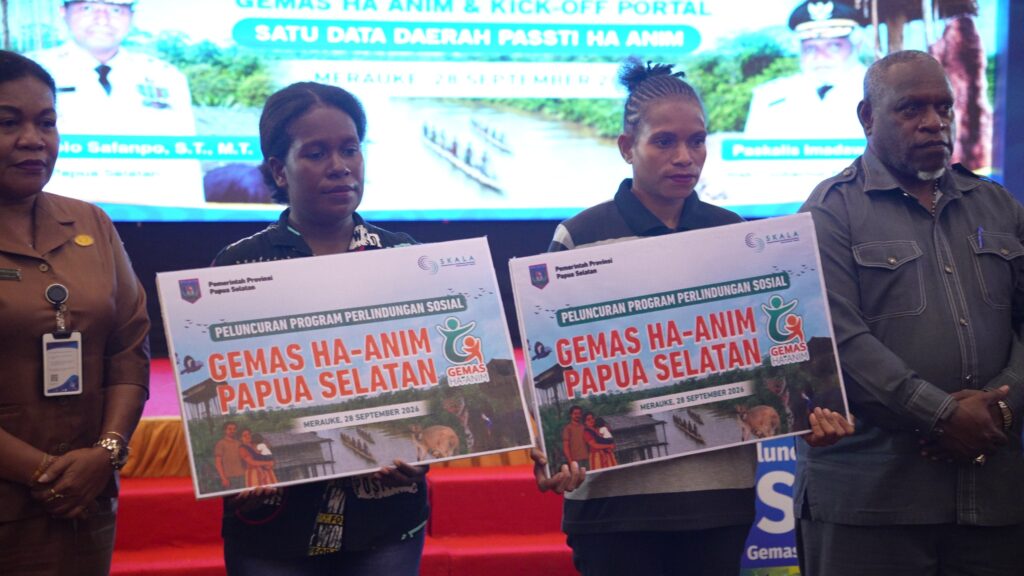
One key initiative launched in September that will benefit from this information is GEMAS Ha-Anim, a regional social protection initiative for Indigenous Papuan families with infants aged 0–12 months. By using SIRIOS data to identify and target eligible families more accurately, GEMAS Ha-Anim can help ensure that assistance reaches those who need it most.
The program provides cash assistance to eligible families to support children’s basic needs during their early stages of life, particularly health and nutrition during the critical first 1,000 days. It also encourages families to obtain civil registration documents for their children, helping them access essential public services.
Meanwhile, PASSTI Ha-Anim serves as a regional data portal, integrating information from government agencies and strengthening data across village, regency and provincial administrations, as well as national government systems.
Together, these initiatives aim to improve how governments use community data to identify beneficiaries, set development priorities and allocate public resources.
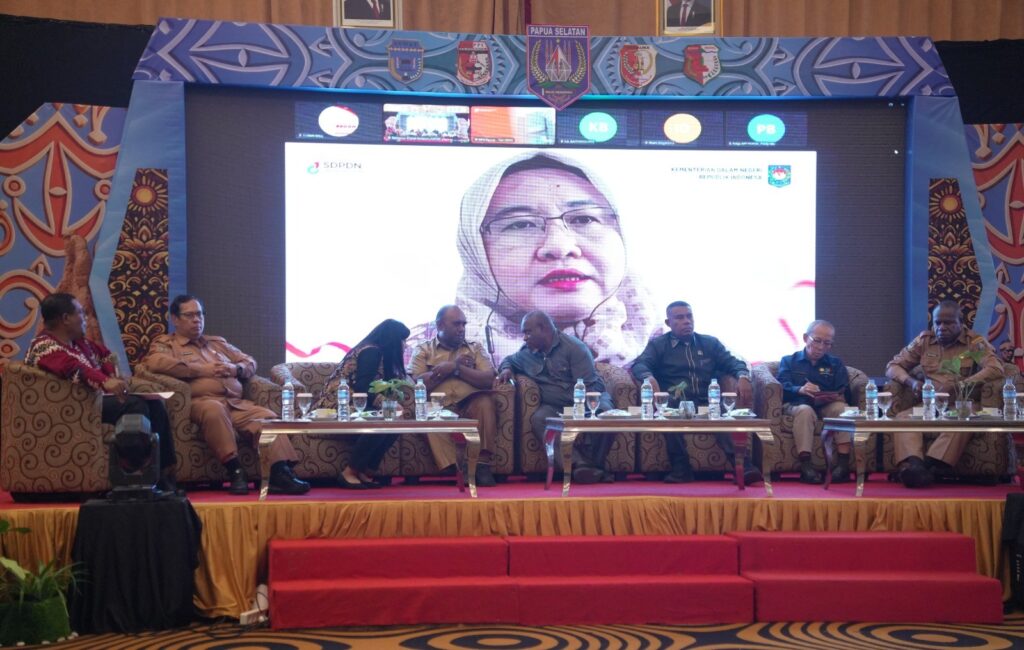
Ika Retna Wulandary, Director for Eastern Indonesia Development at the Ministry of National Development Planning (Bappenas), highlighted the importance of integrated data in ensuring that government programs respond directly to community needs.
‘Integrated data provide a comprehensive, up-to-date and consistent picture of communities and development conditions, helping governments set appropriate priorities and policies. This enables more precise identification of needs, including those of Indigenous Papuans, so that programs and interventions reach the people who need them most,’ she said.
Strengthening collaboration across government
Effective implementation of these initiatives requires coordination between provincial and regency governments, particularly in collecting, maintaining and using data at the community level.
During the launch, the Papua Selatan Provincial Government and the four regency governments signed a joint commitment to implement SIRIOS, utilise PASSTI Ha-Anim and support the delivery of GEMAS Ha-Anim.
The event also included the official activation of SIRIOS and PASSTI Ha-Anim, a demonstration of the data collection system and the symbolic presentation of GEMAS Ha-Anim assistance to beneficiary families.
To support implementation, introductory sessions and technical training were organised for village cadres, village and urban ward heads and government officials from Merauke, Asmat, Mappi and Boven Digoel.
The training focused on data collection, the use of SIRIOS in local planning and budgeting and strategies to accelerate community-level data collection.
The Ministry of Home Affairs also emphasised the importance of strengthening regional data governance. Yeni Indah Susanti, Head of the Data and Information Management Division at the Ministry’s Data and Information Centre, highlighted the need for accurate, regularly updated and accessible data to support government administration and development policymaking.
These efforts are expected to help establish more consistent data management practices across government institutions and ensure that information collected from communities can be used effectively in development programs.
Supporting more inclusive basic services
For Papua Selatan, strengthening data systems is closely linked to improving social protection and basic services, particularly for Indigenous Papuan families and young children.
Reliable household information can help governments identify eligible beneficiaries, monitor program delivery and better understand gaps in access to essential services. This is particularly important for programs supporting maternal and child health, nutrition and early childhood development.
Theodore Weohau, Implementation Director at the Australia-Indonesia Partnership, SKALA, highlighted the importance of investing in children’s wellbeing during the earliest stages of life.
‘Supporting infants and families during the early stages of life is a long-term investment. It is closely connected to health, nutrition, social protection and the future of Papua Selatan’s human resources,’ he said.
The development of SIRIOS, GEMAS Ha-Anim and PASSTI Ha-Anim has been supported by close collaboration between national government partners, the Papua Selatan Provincial Government, the four regency governments and the Australia-Indonesia Partnership Program, SKALA – Synergy and Collaboration for the Acceleration of Basic Services.
This collaboration supports stronger data governance, development planning and budgeting so that policies and services better meet the needs of all citizens, including Indigenous Papuans and vulnerable communities. With the three initiatives now launched, the focus is on making them a part of everyday government practice and sustaining their use over time. Government agencies will need to maintain coordination, collect reliable data and use it effectively to help social protection programs reach eligible families and improve basic services across Papua Selatan.