


Papua Barat Puts Data at the Heart of Development Planning
Reliable development planning in Papua Barat has long been hindered by a familiar challenge: data scattered across numerous government agencies, recorded in inconsistent formats and lacking the metadata needed for sound decision-making.
Data gaps make it harder for governments to prioritise community support, monitor development progress and direct public resources for the greatest impact. In Papua Barat, this is particularly important as the province implements Special Autonomy (Otonomi Khusus), which grants additional funding and authority to improve the welfare of Indigenous Papuans and support inclusive development.
As the Papua Barat Provincial Government prepares its 2027 work plan, addressing these data gaps has become a priority. To drive this effort, the Provincial Government held a workshop in Manokwari from 8 to 10 June 2026 focused on the Papua Barat Data Ecosystem (PAPEDA), the province’s central data platform. Through PAPEDA, agencies consolidated fragmented provincial data into a single repository, while participants strengthened e-Walidata, the electronic system for integrating and validating subnational data, and e-Dalev, the electronic monitoring and evaluation system within SIPD, the Subnational Government Information System. Together, these platforms help ensure development planning and evaluation are supported by reliable, accessible and integrated data.
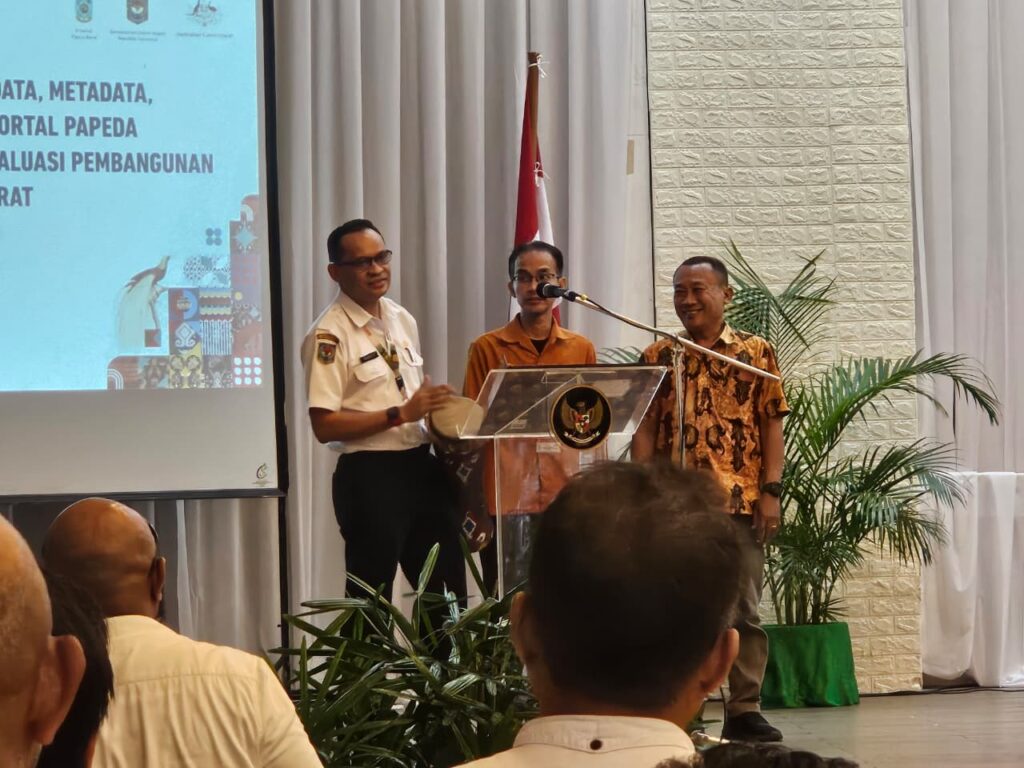
Opening the workshop, Deputy Governor of Papua Barat Mohamad Lakotani stressed that reliable data is central to the province’s planning work. ‘The Papua Barat Provincial Government is preparing a range of development documents, including the 2027 government work plan, a process that relies on acurate and timely data,’ he said. He urged provincial, regency and municipal agency heads to prioritise the management of their own sectoral data through PAPEDA. ‘I ask all heads of government agencies to pay serious attention to managing sectoral data in their respective institutions,’ he said.
The workshop brought together representatives from the Ministry of Home Affairs, Statistics Indonesia (BPS), the Papua Barat Provincial Government and district governments across the province. With technical guidance from national and provincial agencies, participants worked directly in the PAPEDA Portal, completing data lists, metadata and data standards, and consolidating 2026 e-Walidata data alongside data on progress against the 2025 work plan and first-quarter 2026 monitoring data through e-Dalev.
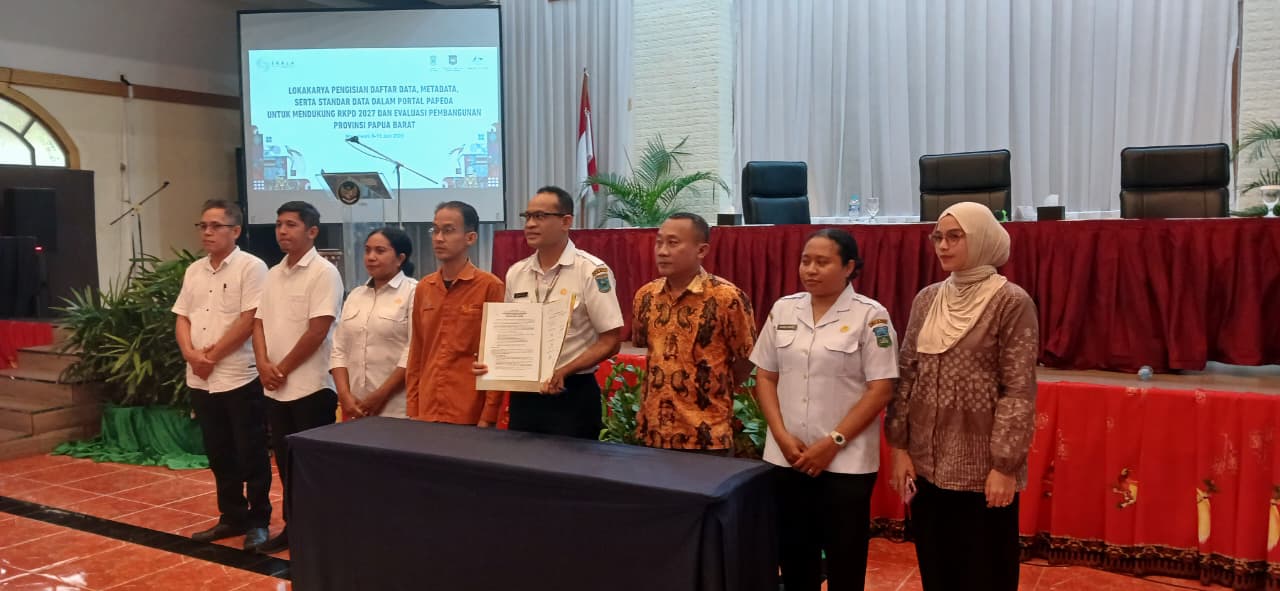
Participants agreed on a clear division of responsibilities to strengthen data governance. The Provincial Development Planning Agency (Bappeda) will coordinate data requirements for planning and evaluation, the Provincial Office of Communication and Information will serve as PAPEDA’s technical manager, provincial, regency and municipal agencies will provide sectoral data, and Statistics Indonesia will oversee sectoral statistical standards.
The workshop was supported by the Australia–Indonesia Partnership Program, SKALA (Synergy and Collaboration for the Acceleration of Basic Services), which provided technical support throughout the workshop and helped the Papua Barat Government prepare a follow-up action plan.
The workshop mapped data gaps, developed a follow-up action matrix and strengthened data linkages between provincial and district governments as part of Satu Data Daerah, Indonesia’s national initiative to improve the consistency and accessibility of government data.
Participants agreed that data compiled through PAPEDA will be used to support the 2027 work plan, strengthen development monitoring and improve decision-making across government. They committed to a series of follow-up steps, including strengthening the PAPEDA Data List, developing the PAPEDA Data Portal alongside an Executive Portal for senior decision-makers, finalising e-Walidata data to support approval of the 2027 work plan, and verifying and updating e-Dalev data as the basis for monitoring and evaluation.
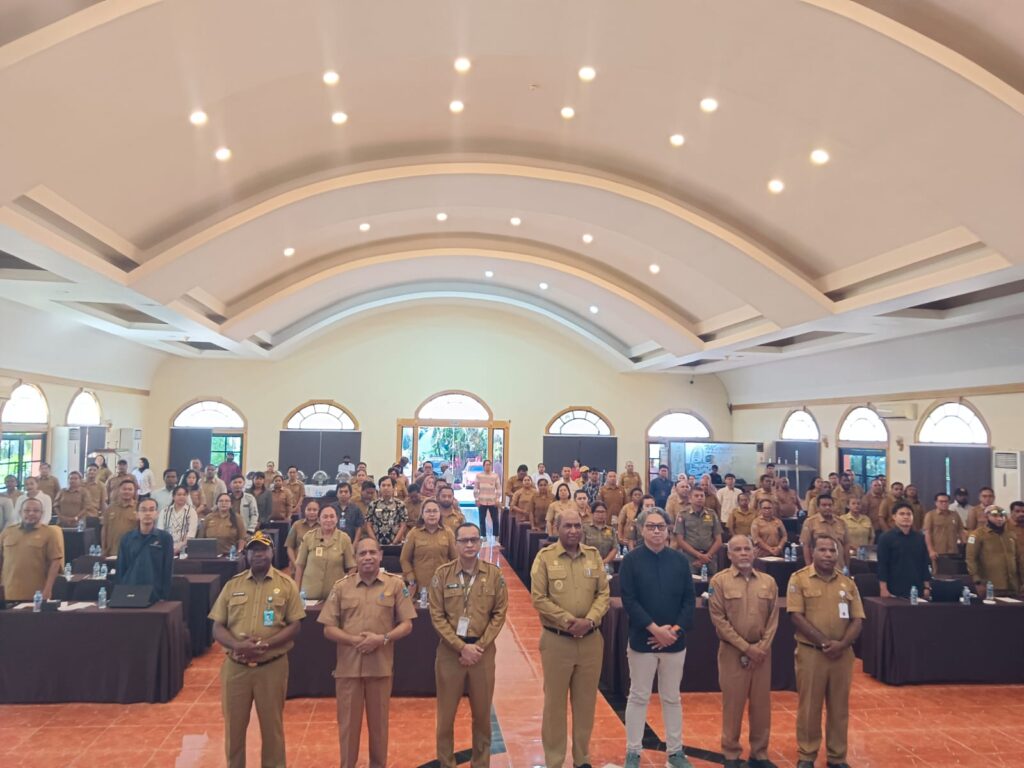
With more than 124 participants drawn from provincial agencies and district governments across Papua Barat, the workshop reflected the breadth of commitment needed to make Indonesia’s unified subnational data initiative a reality. The work of consolidating, validating and linking development data is now under way. It is laying the groundwork for a 2027 government work plan built on accurate and integrated data, helping ensure development programs and services better respond to the needs of communities across Papua Barat.
With a stronger evidence base, the province is better placed to improve access to essential public services such as health, education and social protection, reduce disparities between communities, and design more targeted policies for Indigenous Papuans, women, people with disabilities and other vulnerable groups.