

NTB Launches Executive Dashboard to Strengthen Data-Driven Development
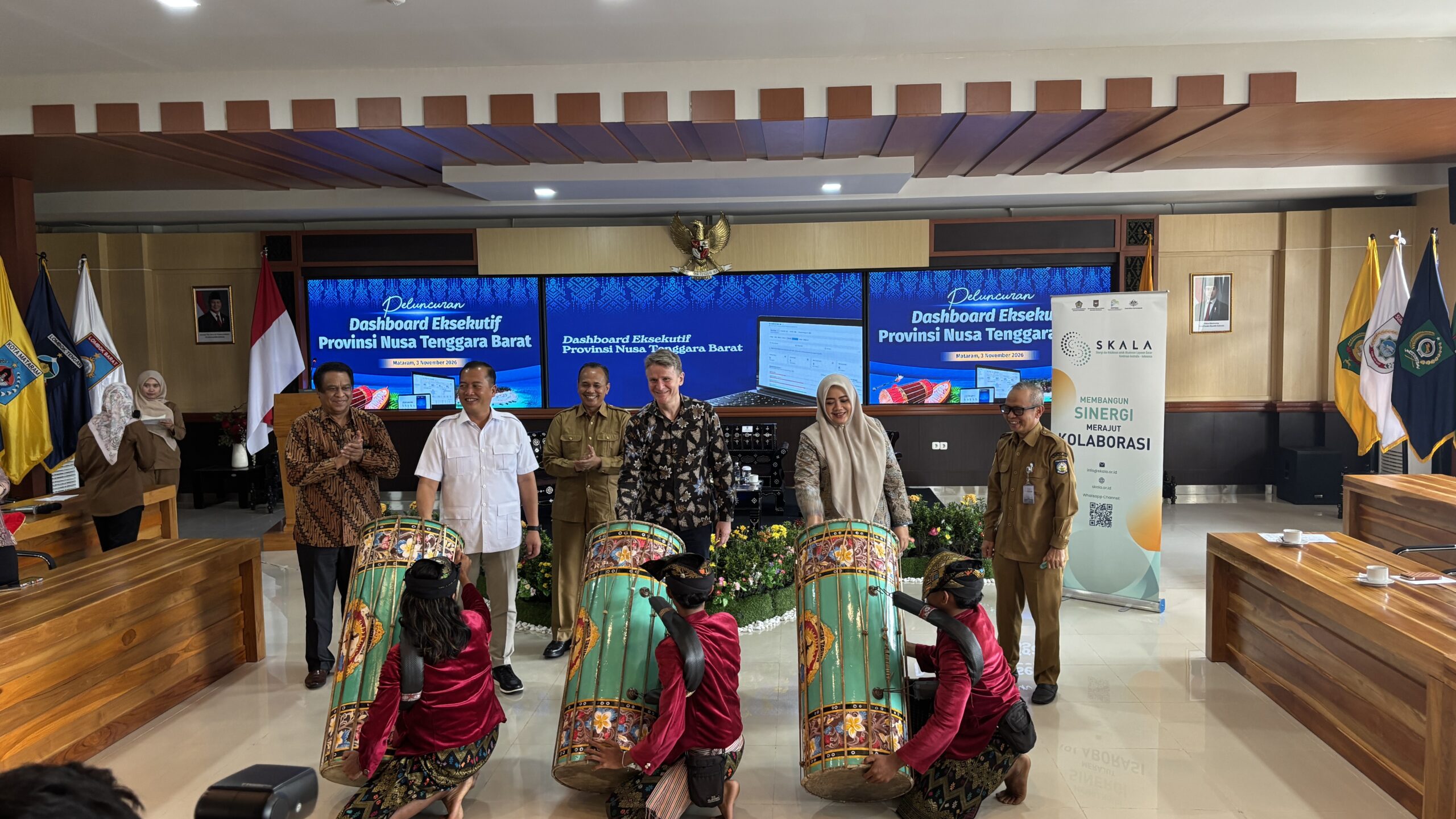
The West Nusa Tenggara (NTB) Provincial Government has launched its Executive Dashboard to strengthen development planning, monitoring and decision-making. By integrating information on development priorities, public services, budgets and government performance, the dashboard aims to help provincial leaders make more evidence informed decisions and improve the delivery of basic services.
Reducing poverty, improving basic services and strengthening economic development remain key priorities for the West Nusa Tenggara (NTB) Provincial Government. Achieving these goals requires a clear understanding of development progress, how public resources are being used and where further government attention is needed.
However, with development information managed across different government agencies and systems, obtaining a comprehensive picture of regional performance can be challenging. More integrated and accessible data are essential to help government leaders identify development gaps, monitor programs and make decisions that respond to community needs.
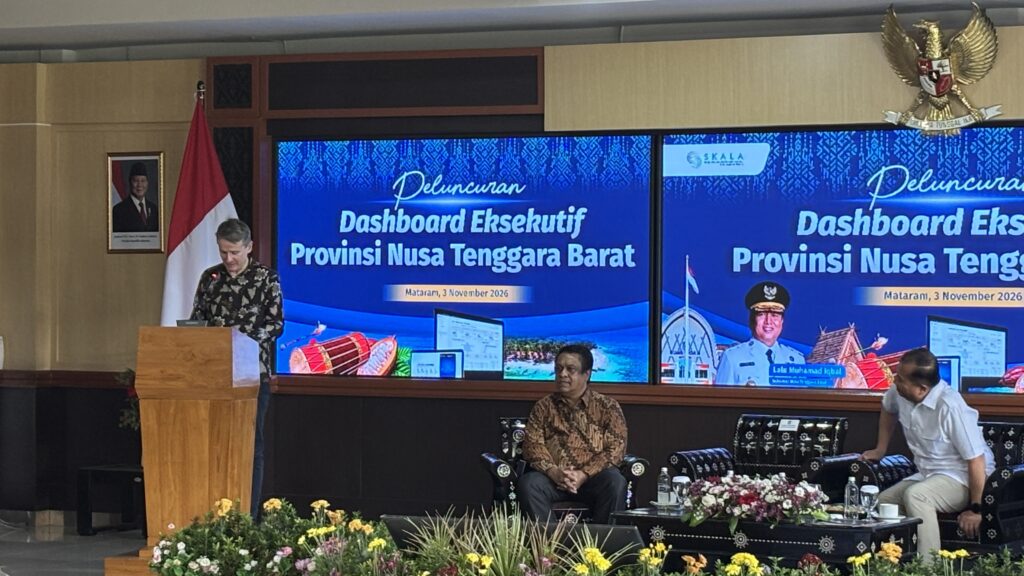
To address these challenges, the NTB Provincial Government officially launched the NTB Executive Dashboard at the Governor’s Office in Mataram on 3 November 2026. The launch was led by NTB Governor Lalu Muhamad Iqbal alongside Australian Ambassador to Indonesia Roderick Bruce Brazier.
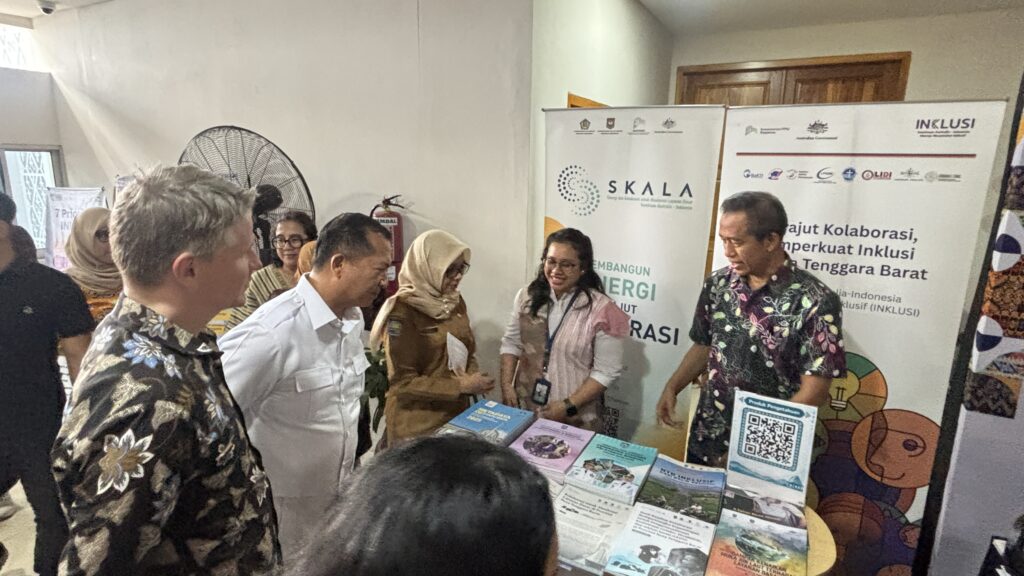
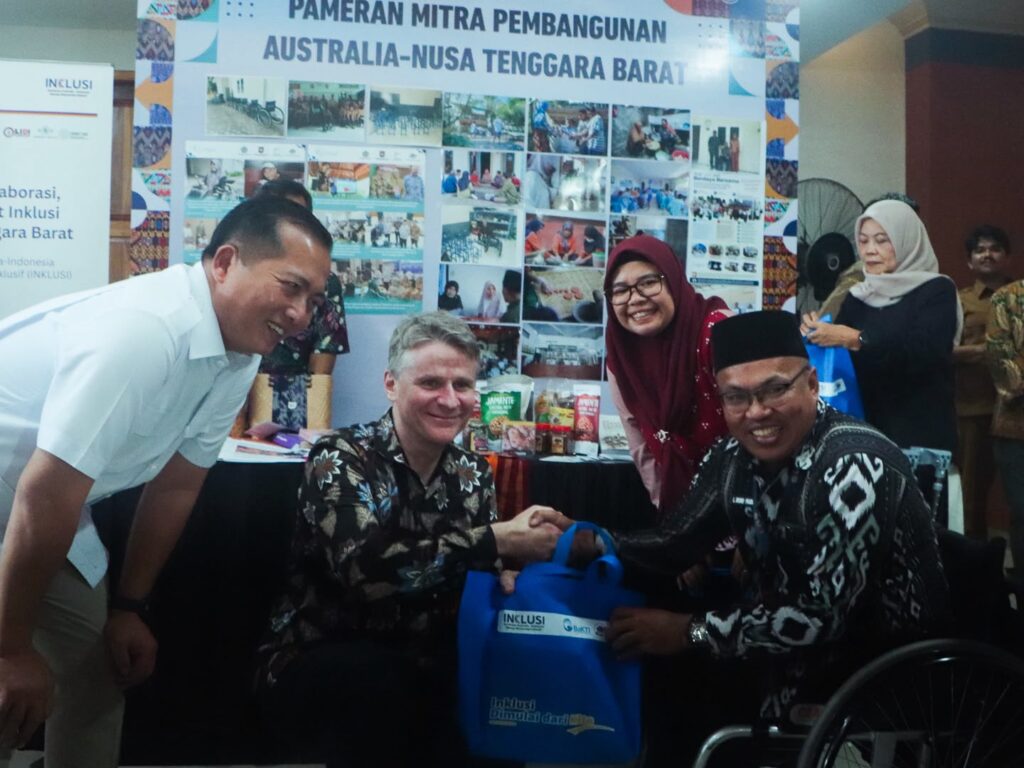
The event was attended by the NTB Vice Governor, Provincial Secretary, Head of Statistics Indonesia (BPS) NTB, heads of provincial government agencies, the Governor’s Expert Team, and representatives of the Australian Embassy and SKALA.
The Executive Dashboard brings together strategic development information on a single platform, allowing provincial leaders to track priority programs, monitor budget implementation, assess government agency performance and identify issues requiring further attention.
Supporting better decisions through integrated data
For NTB Governor Lalu Muhamad Iqbal, the dashboard provides a practical tool to support his responsibilities in overseeing regional development. By making information from different sectors more accessible, it enables provincial leaders to review available evidence and identify priorities without relying solely on separate reports from individual government agencies.
“With this Executive Dashboard, we now have a common reference to guide our decisions. The information may not be 100 per cent precise, but at least we have an initial reference that we can then verify and examine further,” Governor Iqbal said.
His remarks highlight the importance of combining accessible data with further verification and an understanding of conditions on the ground. While the dashboard provides an overview of development performance, the information remains a starting point for deeper analysis and policy decisions.
Governor Iqbal also welcomed the practical benefits of the system, expressing appreciation for the support provided in its development.
“Thank you for making my work easier. I can now collect data more easily, review evidence and find references to guide policy decisions on various issues across sectors. This has made my work much easier. Thank you very much.”
The dashboard is expected to strengthen coordination across provincial agencies by providing a shared reference for monitoring program implementation, identifying performance gaps and determining necessary follow-up actions.
Connecting data across development priorities
The NTB Executive Dashboard presents information through ten main features covering key development priorities and government functions.
According to Ahsanul Khalik, Head of the NTB Provincial Communication, Informatics and Statistics Office (Kominfotik), these include regional performance indicators; poverty and employment; food security and downstream industries; quality tourism; the Desa Berdaya (Empowered Villages) program; current-year regional budget implementation; national priority programs; Minimum Service Standards (SPM) in health; public complaints management; and regional government agency performance.
These features allow provincial leaders to compare development targets with achievements, monitor public expenditure and assess progress across programs.
For example, poverty and employment data can help the government understand changes in socioeconomic conditions, while health indicators provide information on progress towards Minimum Service Standards. Budget and performance data can also help identify whether resources and program implementation are aligned with development priorities.
The dashboard builds on the provincial government’s broader NTB One Data initiative, which seeks to improve the availability, consistency and use of development information across government institutions.
Ahsanul explained that the NTB One Data Portal currently contains 995 datasets, with 825 datasets connected to the Ministry of Home Affairs. NTB’s sectoral data have also been linked with ten national ministries and government institutions, including the Ministry of Home Affairs and the Ministry of National Development Planning/Bappenas.
The provincial government is also exploring collaboration with universities to integrate academic research into its data ecosystem, expanding the evidence available to support regional development planning and evaluation.
For Ahsanul, strengthening data governance is closely linked to building public confidence in government policies and development processes.
“NTB One Data is the West Nusa Tenggara Provincial Government’s approach to building public trust by establishing a strong foundation for development planning through accurate and reliable data,” he said.
One of the province’s key development priorities is poverty reduction. According to Ahsanul, NTB’s poverty rate stood at 11.17 per cent in March 2026, with the provincial government aiming to reduce it to a single-digit figure by 2029.
Integrated information on poverty, employment and other development indicators can help the government monitor progress, better understand the circumstances of vulnerable communities and identify where additional interventions may be required.
Strengthening governance for more inclusive development
The launch of the Executive Dashboard highlighted the importance of data in strengthening government accountability and improving public services.
Australian Ambassador to Indonesia Roderick Bruce Brazier welcomed the initiative and acknowledged the NTB Provincial Government’s commitment to strengthening evidence-based development.
“Every day, governments must make important decisions. To determine the right priorities and use resources effectively, they need accurate, accessible and integrated data. This is why the dashboard is so relevant. It helps regional leaders monitor development progress, identify gaps and respond to challenges more quickly,” Ambassador Brazier said.
He also emphasised the role of reliable information in improving essential services, particularly education and healthcare. Better data can help governments understand the different needs of communities, identify gaps in service delivery and direct available resources more effectively.
The Executive Dashboard provides an opportunity for the NTB Provincial Government to strengthen the connection between development planning, budgeting, program implementation and performance monitoring. Its continued effectiveness will depend on government agencies maintaining accurate and regularly updated information and consistently using that evidence to inform their decisions.
The Australian Government has supported the development of the NTB Executive Dashboard through SKALA (Sinergi dan Kolaborasi untuk Akselerasi Layanan Dasar), an Australia–Indonesia Partnership Program, as part of its collaboration with the Government of Indonesia and the NTB Provincial Government to strengthen data governance, evidence-based planning and inclusive basic service delivery.
With the dashboard now launched, the next priority is to ensure that integrated data becomes part of routine government decision-making. Sustained coordination across provincial agencies, regular data updates and continued commitment from government leadership will be essential to maximising its benefits. Through these efforts, the NTB Provincial Government aims to strengthen accountability, improve the effectiveness of development programs and ensure that public resources contribute to better services and more inclusive development outcomes for communities across West Nusa Tenggara.