


Evidence-based Policy Recommendations Drive Systemic Change in NTB
Policy recommendations become meaningful when data, community experience and policymakers’ knowledge come together to address the root causes of development challenges. Lessons from West Nusa Tenggara (NTB) show how policy briefs can serve as important references to inform decision-making and develop local regulations.
Two policy briefs that underwent peer review in 2024 have served as crucial technical inputs for local regulations recently enacted in NTB. The briefs addressed the issue of child marriage, including the practice of merariq kodeq (underage elopement), and how its prevention links to achieving the Minimum Service Standards (Standar Pelayanan Minimal/SPM).
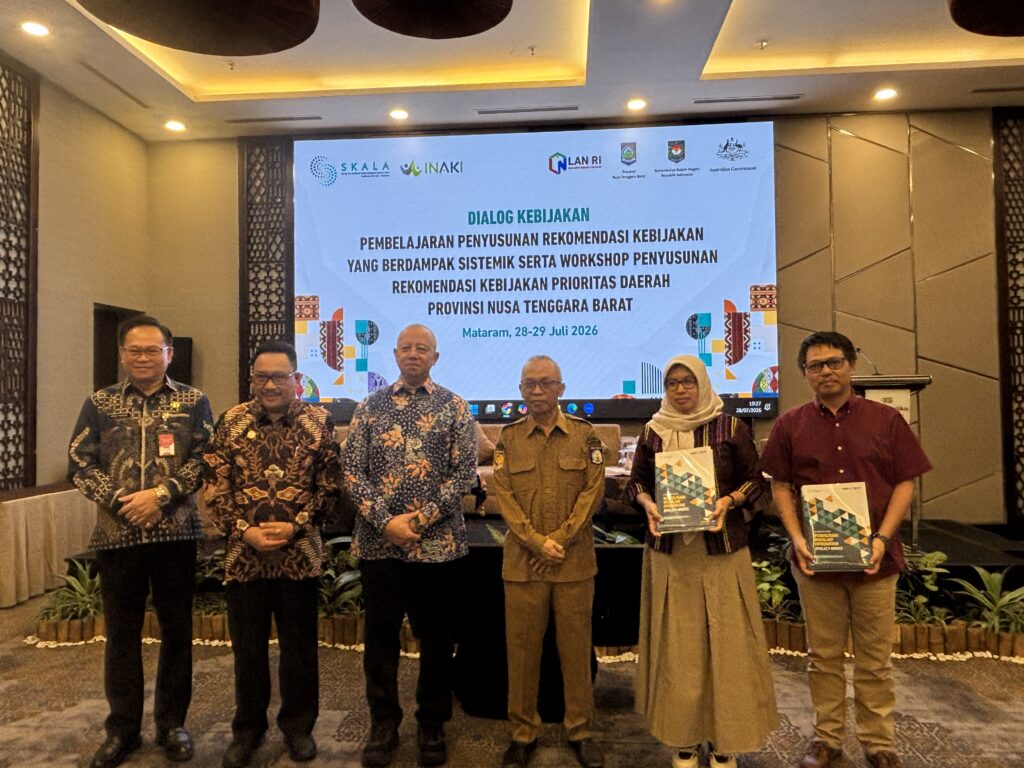
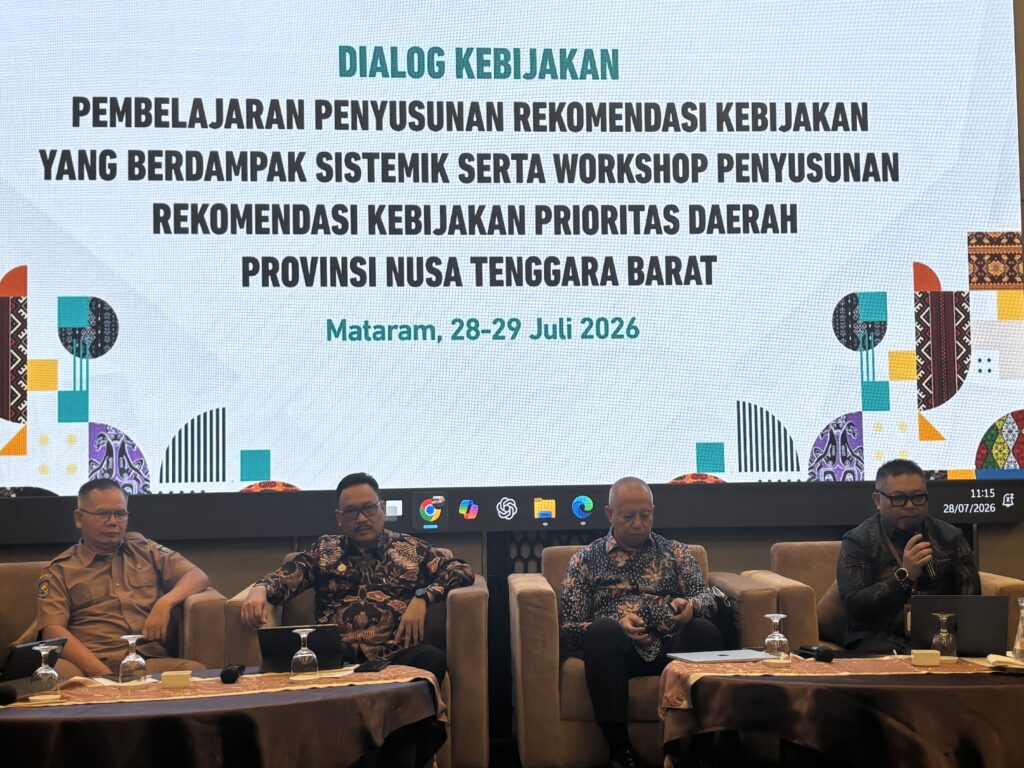
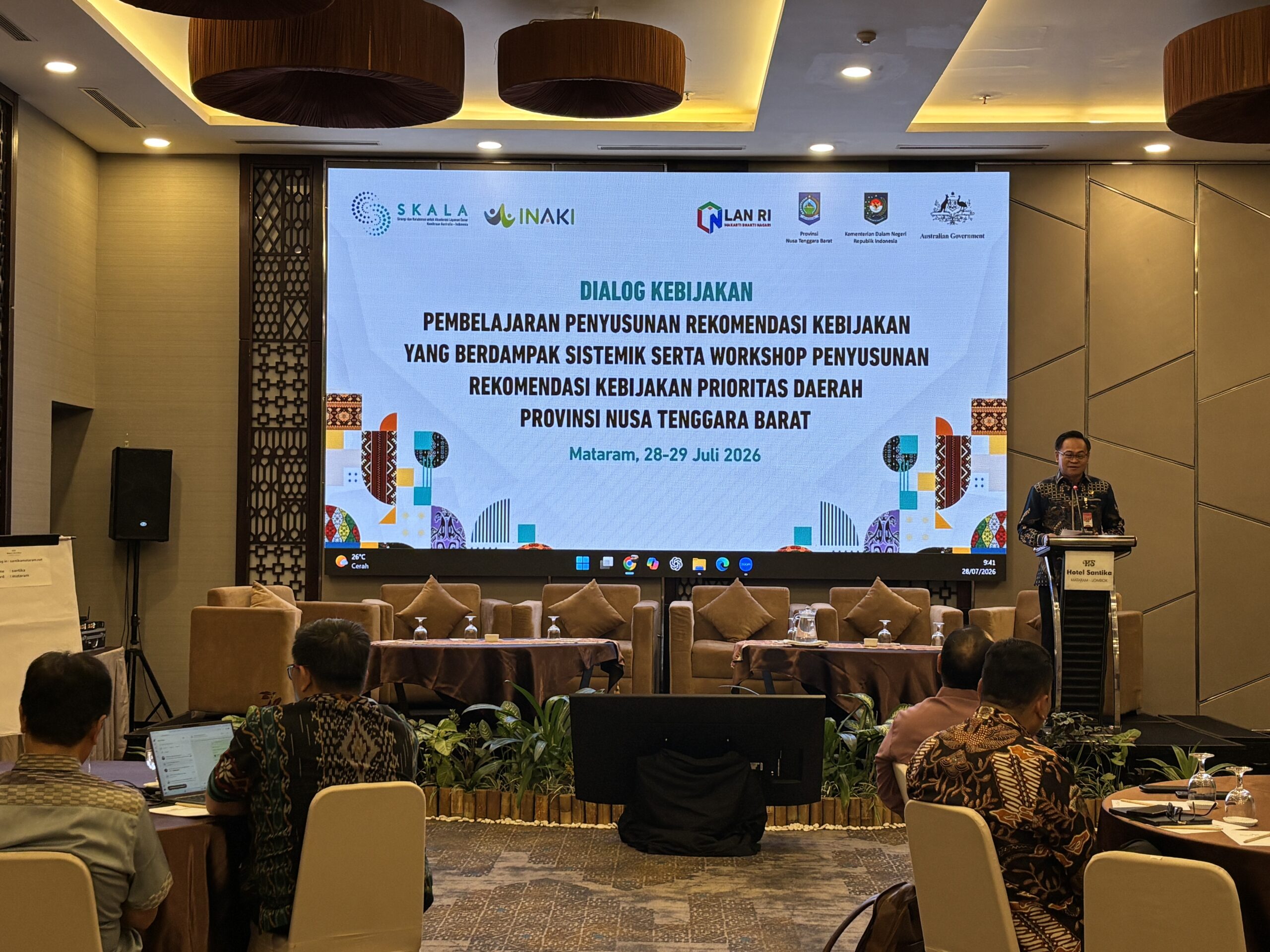
This experience was one of the key discussion points during a dialogue on developing policy recommendations for systemic impact held in Mataram on 28–29 July 2026.
Organised by the NTB Provincial Government through the Regional Development Planning Agency (Bappeda) and Regional Research and Innovation Agency (BRIDA), the event brought together government officials, policy analysts, academics, researchers, civil society organisations, basic service practitioners and development partners.
Seventy participants attended the policy dialogue on the first day. Of these, 40 continued to the workshop, where they translated priority regional issues into concise, evidence-based and actionable recommendations.
In his opening remarks, NTB Provincial Secretary Abul Chair said that being able to develop policy recommendations was an important part of improving the quality of decision-making. He said valid data needed to be analysed to identify a problem’s underlying causes and then translated into options that decision-makers could understand easily.
“Policy briefs are very important because they bring together in-depth analysis and [take account of] the limited time available to leaders to read lengthy reports,” Mr Chair said.
The event was attended by Secretary of the Ministry of Home Affairs’ Domestic Policy Strategy Agency (BSKDN), Noudy RP Tendean; Deputy for Improving the Quality of State Administration Policy at the National Institute of Public Administration (LAN), Agus Sudrajat; and Chair of the Indonesian Association of Policy Analysts, Imam Gunarto.
Their participation strengthened connections between policy strategy development, policy quality and analysts’ competencies, and the role of professional organisations.
Policy recommendations as a basis for decision-making examining priority regional issues
During the workshop, participants worked in four groups to examine two strategic issues: sea-level rise and Public Expenditure and Revenue Analysis (PERA).
Sea-level rise is an important concern for NTB as an archipelagic province. Data presented during the event indicated annual sea-level rise of about 3.5 millimetres in North Lombok and 6.5 millimetres in South Lombok.
Participants used a range of data sources, including the SEPAKAT application and a sea-level rise dashboard, to identify affected populations and locations and determine the cross-sectoral responses required.
PERA, meanwhile, helped participants understand the relationships between revenue, expenditure, development priorities and regional fiscal space. The analysis supported the development of policy options that considered community needs, available financing and the effectiveness of public expenditure.
SKALA NTB Provincial Lead Anja Kusuma said LAN and a group of policy experts had reviewed 15 policy briefs prepared by participants during an earlier capacity-strengthening activity.
“All the policy briefs have been compiled into a publication and will be submitted to the NTB Provincial Government as a reference for developing regional development policies,” he said.
Building a policy learning community
Developing policy briefs requires continuous learning, including testing arguments, updating data, receiving feedback and engaging with the people who will use the recommendations.
A strong network of policy analysts connects government officials with data analysis teams, universities, professional organisations and civil society. Such collaboration can broaden the available sources of knowledge while ensuring that recommendations remain technically sound and responsive to diverse community conditions.
On the event’s second day, participants continued drafting their policy briefs, received feedback from facilitators and presented what they had done so far. Each participant submitted an initial draft for further refinement and follow-up.
The NTB Provincial Government’s efforts to strengthen the capacity of government officials and build a policy learning community are supported by SKALA, an Australia–Indonesia partnership program. This support includes facilitating learning and peer-review processes and strengthening the use of data and evidence in the development of local policy recommendations.
Through this initiative, the NTB Provincial Government continues to strengthen its evidence-based policy ecosystem so that policy recommendations can inform regional planning, budgeting and regulatory development.