

SEKAR Inklusif: A Learning Management System to Strengthen Public Participation in Development
SEKAR Inklusif is an online learning platform designed to strengthen people’s capacity to participate in development planning, understand public budgets, advocate for community needs through evidence-based proposals, and monitor implementation to ensure that development benefits reach those who need them most.
The momentum for government planning and budgeting to better respond to community needs continues to gain pace, with government seeking a wide range of inputs to set priorities, allocate resources and ensure well-directed public spending.
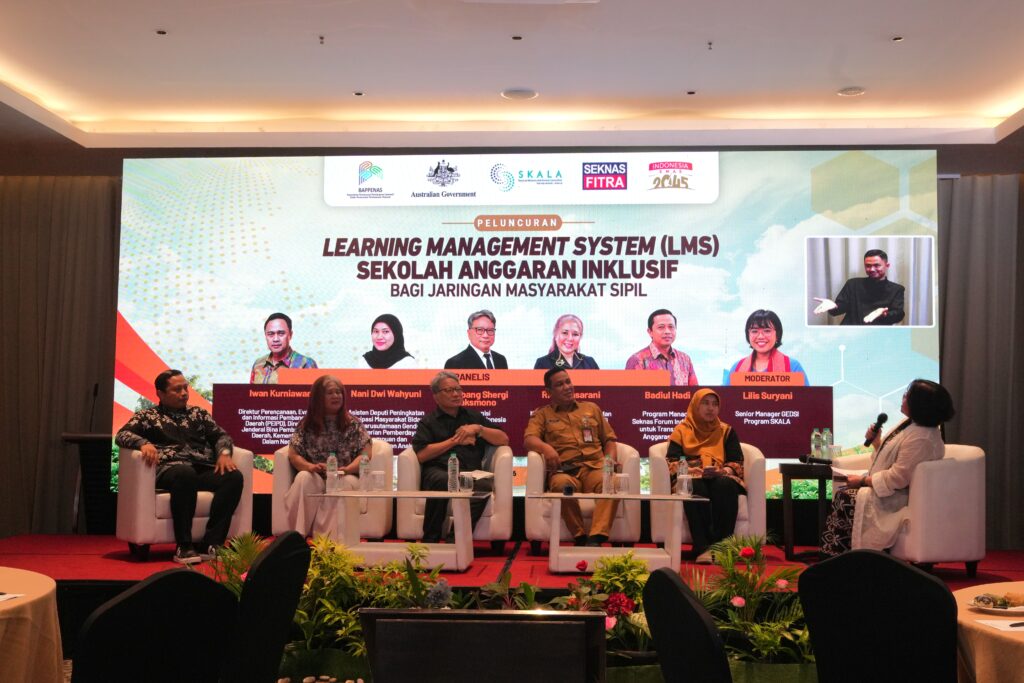
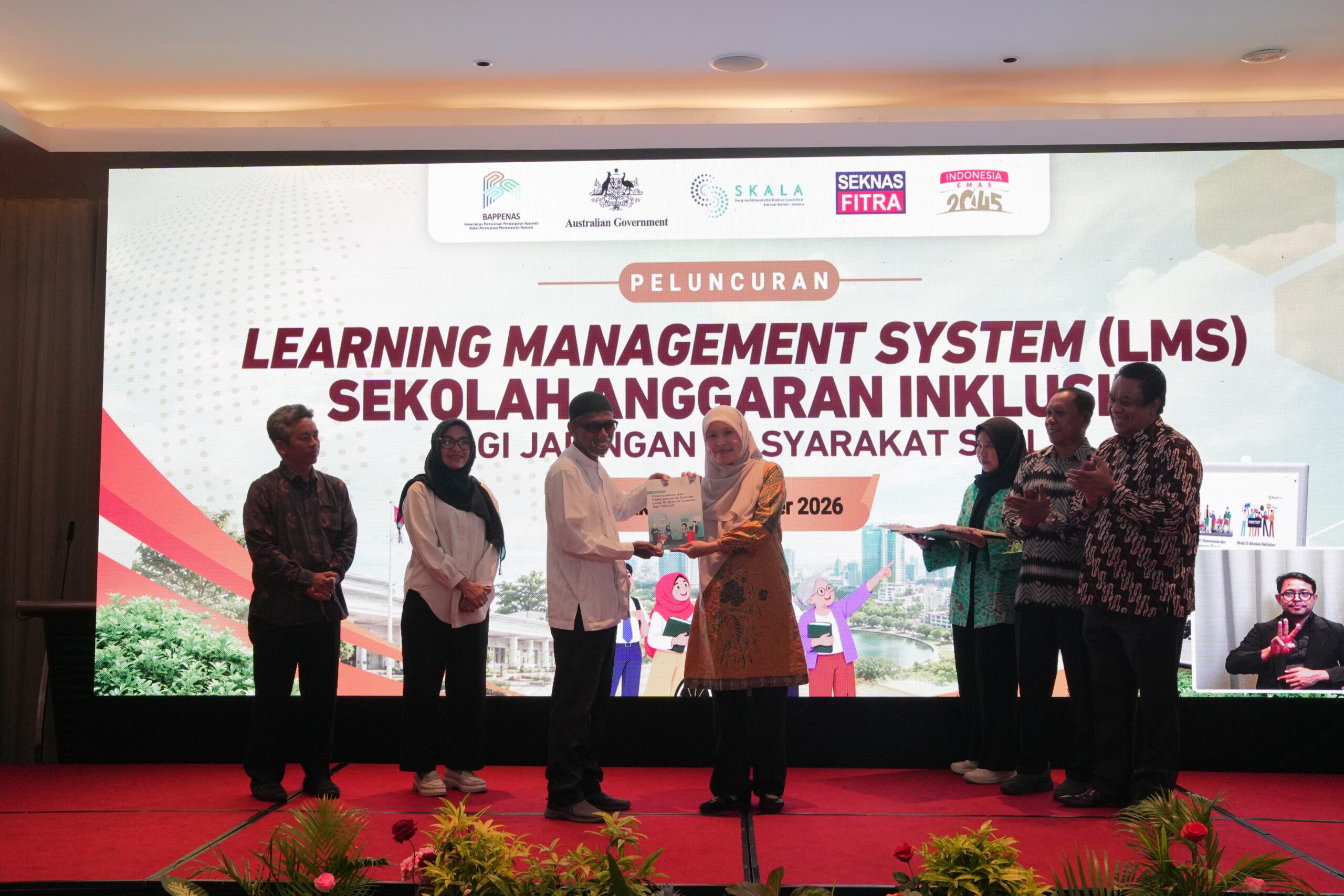
To support broad-based participation in these processes, the Ministry of National Development Planning (Bappenas), National Secretariat of the Indonesian Forum for Budget Transparency (FITRA) and SKALA, an Australia–Indonesia partnership program, launched the Inclusive Budget School (Sekolah Anggaran Inklusif) Learning Management System, known as SEKAR Inklusif in Jakarta on 27 October 2026.
SEKAR Inklusif is open to anyone who wishes to independently develop their understanding of gender-responsive and inclusive planning and budgeting. Civil society organisations (CSOs), government officials, academics, journalists, university students, community groups and the general public are expected to be among those interested in the platform.
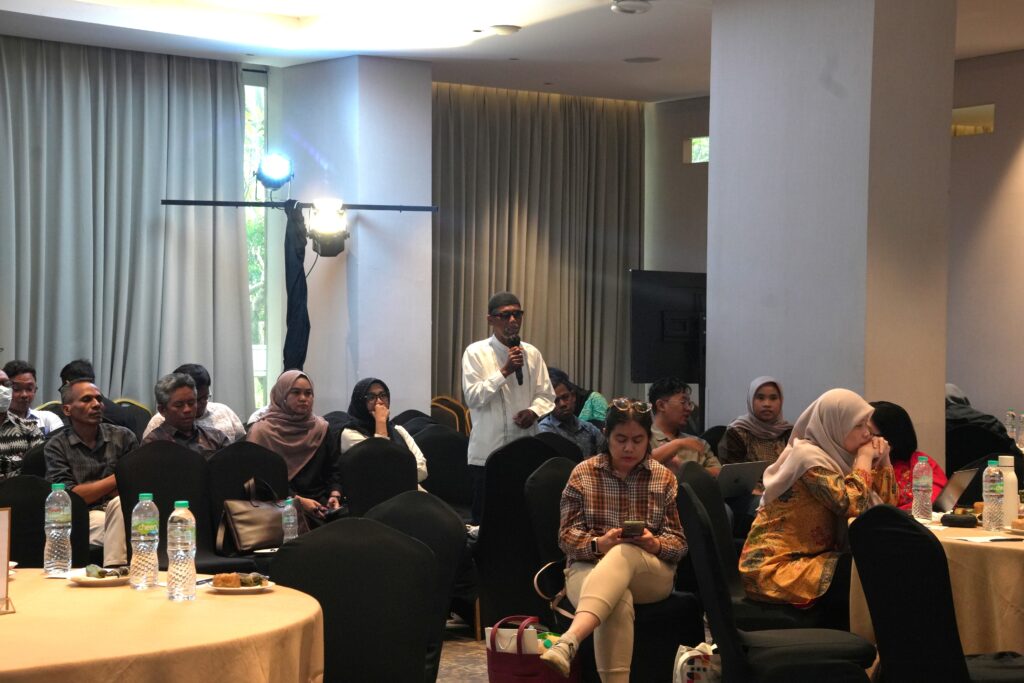
The hybrid launch brought together stakeholders from government, academia, CSOs and organisations of people with disability. A discussion featuring speakers from different sectors provided participants an opportunity to reflect on ways to strengthen meaningful public participation in development processes, particularly among people with disability and other under-represented groups.
Gender-responsive and inclusive budgeting
One of the key challenges in government budgeting is determining whether public spending genuinely responds to community needs. Budget allocation or the proportion of funds spent, does not necessarily indicate whether public services are reaching the people who need them.
Deputy for Gender Equality at the Ministry of Women’s Empowerment and Child Protection, Amurwani Dwi Lestariningsih, explained that budgets shape development priorities and influence people’s access to development benefits.
“Budgets are policy instruments that determine development priorities, the distribution of resources, the quality of public services and people’s wellbeing,” Ms Lestariningsih said.
The challenge of achieving equitable development is highlighted by quantitative measures of persistent gender inequality. In 2025, Indonesia’s national Gender Inequality Index stood at 0.402, down from 0.421 in 2024. While this represents an improvement, gender inequality remains an important development concern.
Budget policies therefore need to consider the different needs and circumstances of women and men, ensuring that public resources are allocated in ways that respond to these differences and advance gender equality.
Meaningful public participation in development planning
Understanding community needs requires information about the circumstances and challenges people face in their daily lives. CSOs are crucial to gathering and bringing these perspectives into development processes.
Director for Family, Parenting, Women and Children at Bappenas, Qurrota A’yun, emphasised how important CSOs are to evidence-based development planning.
“Civil society organisations often work directly with communities at the grassroots level. They understand the challenges communities face and can convey the aspirations of groups that are often under-represented in development processes,” Ms A’yun said.
However, to convey those aspirations effectively, members of CSOs and other interested parties must be able to understand planning documents, interpret budget allocations and assess how public spending relates to community needs.
A key motivation for developing SEKAR Inklusif was to deepen understanding of these processes and improve access to learning about them.
Expanding access to budget literacy
According to Secretary-General of FITRA, Ervyn Kaffah, SEKAR Inklusif builds on FITRA’s longstanding efforts to strengthen public budget literacy.
These efforts began with FITRA’s Budget Resource Centre (Pusat Pengetahuan Anggaran), which performed four core functions: learning, information provision, budget analysis and advocacy.
This experience subsequently helped inform development of the Village Budget School (Sekolah Anggaran Desa), which helped to strengthen budget literacy among communities and local governments.
Now FITRA, with support from SKALA, hopes to reach a much wider user base with SEKAR Inklusif’s digital learning platform.
“We want to provide a platform that is easily accessible to the wider public, particularly those who have been actively building capacity and supporting community groups, especially vulnerable groups,” Mr Kaffah said.
SEKAR Inklusif provides an accessible learning platform that enables people from diverse backgrounds, including people with disabilities, to learn independently and at their own pace.
Learners are supported to understand government planning and budget documents, identify gaps in public service delivery, and prepare proposals informed by data that respond to community needs.
Connecting budget data with community experiences
SKALA Implementation Director, Ted Weohau, said public budgets needed scrutiny informed by the experiences and perspectives of the people they are intended to serve.
This is because the availability of facilities and expenditure of public funds do not automatically guarantee that everyone can access and benefit from services.
Mr Weohau gave the example of a woman with a disability seeking healthcare services. A healthcare facility might be available to meet her needs, but travelling to it could be difficult. Not being able to find information about the facility and an absence of assistance to get there would create further barriers to receiving the care it offered.
As such, budget data needs to be considered alongside people’s lived experiences to identify gaps that may otherwise remain overlooked.
“This is where bringing together data, community experiences and budget decisions becomes important,” Mr Weohau said.
SKALA’s work with regional government partners is demonstrating progress in regard to the inclusion of vulnerable people’s perspectives and needs in planning and budgeting processes.
For example, in Nusa Tenggara Barat, 94 out of 137 proposals submitted by vulnerable groups have been incorporated into the Regional government work plan. In North Kalimantan, 42 proposals submitted through the Mentari Kaltara mechanism have been accommodated in budget implementation documents.
These figures indicate that opportunities are being created for vulnerable groups to influence regional planning and budgeting. However, continued monitoring is essential to determine whether the proposed activities are being implemented and make a meaningful difference to the intended beneficiaries.
On top of learning how to develop evidence-based proposals and engage in dialogue with government, community groups can learn about monitoring program implementation as part of SEKAR Inklusif’s whole learning package.
SEKAR Inklusif offers five learning modules:
- Gender-responsive and inclusive regional planning and budgeting processes — introduces the principles and processes of inclusive development planning and budgeting.
- Data-driven analysis of regional planning and budgeting — strengthens participants’ ability to use disaggregated data to identify inequalities and assess budget priorities.
- Policy advocacy for gender-responsive and inclusive regional planning and budgeting — develops the knowledge and skills needed to advocate for more inclusive government policies and resource allocations.
- Implementation and monitoring of gender-responsive and inclusive advocacy — supports participants to follow up on advocacy efforts and monitor the implementation of development commitments.
- Inclusive Budget Knowledge Centre (PPAI): from data to knowledge, from knowledge to change — provides resources to turn budget information and analysis into practical knowledge and action.
Interested participants are encouraged to go to the SEKAR Inklusif registration page to start their learning journey.