


Strengthening Regional Fiscal Autonomy through the Local Tax Ratio
A study by the Ministry of National Development Planning/Bappenas has revealed a decline in the average local tax ratio (LTR), defined as the ratio of regional tax revenue to Gross Regional Domestic Product (GRDP). The drop from 1.22 per cent in 2024 to 1.12 per cent in 2025 highlights the fragility of subnational fiscal capacity and an ongoing heavy reliance on central government transfers.
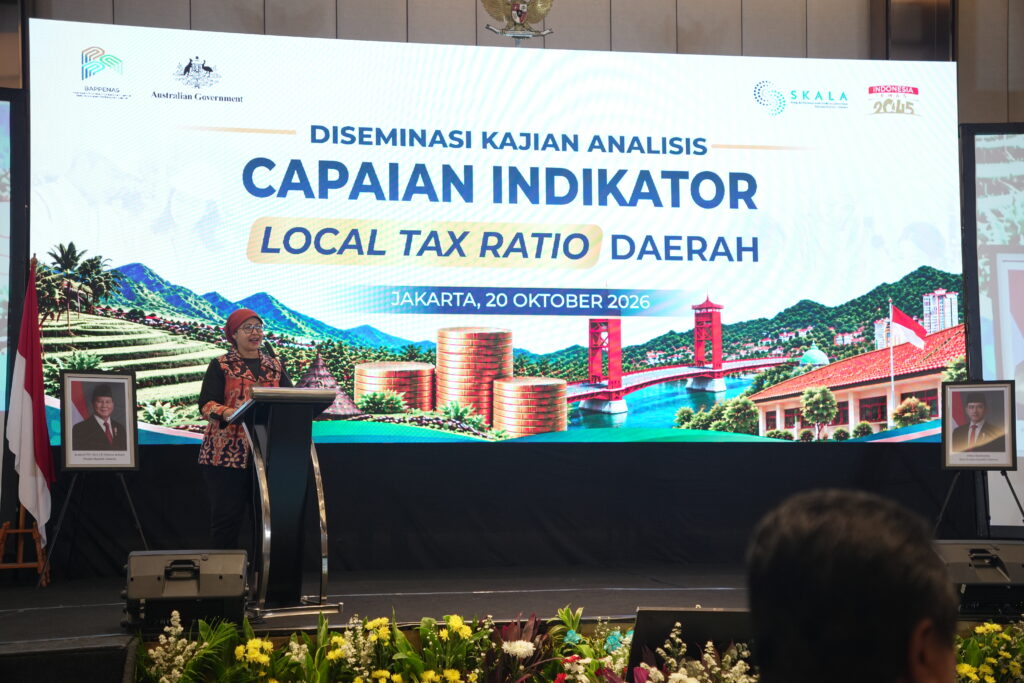
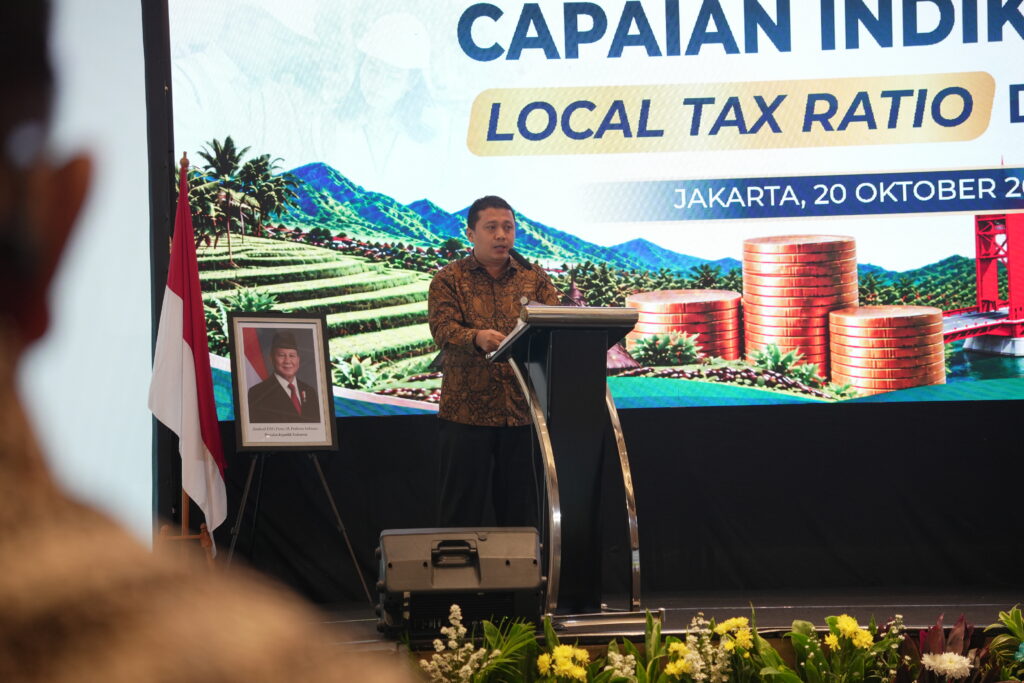
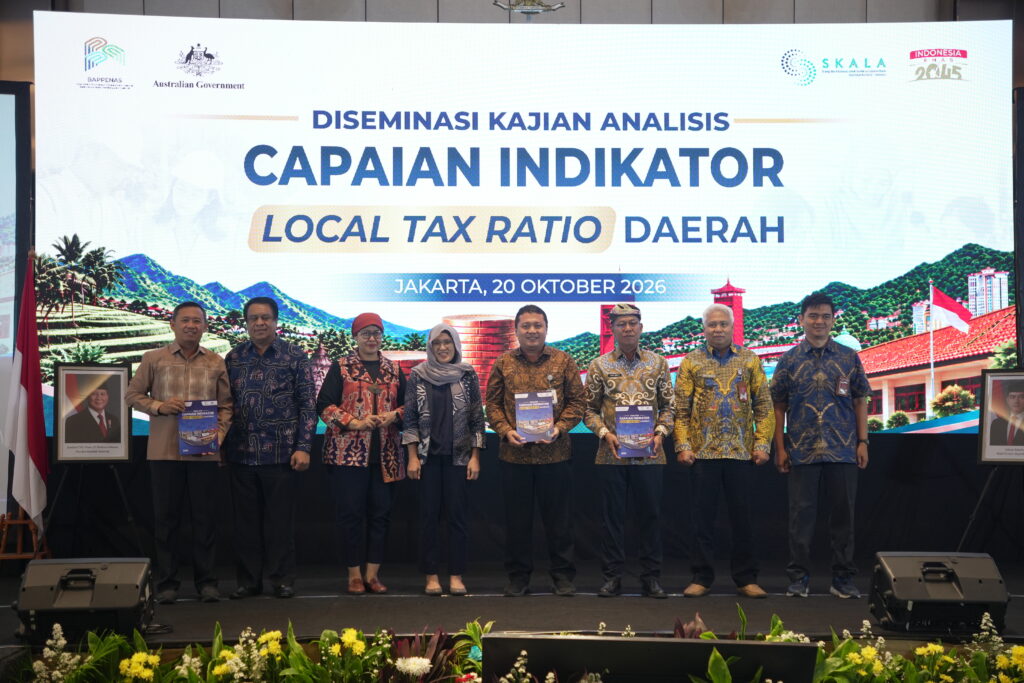
The findings of the study, titled ‘Analysis of Regional LTR Indicator Achievements’, were presented during a dissemination event in Jakarta on Tuesday (20 October 2026). Beyond the decline in the national average, inter-regional disparities remain stark. Bali recorded the highest LTR at 4.60 per cent, whilst West Papua registered the lowest at 0.39 per cent.
The study concludes that the correlation between the LTR and per capita GRDP remains weak and leans negative. In other words, vibrant regional economic activity does not automatically guarantee higher tax contributions to subnational coffers. Diverging economic structures are the primary factor: regions dependent on mining and extractive commodities generate substantial economic value, yet the bulk of these revenues accrues to the central government. In contrast, services sector, tourism, commerce, transport, and hospitality are directly linked to regional tax bases.
Anang Budi Gunawan, Director of Regional Government, Subnational Finance, and Transfers to Regions at the Ministry of National Development Planning/Bappenas, observed that bolstering fiscal independence is increasingly urgent amid narrowing fiscal space and surging development expenditure needs. Subnational governments must optimise regional own-source revenue (PAD) and reform tax governance without unduly burdening residents or dampening the investment climate.
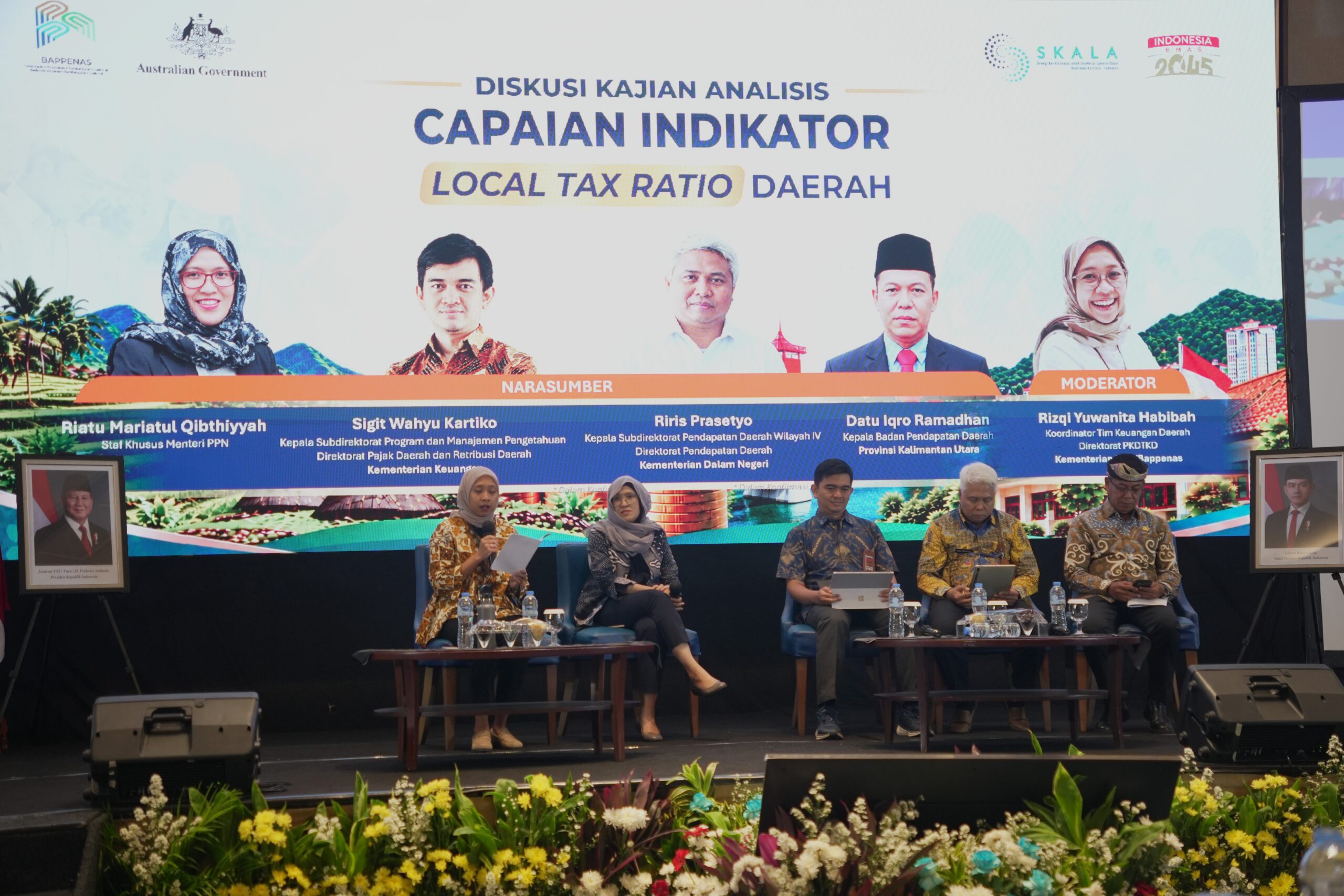
Special Staff to the Minister of National Development Planning/Head of Bappenas, Riatu Mariatul Qibthiyyah, noted that subnational fiscal policy cannot take a uniform approach. ‘A one-size-fits-all approach is not viable. Economic dynamics and activities vary considerably from one region to another,’ Riatu explained.
She added that strategies to boost the LTR must be formulated around each region’s economic structure, institutional capacity, tax base, and administrative challenges. Furthermore, taxpayer compliance is heavily shaped by the tangible reciprocal benefits of public development.
Astrid Kartika, Unit Leader of Decentralised Governance at the Australian Embassy’s Department of Foreign Affairs and Trade (DFAT), noted that adequate fiscal space is critical for Indonesia to effectively harness diverse economic potential and local governance capacities nationwide.
Reforming Governance and Data Systems
In practice, revenue optimisation confronts hurdles including limited data, public sector workforce capacity, taxpayer compliance and inter-agency coordination.
The Head of the North Kalimantan Regional Revenue Agency, H. Datu Iqro Ramadhan, highlighted potential revenue leakage caused by the widespread use of out-of-province registration plates on operational vehicles in the mining and oil palm sectors. ‘They use North Kalimantan’s roads and buy fuel here, yet they make no fiscal contribution to the province,’ Datu Iqro stated.
To tackle this challenge, the North Kalimantan Provincial Government introduced initiatives including a Watercraft Tax and a Heavy Equipment Tax supported by barcode scanning for asset identification and compliance monitoring. This experience demonstrates that lifting own-source revenue demands concrete operational execution, updating databases, plugging loopholes, and broadening the tax base, rather than simply raising tax rates.
The Bappenas LTR study drew on data from 2014 to 2025, incorporating a survey of 38 provinces and 12 regencies/cities, alongside spot checks in Aceh, Southwest Papua, North Kalimantan, and Special Capital Region of Jakarta (DKI Jakarta).
The research and dissemination were supported by SKALA, an Australia-Indonesia Partnership Program. SKALA supports subnational fiscal capacity through policy research, technical advice, regulatory drafting support, and institutional capacity building for local governments. Designating the LTR as a priority program indicator in the 2025–2029 National Medium-Term Development Plan (RPJMN) and aligning it with Regional Medium-Term Development Plans (RPJMD) establishes mandatory, routine monitoring throughout the budget planning cycle. Through evidence-based governance, subnational governments are expected to expand their fiscal space for development while maintaining the quality of essential public services.