


Papua Province Strengthens Integrated Data Governance through The Satu Data Forum
Accurate, up-to-date and integrated data are essential for governments to understand community conditions, set development priorities and improve the quality of public services. In Papua Province, efforts to strengthen data governance continue so that available data are increasingly complete, consistent and usable for planning and decision-making.
As of early September 2026, 555 data entries were registered in the Papua Provincial Data List. Of these, 414 entries, or around 74.6 per cent, were completed by the responsible regional government agencies. This result highlighted areas that remain to be strengthened, particularly data completeness, metadata, system integration, and the use of data in development processes.
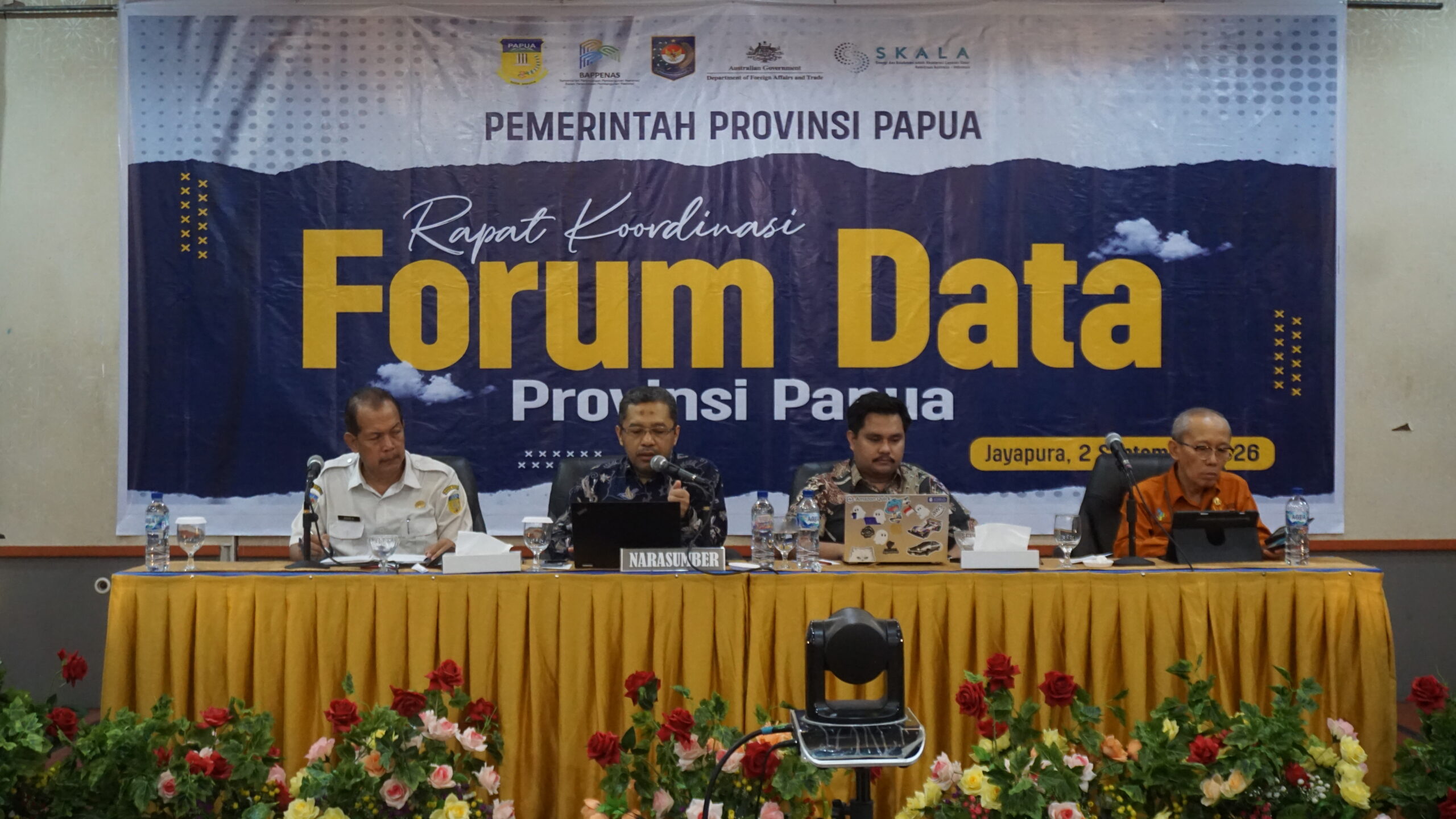
To boost the implementation of One Data (Satu Data), the Papua Provincial Government held the 2026 Papua Province Satu Data Forum Coordination Meeting in Jayapura City on 2 September 2026. The forum provided a platform to align development data needs, strengthen Satu Data governance, and agree on follow-up actions at both provincial and district/city levels.
Data as the foundation for Papua’s development
Representing the Governor of Papua, Acting Regional Secretary of Papua Province Christian Sohilait opened the coordination meeting and emphasised that implementation of Satu Data was a shared responsibility across government agencies.
“Data is the foundation for government to understand community conditions, determine priorities, formulate policies, and measure development progress. Good policies must be built on accurate data. Well-targeted programs require up-to-date data.”
He also said it was important to ensure the agreed data list genuinely reflected Papua’s development needs and could be used in decision-making processes.
“Let us use this forum as momentum to build a government culture that places data at the centre of decision-making, rather than treating it merely as a supporting administrative document.”
Creating a culture of data use is vital for Papua’s development – doing so will usher in policies, programs and public services underpinned by the actual conditions and needs of communities.
Agreeing on priorities to strengthen Satu Data in Papua
The coordination meeting focused on three main agendas: preparing the 2027 Papua Provincial Data List, developing the 2027–2030 Papua Province Satu Data action plan, and setting the direction for revitalising the Papua Provincial Data Portal, PAITUA.
Satu Data’s implementation in Papua refers, among others, to Presidential Regulation No. 39 of 2019 on Satu Data Indonesia, Ministry of Home Affairs Regulation No. 70 of 2019 and Papua Governor Regulation No. 50 of 2021 on Papua Integrated Satu Data.
The Papua Provincial Government is encouraging all districts and cities to put in place three key elements of Satu Data: regulation, institutional arrangements and implementation.
The coordination meeting provided an opportunity to review how each local government was tracking on implementation of the three key elements.
Waropen and Supiori districts already have regulations, institutional arrangements and implementation mechanisms in place. Jayapura District has established a forum, but its regulatory and institutional arrangements still need to be finalised.
Keerom, Sarmi, Mamberamo Raya, Kepulauan Yapen and Biak Numfor have scope to enhance both regulation and implementation. Meanwhile Jayapura City has enacted a mayoral regulation, but its institutional arrangements require follow-up.
At the provincial level, the 2026 Data List has been aligned with the Papua provincial medium-term development plan (RPJMD) 2025–2029. A total of 98 datasets have been identified as priorities and 544 indicator codes have been mapped. All 555 entries in the list are classified as open to the public.
The forum brought together more than 80 participants from 42 provincial government agencies, as well as representatives from the Regional Development, Research and Innovation Agency (Bapperida), Communications and Informatics (Diskominfo) and Statistics Indonesia (BPS) offices from nine districts and one city across Papua Province. The discussions also involved the Satu Data Indonesia Secretariat at the Ministry of National Development Planning (Bappenas), the Data and Information Systems Centre of the Ministry of Home Affairs and BPS Papua Province.
Strengthening standards, integration and data use
Throughout the coordination meeting, participants discussed various aspects of Satu Data implementation, including governance, standards and metadata, system integration and the use of data portals.
The forum’s coordinator, Mr Sohilait, presented on how Satu Data implementation was progressing across the province, including the remaining challenges. The discussion continued with an overview of regional Satu Data governance in line with Ministry of Home Affairs regulations and Satu Data Indonesia guidelines from Bappenas.
BPS Papua Province also highlighted that metadata standardisation was crucial to ensuring that data produced by different data producers could be read, compared and used consistently.
The forum also discussed preparation of the 2027–2030 Papua Province Satu Data action plan and revitalisation of the PAITUA portal to support a more integrated government data ecosystem. Discussions centred on system interoperability, data standards, metadata and a desire for regional government agencies to make greater use of the portal.
Efforts to strengthen Satu Data in Papua are intended to produce data that provide a more comprehensive picture of community conditions and needs. Disaggregated data helps governments understand the needs of women, men, people with disability, communities in remote areas and Indigenous Papuans in development planning processes.
SKALA, the Australia–Indonesia partnership program, is supporting the Papua Provincial Government to prepare the 2027–2030 Papua Province Satu Data action plan and to strengthen data quality and consistency as a basis for inclusive development planning.
Following up on the forum’s outcomes
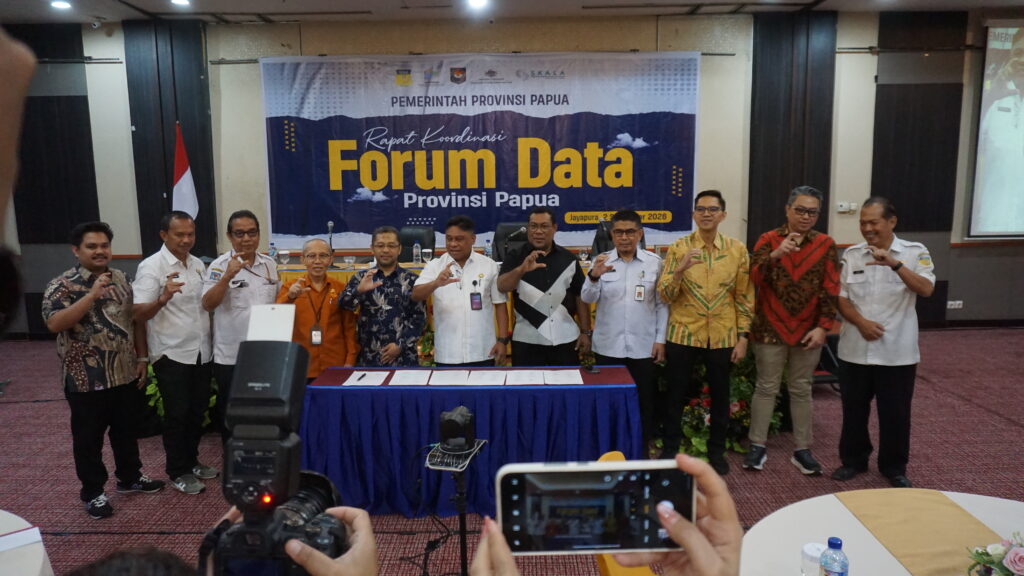
The agreements reached during the forum were formalised in an official record. Representatives from participating regional government agencies signed the record, witnessed by Mr Sohilait as forum coordinator.
Follow-up actions include developing standard operating procedures, completing metadata, refining the data list and increasing how much data are entered into PAITUA by regional government agencies. Through these follow-up actions, the Papua Provincial Government will continue strengthening Satu Data implementation so that data become more complete, integrated and consistently used to support planning, decision-making and improvements in the quality of public services. SKALA’s support is directed towards strengthening this process in line with the provincial government’s priorities and needs.