


HONAI One Data: Foundation for Indigenous Papuan data and evidence-based planning
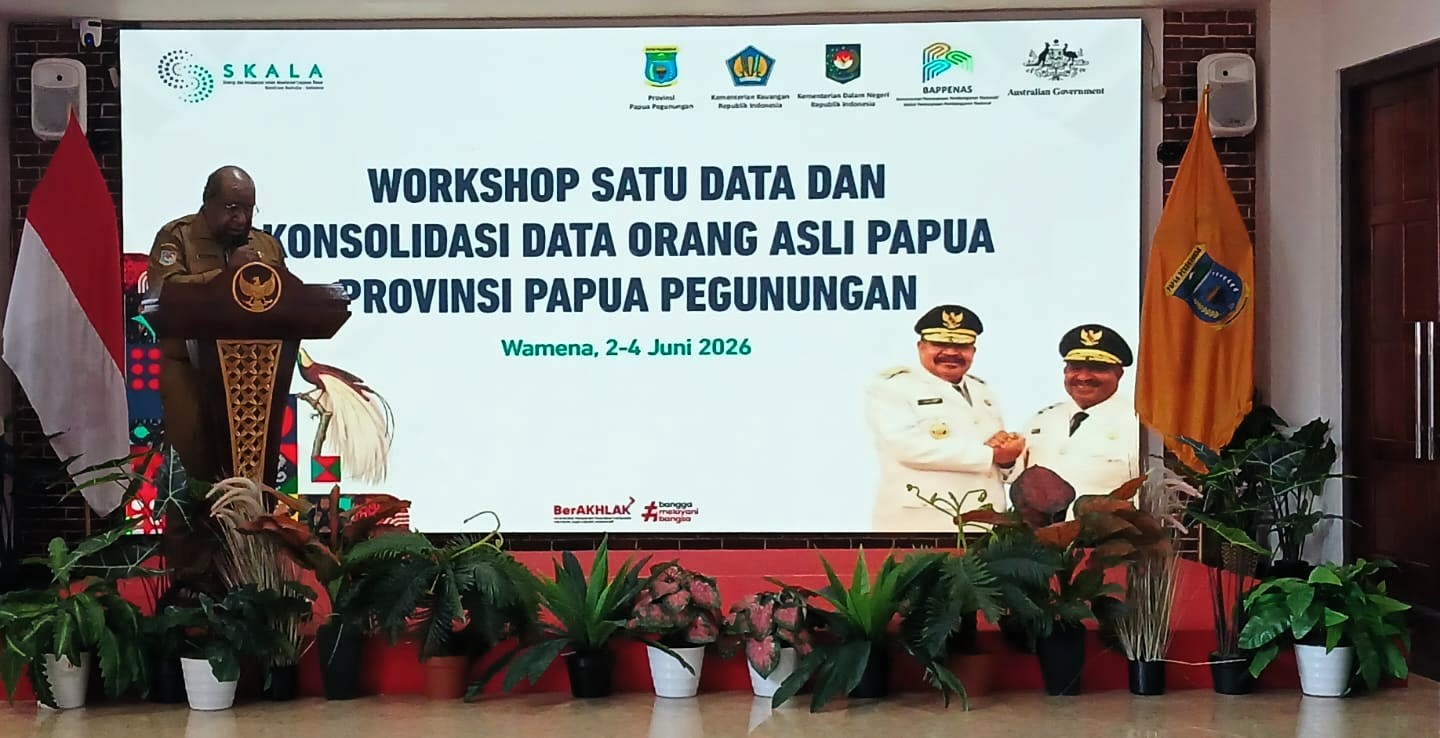
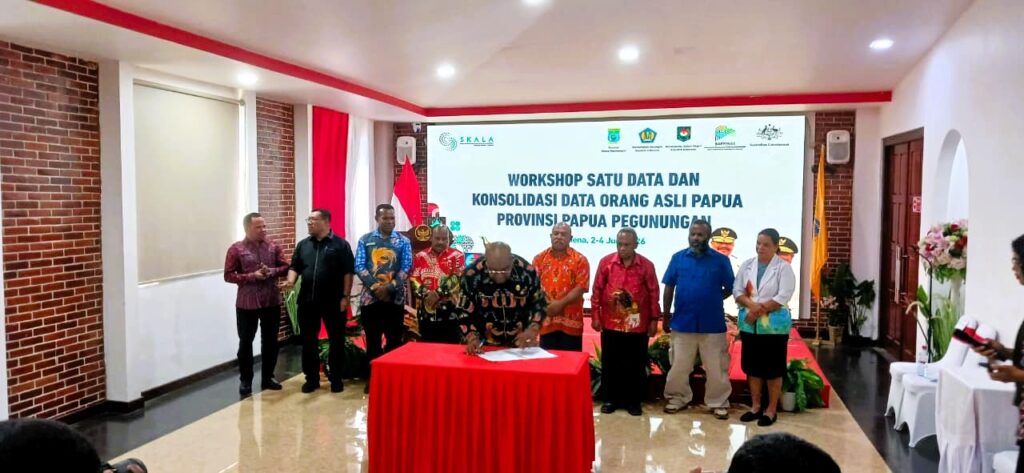
The Papua Pegunungan Provincial Government convened the Papua Pegunungan’s One Data and Indigenous Papuan Data Consolidation Workshop from 2 to 4 June 2026 in Wamena, Papua Pegunungan Province. This event marked a preliminary step in strengthening regional One Data governance within Papua Pegunungan as a newly autonomous region.
This initiative represents the first step for the Papua Pegunungan Provincial Government in building the institutional foundation for One Data: formulating the initial direction for the 2026–2029 Regional One Data Action Plan, mapping the data inventory requirements for the upcoming year, and consolidating data on Indigenous Papuans (OAP). This data consolidation serves as the basis for more affirmative and precisely targeted development planning.
The workshop was officially opened by the Regional Secretary of Papua Pegunungan Province, Wasuok Demianus Siep, representing the Governor of Papua Pegunungan, in hope that “this activity will yield tangible, follow-up actions for Indigenous Papuans.” This message underscored the critical point that data enhancement is inextricably linked to efforts ensuring development effectively reaches communities in need.
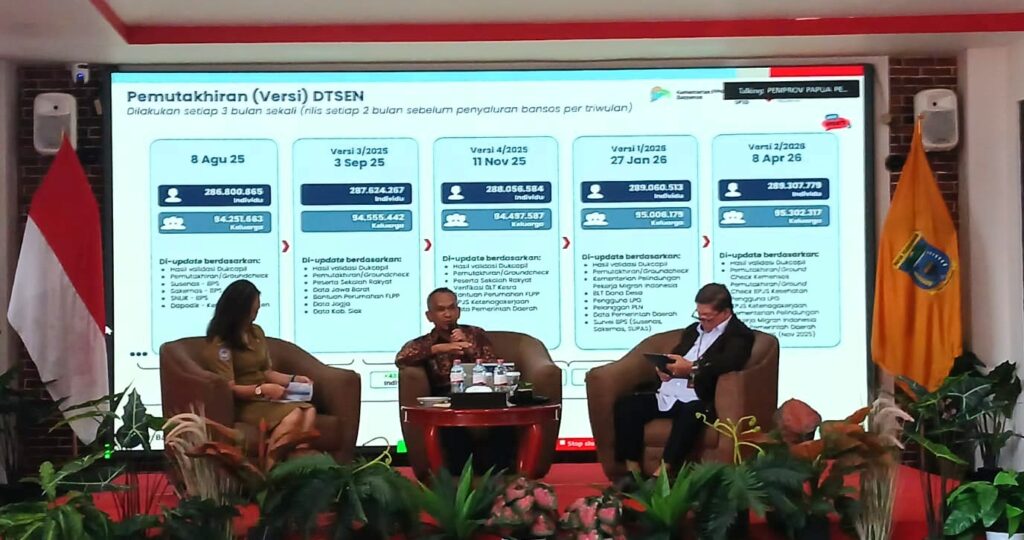
The event was widely attended by participants representing the Papua Pegunungan Provincial Government; district governments across Papua Pegunungan; the Regional Development Planning, Research and Innovation Agency (Bapperida); the Department of Communication and Informatics (Diskominfo); the Department of Population and Civil Registration (Dukcapil); regional apparatus organisations (OPD) acting as data producers; the Papuan People’s Assembly (MRP) of Papua Pegunungan Province; the Steering Agency for the Acceleration of Special Autonomy Development in Papua (BP3OKP); and Statistics Indonesia (BPS) at both provincial and district levels, alongside resource persons from various national ministries/agencies and SKALA. Topics addressed included the One Data Indonesia and Internal Administration One Data policies, Regional Development Data and Data Inventories, access to the National Socio-Economic Single Data, the utilisation of the Centralised SIAK/SIAK Plus system for OAP data collection, and lessons learned from the socio-economic data collection of Indigenous Papuans in South Papua.
One Data as the foundation for a newly autonomous region
As a newly autonomous region, Papua Pegunungan requires a data system that is orderly, standardised, integrated and applicable for planning, budgeting, control, evaluation and development-related decision-making. In the absence of robust data governance, sectoral data risks operating in silos, becoming difficult to compare or share and lacking the reliability required to inform targeted policies.
For Papua Pegunungan, data enhancement comes with additional benefits. Data on Indigenous Papuans is crucial for the full implementation of Special Autonomy, basic services, social protection, education, health, the economy, and more equitable regional development. OAP data encompasses not merely population figures, but also identity, tribe, clan, village, district, customary territories and verification mechanisms that must be executed meticulously and with full accountability.
Indigenous Papuan data and affirmative action policy
Based on preliminary consolidation efforts, the population for Papua Pegunungan in the second semester of 2025 was recorded as 1,481,059 individuals. OAP data within the SIAK Plus system indicated 1,337,966 individuals, whereas available ‘by name, by address’ OAP data currently stands at approximately 24,541 individuals. This situation signifies that while aggregate OAP data is available, the consolidation of ‘by name, by address’ data still requires acceleration, verification and phased updating.
The consolidation of OAP data is imperative, because affirmative action policies necessitate data that shows who requires services, their geographic location and which needs must be prioritised. Without more granular and validated data, development programs run the risk of failing to reach the most vulnerable community cohorts.
Discussions on OAP data collection identified notable gaps in access to services. Several districts were found to be facing geographical impediments, limited transport access to sub-districts, inadequate telecommunications networks, security challenges, budgetary constraints for data recording, limited human resources, incomplete tribal and clan data, and low public awareness concerning the reporting of vital demographic events such as births, deaths, marriages, departures and arrivals.
The workshop participants deliberated on the need for a data collection approach better tailored to the specific conditions of Papua Pegunungan. Conducting OAP data collection solely via an administrative approach is insufficient: collection must consider villages, districts, tribes, clans, customary territories and the engagement of local actors possessing social legitimacy. The consolidation of OAP data demands collaborative efforts across provincial and district Dukcapil, Bapperida, Diskominfo, BPS, MRP, BP3OKP, relevant OPDs, district governments and village administrations.
As part of the workshop, participants were divided into discussion groups to address 2 primary agendas. The first group focused on One Data institutional arrangements, the action plan, data inventories, the structure of the One Data Forum, and regional regulatory requirements. The second group examined the consolidation of OAP data, progress on data collection per district, the utilisation of SIAK Plus, requirements for tribal and clan data, and the challenges associated with expediting recording and verification processes. In the institutional discussions, participants agreed that Papua Pegunungan One Data must be established through clear regulations and division of roles. Please see following image for the coordination structure of One Data Forum.
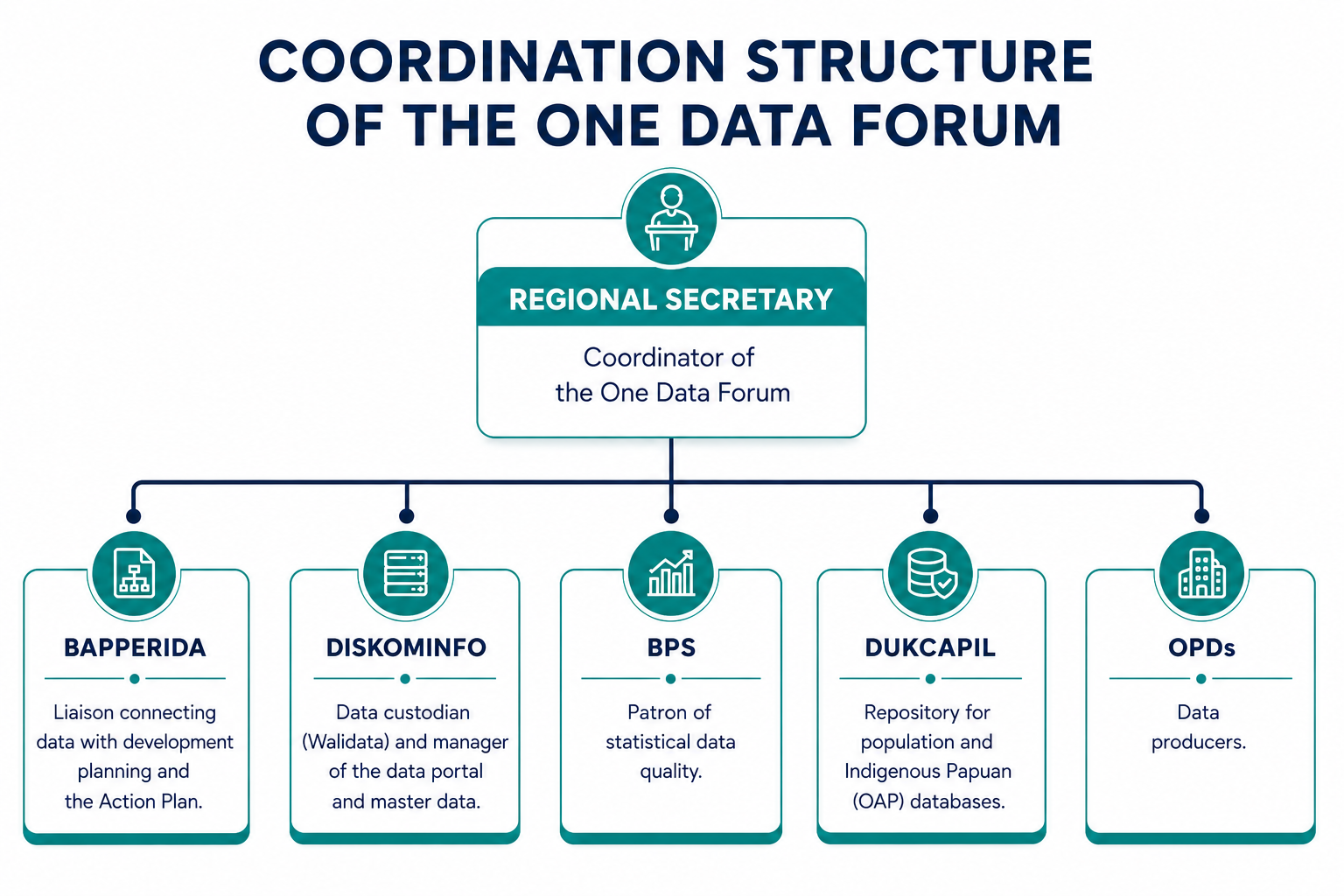
The Regional Secretary is positioned as the coordinator of the One Data Forum, Bapperida as the liaison connecting data with development planning and the Action Plan, Diskominfo as the data custodian (walidata) and manager of the portal/master data, BPS as the patron of statistical data quality, Dukcapil as the repository for population and OAP databases, and OPDs as data producers.
HONAI One Data as a shared home for data governance
The event generated preliminary discussions regarding Papua Pegunungan HONAI One Data as the identity and ecosystem for regional data governance. HONAI One Data is positioned as a ‘shared home’ to collect, verify, maintain and utilise Papua Pegunungan’s development data. HONAI is also a comprehensive framework and thus requires regulation, institutional structures, an action plan, data inventories, standard operating procedures (SOPs), financing, human resources and mechanisms for data utilisation.
Participants deliberated on the Papua Pegunungan One Data Action Plan 2026–2029. The plan is conceived as a phased roadmap for establishing regional data governance, spanning the strengthening of regulations and institutions, mapping data needs, capacity building for human resources, developing the portal/master data, data collection and verification, through to monitoring and evaluation at the district level. Within the forum, the Action Plan was agreed upon at a semi-final status, and will require further compilation.
In addition to the Action Plan, the workshop addressed the Data Inventory for the coming year. The Data Inventory ensures that data required for the Regional Medium-Term Development Plan (RPJMD), Regional Government Work Plan (RKPD), Regional Budget (APBD), Special Autonomy, basic services and OAP affirmative action policies can be identified proactively. Several prominent priority data sets included population figures by district and gender; poverty rates and social assistance recipients; school participation rates and school-aged children demographics; maternal and infant mortality rates; life expectancy; health workforce statistics; OAP services; households lacking access to water, sanitation and electricity; as well as data on OAP micro, small and medium enterprises (MSMEs) and cooperatives.
Based on the discussion outcomes, all parties agreed that the Papua Pegunungan One Data Forum must not be relegated to a ceremonial role. The Forum must function as a space for clarification, verification, agreement and data delegation. Each OPD acting as a data producer must ensure that proposed data is genuinely available, originates from a clear source, is verifiable and is relevant to the region’s development planning requirements.
The event concluded with the reading and refinement of agreed follow-up actions. Aligning with the Regional Secretary’s directives during the opening session, the workshop’s closure reaffirmed that all discussion outcomes must be translated into tangible work agendas, particularly to strengthen the consolidation of OAP data and establish a more structured Regional One Data governance framework.
Agreed-upon follow-up actions include the establishment of the Papua Pegunungan One Data Forum, the finalisation of the One Data Action Plan 2026–2029, the finalisation of the subsequent year’s Data Inventory, the formulation of Regional One Data regulations including Governor Regulations (Pergub) and decrees (SK) for organisers/the forum, the enhancement of roles for data custodians and producers, the consolidation of OAP data via SIAK Plus, the mapping of tribal and clan data, capacity building for data management personnel, and the development of the master data or the Papua Pegunungan HONAI One Data portal.
The parties concurred on the critical need to bolster financing and infrastructure to support OAP data collection. This includes data recording, outreach to remote areas, operational equipment, network connectivity, servers and backup systems, as well as training for data managers at the provincial, district and village levels. This support is essential to ensure OAP data collection can be progressively executed on the ground.
From agreement to implementation
This process was made possible through the supervision of the Data and Information Centre (Pusdatin) of the Ministry of Home Affairs, which has assisted the Papua Pegunungan Provincial Government in establishing an administratively sound data governance system that is viable for more inclusive, affirmative and evidence-based development planning. The SKALA Program (Synergies and Collaboration for Service Delivery Acceleration), an Australia–Indonesia government partnership, supported this process by facilitating discussions, strengthening capacity, providing technical assistance in drafting the direction of the Action Plan, and supporting institutional consolidation and OAP data efforts.
Empowered by a more robust One Data framework, the regional government is expected to formulate more precisely targeted policies, reinforce the implementation of Special Autonomy, and ensure that Indigenous Papuans and communities residing in the highland regions remain central to development planning.