


Maluku Supports Inclusive Development for Vulnerable Groups
A meeting between Maluku’s parliament and civil society organisations could shape the province’s 2027 development plan, putting healthcare access, disability education and the rights of women fishers at the centre of Maluku’s push for inclusion.
In Maluku, two of the province’s 11 regencies and cities still have no school for children with disabilities. The women who work as fishers, central to food security and household income across the islands, have no formal recognition in government policy. And victims of sexual violence are often required to pay for their own medical examinations, despite a 2022 law that entitles them to free health care.
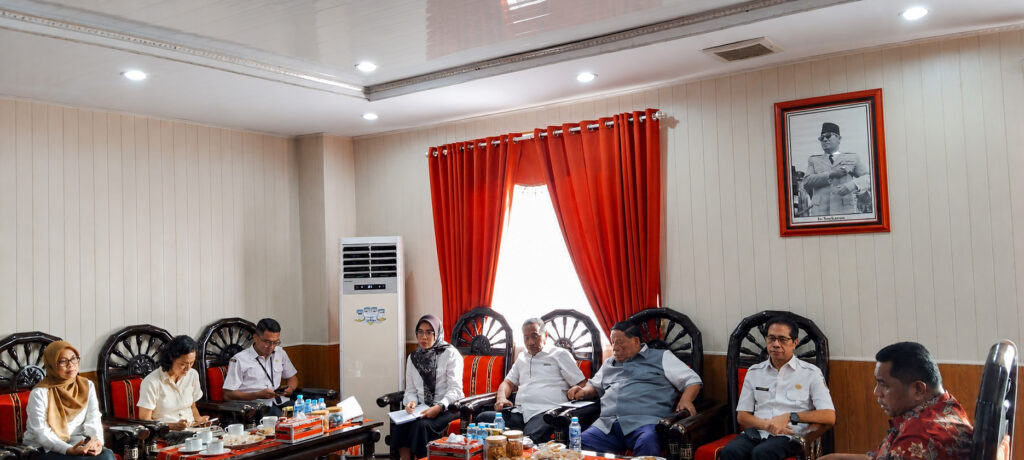
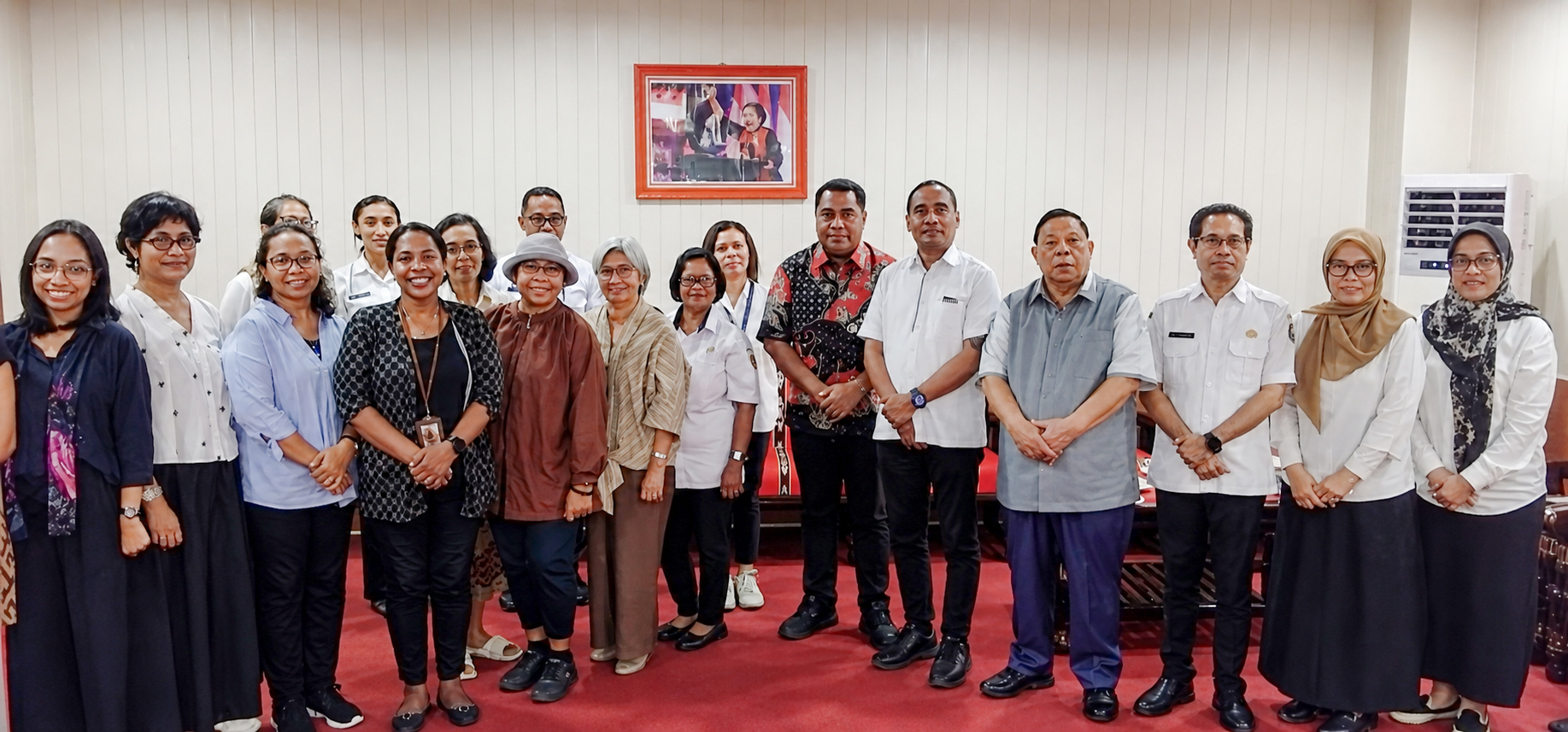
These were among the challenges raised when the Maluku Provincial Regional Legislative Council (DPRD), the province’s parliament, met with the Manise Public Participation Forum for the Welfare of Women and Children (PUSPA) in May 2026. The parliament is pushing for inclusive development programs and initiatives, designed to respond to the different needs of women, men, older people and people with disabilities.
The meeting was a follow-up to a Thematic Development Planning Deliberation (Musrenbang Tematik), a provincial planning forum designed to help shape development priorities by bringing together civil society organisations, including PUSPA, the Women and Children’s Empowerment Circle (LAPPAN), and the Centre for General Election Disability Access (PPUAD). Held in late 2025 under the theme of communities sharing experiences (Bacarita Manise), the gathering aimed to integrate gender equality, disability and social inclusion (GEDSI) considerations into Maluku’s development planning.
Benhur Watubun, Chair of the Maluku DPRD, said the legislature supports the provincial government’s efforts to integrate these issues into future development programs.
‘The DPRD’s role is to provide oversight,’ he said. ‘What matters is that there is a budget function in the programs the government formulates.’
Watubun said Maluku already has a legal foundation to act, citing Regional Regulation No. 5 of 2024 on the Implementation of Respect, Protection and Fulfilment of the Rights of Persons with Disabilities.
‘We can oversee the proposals put forward by our colleagues from PUSPA to ensure they are incorporated into the 2027 development plan. This is particularly viable given that the legal framework is already in place,’ Watubun said.
Gaps in support for victim-survivors of sexual violence
Baihajar Tualeka, Director of LAPPAN, said service provision for victim-survivors of sexual violence in Maluku continues to face numerous obstacles. These challenges include fiscal constraints that disrupt recovery, and medical care and tailored support services.
‘Budget constraints result in victim-survivors having to pay out-of-pocket for medical examinations at hospitals. This directly contradicts Law No. 12 of 2022 on Crimes of Sexual Violence (UU TPKS), which guarantees them access to free health care services,’ she said.
She said case management for victim-survivors requires a streamlined, single-window approach involving multiple stakeholders, and that an integrated criminal justice system could provide a powerful solution.
This integrated approach, known as the Integrated Criminal Justice System for Handling Cases of Violence Against Women (SPPT-PKKTP), is an inter-agency mechanism bringing together police, prosecutors, courts and service providers. Developed by the National Commission on Violence Against Women (Komnas Perempuan) since 2003, the system is designed to guarantee victim-survivors of gender-based violence access to justice and recovery.
Providing inclusive education across Maluku
The Maluku government is expected to provide inclusive education for the entire community, including through the establishment of Special Education Schools (SLB) across the province.
Although Maluku currently has 16 SLBs across nine of its 11 regencies and cities, two regencies, Southwest Maluku and Eastern Seram, have none. Gilbert Reawaruw, PPUAD representative, said he hoped the Maluku Education Agency would prioritise establishing new SLBs in the two regencies, rehabilitate other SLBs and strengthen special education skills among teachers.
Yunus Serang, a member of the Maluku DPRD’s committee on education and health, said Maluku needs its own university course to train special needs teachers, to help meet demand for SLB staff.
‘The DPRD must advocate for the introduction of a special needs education program at Pattimura University. At present, only standard teacher education programs are available. Yet the population of persons with disabilities in Maluku is quite large,’ he said.
Formal recognition for female fishers
The meeting raised the position of female fishers in Maluku, whose work currently lacks formal recognition in policy. Female fishers play a strategic role in maintaining food security, household economic stability and the sustainability of the regional fishing industry.
Bappeda, the Maluku Regional Development Planning Agency, initiated the meeting as a follow-up to ‘Bacarita Manise’, with support from the Australia-Indonesia Partnership Program, SKALA (Synergy and Collaboration for the Acceleration of Basic Services). Officials from the Office of Women’s Empowerment and Child Protection also attended.
At the meeting, the ‘Manise’ PUSPA Forum handed over a policy brief setting out its GEDSI recommendations, drawing on the outcomes of ‘Bacarita Manise’. Council members will use these recommendations to inform the Strategic Recommendations they put forward for the province’s 2027 Regional Government Work Plan.