


Giving Voice to the Vulnerable: Papua Selatan’s New Approach to Inclusive Development Planning
In one of Indonesia’s newest provinces, a forum held ahead of the government’s annual development planning consultations is ensuring that Indigenous Papuans, women, children, people with disabilities and older people have a direct say in shaping the government’s 2027 development plan.
Participation gap in provincial planning
Indonesia’s national development planning system is built around the Musrenbang – consultative planning forums held at every level of government, from village to national. In principle, Musrenbang is an open process. In practice, vulnerable groups have often struggled to have their needs reflected in the plans that result.
For communities in Papua Selatan, a newly autonomous province still dealing with the challenges of institutional development while managing significant social, geographic and logistical complexity, this gap has been particularly pronounced.
Indigenous Papuans (Orang Asli Papua), women, children, people with disabilities and older people have had limited opportunities to engage in ways that consistently inform provincial, regency and city planning and expenditure. When the voices of the community’s vulnerable members are not heard, subnational policies risk overlooking real conditions on the ground and the services communities rely on most.
Recognising this problem, the Papua Selatan Provincial Government has responded with a practical innovation: the Pre-Musrenbang Thematic Forum for Vulnerable Groups (Fortembang), a forum that brings vulnerable groups together to consolidate priorities and channel them into the formal Musrenbang process.
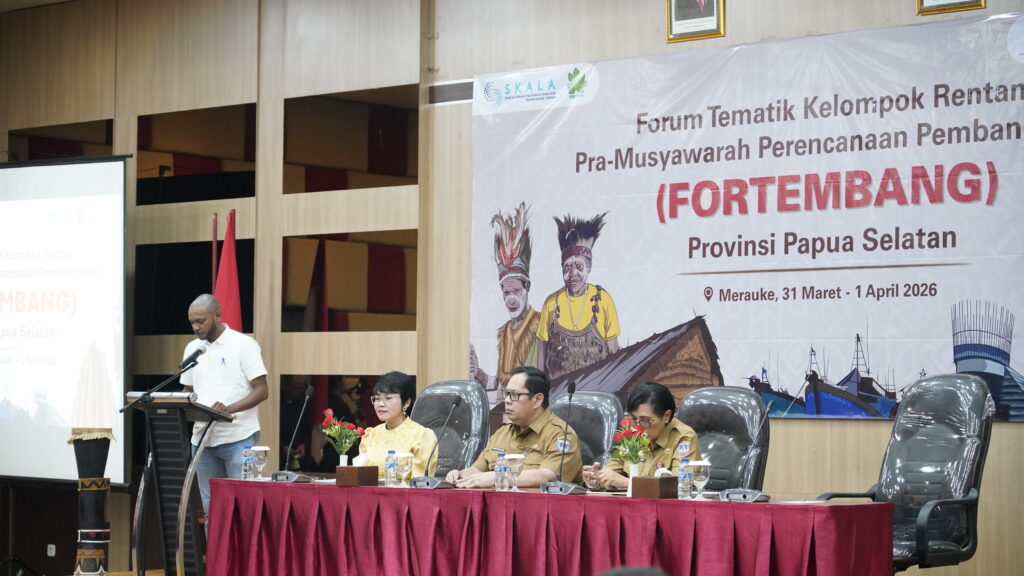
Fortembang in action – Merauke, 31 March-1 April
Organised by the Papua Selatan Regional Development Planning Agency, the forum brought the vulnerable groups together to present their priorities ahead of the provincial Musrenbang. These discussions will feed into the preparation of the 2027 regional work plans (RKPD).
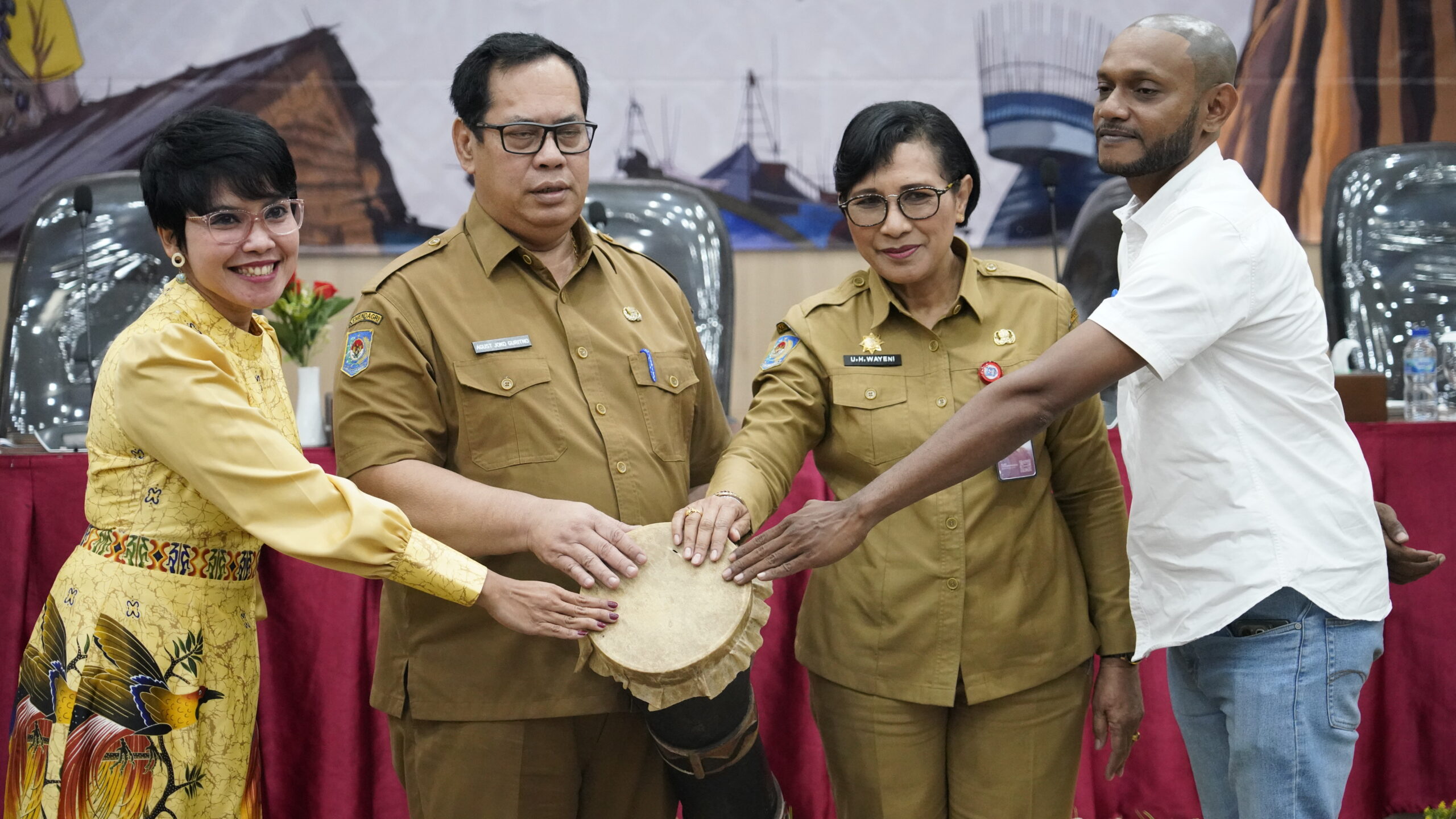
The forum also served as the formal launch of the Fortembang Guidelines, a practical reference document jointly developed by the provincial government and civil society organisation, the Papua People’s Network (JERAT Papua), providing a consistent framework for future implementation.
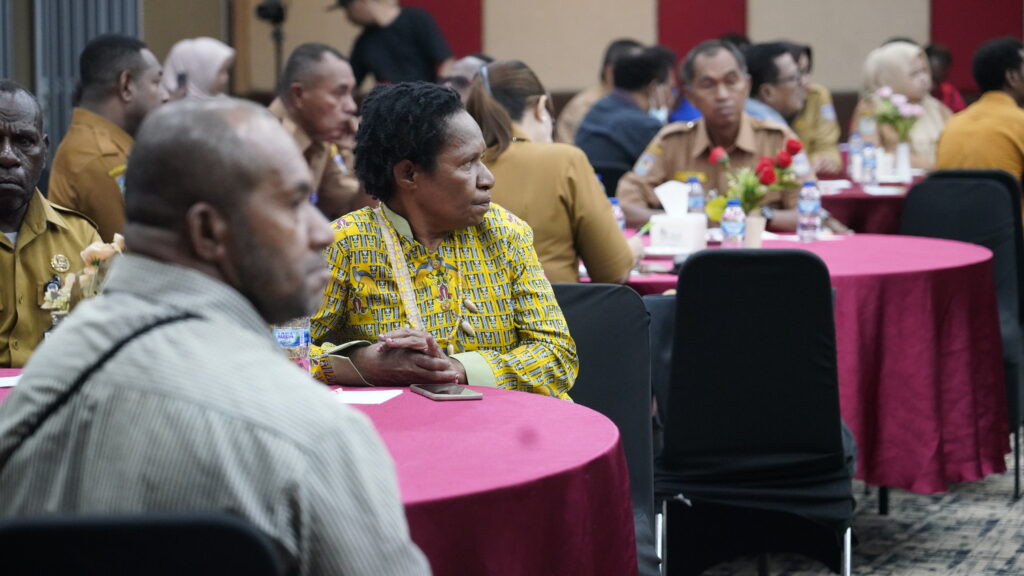
The forum drew 137 participants from local government, civil society networks and community groups, representing a cross-section of the actors whose collaboration is essential if vulnerable groups are to be heard in provincial planning.
For Agustinus Joko Guritno, Assistant I of the Papua Selatan Provincial Government, the forum represents a shift in how planning itself is conceived.
‘Through Fortembang, we are working to develop planning that is based on the real needs of the community and to ensure that the participation of vulnerable groups becomes an integral part of every stage of development,’ he said.
A new kind of participation
Fortembang structured participation around five thematic groups: Indigenous communities, women, children, people with disabilities and older people, each tasked with identifying priority issues and formulating concrete proposals to carry into the Musrenbang forum. .
JERAT Director Jimmy Biay is convinced Fortembang reflects a deeper principle.
‘JERAT Papua was born from the belief that the people, including women, children, people with disabilities, older people and Indigenous communities, have the right to be heard and to drive their own development. With Fortembang, we are adopting a new approach that recognises development must be planned from the people, by the people, and for the people,’ he said.
The discussions produced a clear picture of unmet needs, a point underscored by Lisa Noor Humaidah from SKALA, an Australia-Indonesia partnership program that co-organised the forum.
‘Fortembang is a strategic mechanism to ensure that no community aspirations are left behind and that they are truly incorporated into regional planning documents,’ she said.
The discussions drew attention to a range of priority issues reflecting real conditions in communities. Indigenous communities raised the protection of living space, the preservation of culture and local languages, and the impact of development policies on Indigenous livelihoods.
Women’s groups highlighted protection from violence, economic empowerment, and early childhood interventions in the first 1,000 days of life. Children’s representatives raised education issues, including shortages of teachers, inadequate school infrastructure and protection for vulnerable children, such as street children and victims of exploitation.
The disability group pointed to limited access to education and employment and called for more specific affirmative policies, and highlighted the need for support services across all areas of community life. Older people emphasised the need for dedicated welfare regulations, health services through community-based health posts for seniors, age-friendly public infrastructure, integrated nursing homes, schools for older people and stronger social protection.
Marcy de Fretes of the Senior Citizens Service Commission put it plainly.
‘The number of older people increases every year. We hope that services for them, including transport facilities and programs such as schools for older people, will get more attention from the local government,’ she said.
From Fortembang to Musrenbang
One of Fortembang’s strengths is ensuring that discussion results do not stop at the forum. Proposals from each group will be classified and aligned with the draft RKPD before being discussed at the city, regency and provincial Musrenbang forums. Each group will appoint representatives to oversee their proposals through the Musrenbang process.
Fortembang was organised through a collaboration between the Papua Selatan Provincial Government, JERAT Papua, and the Australia-Indonesia Partnership SKALA Program (Synergy and Collaboration for Accelerating Basic Services).
As a newly established autonomous region, Papua Selatan has the opportunity to build a more open and inclusive planning system from the outset, placing communities as active participants rather than passive recipients of development.
Strengthening the 2027 work plans
All recommendations from Fortembang will contribute to the 2027 RKPD, with its focus on accelerating access to basic services and strengthening Indigenous community-based local economic development.
In choosing to build inclusive participation mechanisms from the ground up, Papua Selatan is taking a deliberate step towards closing a gap that has long undermined development planning in the province, ensuring that the voices of those most often left out are built into the process from the outset.