


Papua Barat Daya Develops 2025–2029 Local Revenue Roadmap to Strengthen Fiscal Capacity
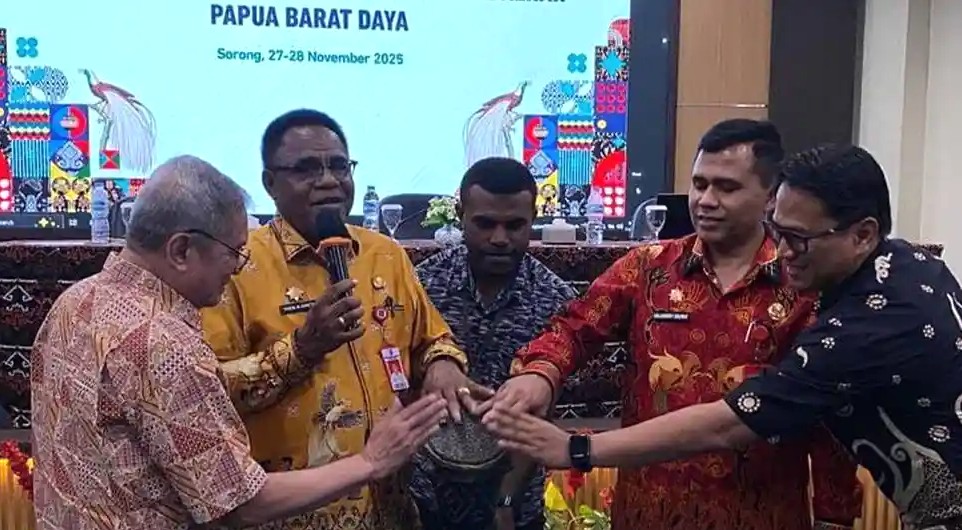
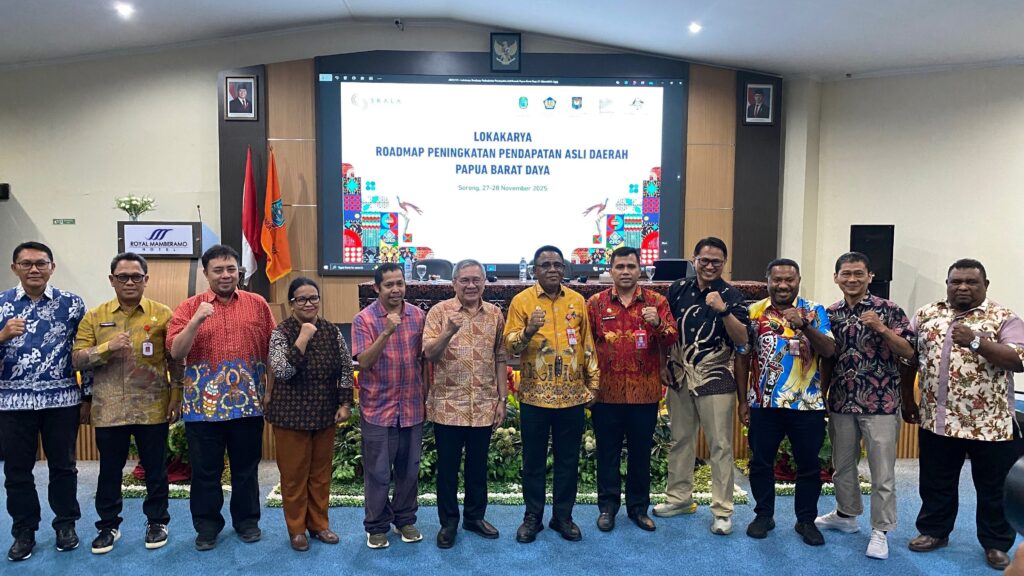
The Government of Papua Barat Daya Province continues to strengthen the foundations of fiscal independence through a series of local revenue reforms. On 27 November 2025, the Papua Barat Daya Provincial Revenue, Financial Management and Asset Agency (BPPKAD/Badan Pengelola Pendapatan Keuangan dan Aset Daerah) convened a workshop in Sorong to develop the 2025-2029 Roadmap for Local Own-Source Revenue (PAD/Pendapatan Asli Daerah). The workshop marked an important step for Indonesia’s newest province in formulating a stronger, more sustainable, and community-responsive revenue strategy.
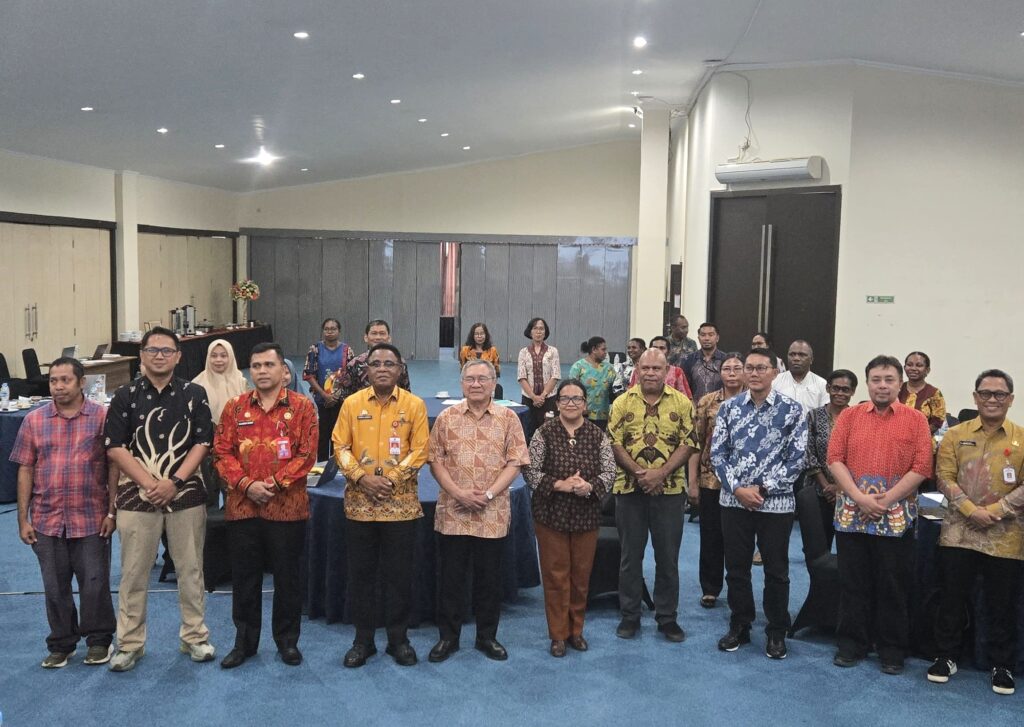
The workshop brought together regional government agencies (OPD/Organisasi Perangkat Daerah) at the provincial and subprovincial levels, along with academics, and community representatives. This multi-stakeholder participation provided a strong foundation for developing an inclusive and realistic PAD policy in line with Indonesia’s national fiscal decentralisation framework.
As a newly established province, Papua Barat Daya faces two major challenges: building government institutions and meeting essential infrastructure needs. These conditions place pressure on the province’s fiscal space.
Acting Provincial Secretary of Papua Barat Daya, Yakob Kareth, emphasised that strengthening PAD is a top priority to safeguard fiscal stability.
“As Indonesia’s youngest province, Papua Barat Daya carries a dual burden: developing basic infrastructure while simultaneously managing fiscal relations between the central and provincial governments. This is why the PAD Roadmap is critical to strengthening our fiscal independence,” he said.
He also stressed that all PAD policies must benefit both communities and the business sector. “PAD must deliver broad public benefit, avoid placing additional burdens on vulnerable groups, and at the same time create a healthy investment climate,” he added.
The workshop was led by the Head of BPPKAD Papua Barat Daya, Halasson Frans Sinurat, who outlined the roadmap’s direction. He explained that the roadmap would focus on two main pillars. The first is the optimisation of existing PAD sources, particularly local taxes, user charges, and asset utilisation. The second is the exploration of new PAD potential aligned with the economic characteristics of Papua Barat Daya, including fisheries, tourism, and value-adding industries based on natural resources.
“We are targeting completion of the roadmap, the draft Governor’s Regulation, and the technical standard operating procedures within the next two months,” Halasson said.
Participants then engaged in discussions on strategic issues, operational planning, and revenue opportunities. The discussions applied a data-driven approach, including mapping revenue potential, analysing regional economic trends, and reviewing existing tax and retribution regulations.
Drawing on these discussions, the workshop identified three key targets to strengthen regional revenue. First, the development of a comprehensive PAD enhancement strategy through both optimisation and exploration of new potential. Second, accelerated PAD reform, including service process simplification and digitalisation of revenue systems. Third, preparation of an initial draft Governor’s Regulation on PAD enhancement as a follow-up to the Regional Regulation on Taxes and User Charges that has been reviewed by the Ministry of Home Affairs.
These targets align with national fiscal policy directions for 2025–2029, particularly the push to strengthen PAD and reform local taxation in accordance with the Law on Fiscal Relations between the Central Government and Regional Governments (UU HKPD/Undang-Undang Hubungan Keuangan antara Pemerintah Pusat dan Daerah). The PAD Roadmap is being developed through a collaborative process involving finance, planning, and technical agencies, as well as academics and regency- and city-level stakeholders.
The Government of Papua Barat Daya Province has also received technical assistance from the Indonesia-Australia Partnership Program, SKALA (Synergies and Collaboration for Service Delivery Acceleration), which supports the strengthening of regional fiscal governance. SKALA’s support includes refining the roadmap’s development methodology, providing technical assistance, and ensuring alignment with the national fiscal regulatory framework.
This collaborative approach ensures that the PAD Roadmap is not merely theoretical, but practical and implementable, with a clear pathway to improving basic services through stronger, more sustainable financing. The initial draft of the 2025–2029 PAD Enhancement Roadmap will undergo internal finalisation and harmonisation with relevant ministries before being formally adopted as an official provincial policy document. The key ministries include Kemendagri and the Ministry of National Development Planning/National Development Planning Agency (Kementerian PPN/Bappenas).
The Government of Papua Barat Daya views the PAD Roadmap as a critical foundation for advancing regional fiscal independence, strengthening development financing capacity, and ultimately improving public services for communities across the provinces.