


BANGKIT Program Supports the Health and Nutrition of Indigenous Papuan Children
Papua Tengah is putting in place a new social protection initiative to support the health, nutrition and wellbeing of Indigenous Papuan children during their first five years of life.
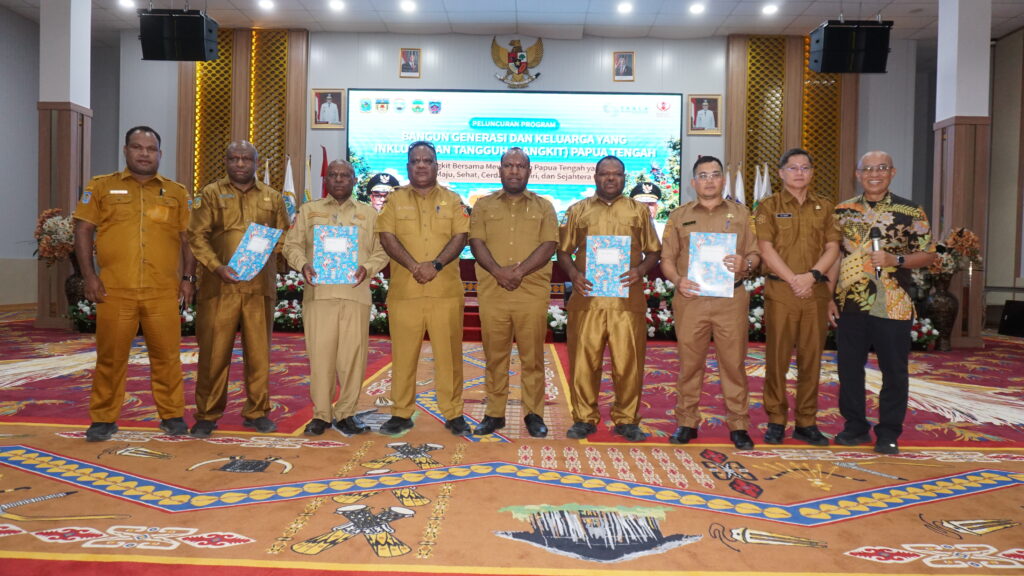
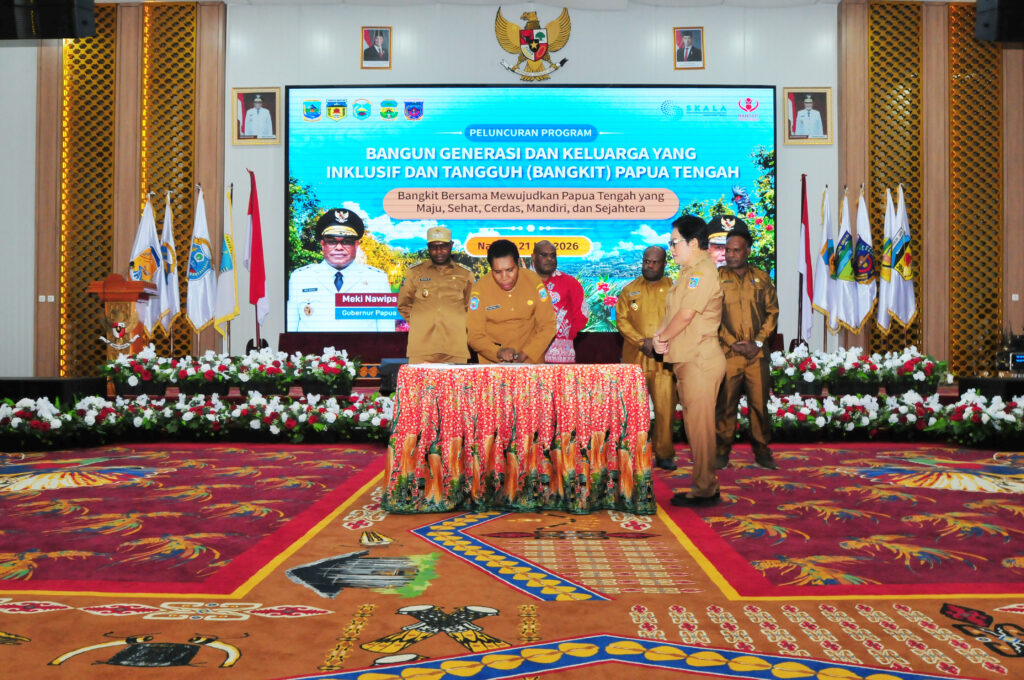
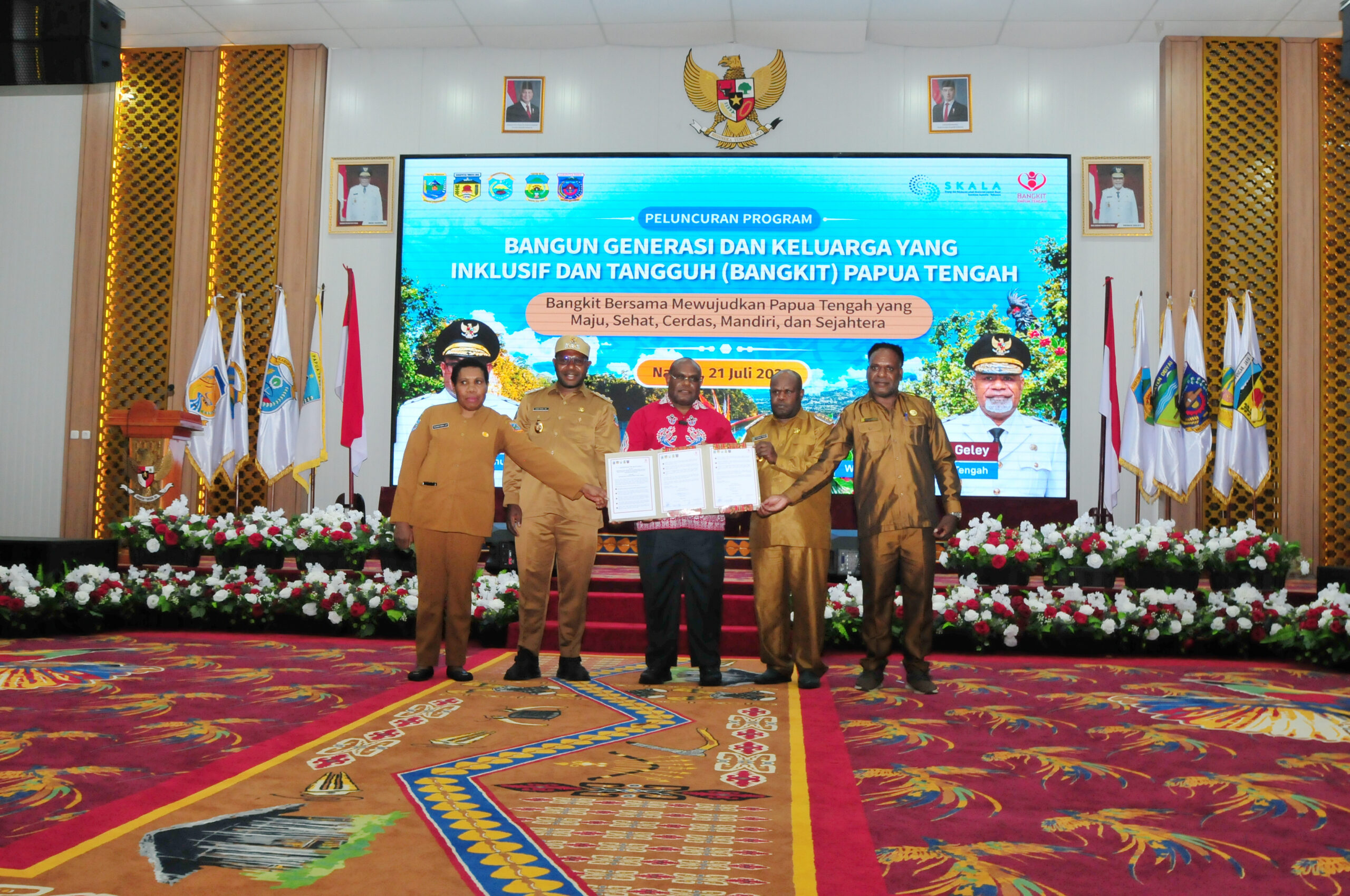
Papua Tengah Governor, Meki F. Nawipa, officially launched the BANGKIT program (Bangun Generasi dan Keluarga yang Inklusif dan Tangguh) in Nabire on 21 July 2026, as part of the province’s fourth anniversary celebrations. The program reflects the provincial government’s broader commitment to strengthening human development, social protection and access to essential services for families across Papua Tengah.
Through BANGKIT Papua Tengah, eligible Indigenous Papuan children under five will receive cash assistance – funded through the Special Autonomy Fund – to help their families meet their health and nutritional needs.
The initial phase is expected to reach around 1,000 children in the districts of Paniai, Dogiyai, Intan Jaya and Puncak Jaya, with the program being expanded to the province’s remaining four districts next year.
Governor Nawipa highlighted the importance of addressing stunting and poverty, as well as improving the quality of data for identifying who should become beneficiaries of social assistance programs.
“Based on the available data, the prevalence of stunting in Papua Tengah is 32.5 per cent and the poverty rate is 28.9 per cent. Through BANGKIT Papua Tengah, we also want to strengthen the quality of our data so that government programs can reach the right people,” he said.
BANGKIT Papua Tengah places early childhood wellbeing within the province’s longer-term investment in human capital. The program has been incorporated into the province’s Regional medium-term development plan, providing a foundation for its continued implementation.
Using data to reach the right families
Reliable beneficiary data is a key part of the program’s design and implementation.
During the launch, the provincial government announced it would use the National Socioeconomic Single Data (Data Tunggal Sosial dan Ekonomi Nasional/DTSEN) to identify eligible beneficiaries.
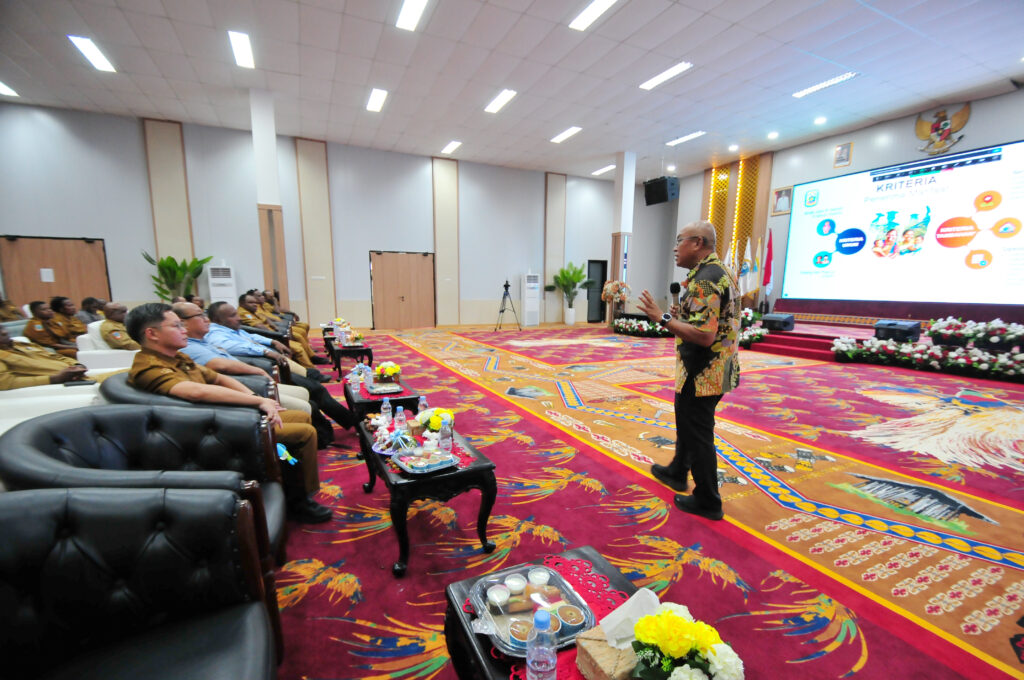
Head of the Papua Tengah Regional Development Planning, Research and Innovation Agency, Eliezer Yogi, underlined the role of socioeconomic data to ensure more accurate targeting.
“The handover of DTSEN is an important part of this process because the data will be used to determine the beneficiaries of BANGKIT Papua Tengah,” Yogi said.
The launch was followed by signing of a joint commitment between the Papua Tengah provincial government and the Paniai, Dogiyai, Intan Jaya and Puncak Jaya district governments.
The commitment sets out several areas for collaboration, including aligning policies and activities, using and updating beneficiary data, strengthening coordination between levels of government, and establishing joint secretariats at district level.
Supporting coordinated implementation
The development of BANGKIT Papua Tengah has been supported by SKALA (Sinergi dan Kolaborasi untuk Akselerasi Layanan Dasar), an Australia–Indonesia partnership program. SKALA has supported the Papua Tengah provincial government to strengthen the program’s design, governance arrangements, use of data and coordination among relevant stakeholders.
Following the launch, the provincial and district governments will continue beneficiary data collection and verification, prepare mechanisms for distributing assistance, and establish joint secretariats to support implementation.